


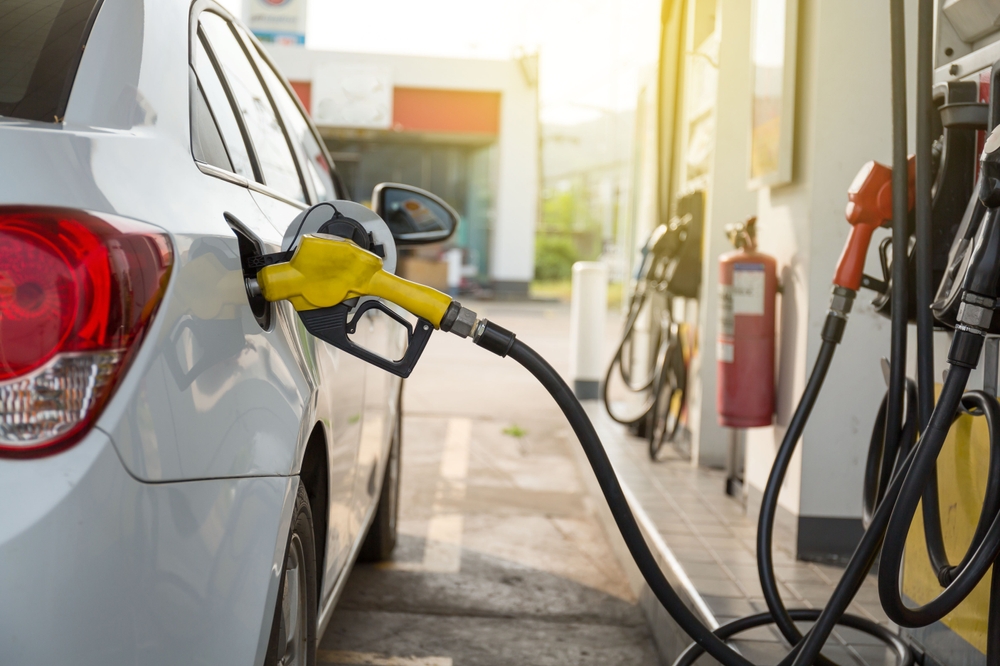
Michigan gas prices have climbed to an average of $3.89 per gallon, up from $2.99 just one month ago. That is a roughly 30% increase in 30 days, leaving drivers paying 97 cents more per gallon than last month and 82 cents more than this time last year. The spike is part of a broader national trend. According to AAA, the national average gas price reached $4.08 per gallon on April 2, up from $3.98 one week earlier and $3.00 on March 5.
Gov. Gretchen Whitmer responded Today by declaring an energy emergency in Michigan, issuing Executive Order 2026-4 with the stated goal of giving drivers some relief at the pump before conditions worsen further.
What the order does
The executive order temporarily suspends a May 1 requirement that certain Michigan counties sell only lower vapor pressure gasoline. In its place, the order allows for the sale of higher vapor pressure fuel blends, which typically run 10 to 20 cents cheaper per gallon.
The suspension applies to eight counties in southeast Michigan: Wayne, Oakland, Macomb, Washtenaw, Livingston, St. Clair, Monroe, and Lenawee. Those counties are home to roughly five million residents, nearly half the state’s total population. Drivers outside those counties may also see savings, as they are already permitted to sell less expensive fuel blends without a waiver.
The order aligns Michigan with a temporary waiver issued by the U.S. Environmental Protection Agency allowing expanded production, distribution, and sale of alternative gasoline blends during declared emergencies.
Why prices spiked
The increase in Michigan and nationally is tied in significant part to the ongoing conflict in Iran, which has disrupted global oil supply chains. The closure of the Strait of Hormuz, a shipping corridor that previously handled up to 21 million barrels of oil per day, has reduced available supply and driven prices upward across markets.
Whitmer framed the order as a response to forces outside the state’s direct control. She acknowledged that state government cannot resolve an overseas conflict or reverse federal policy decisions that contributed to the price increase, but positioned the executive order as action within her authority to take.
Where gas prices stand nationally
California continues to lead the country in gas prices, with drivers paying an average of $5.89 per gallon on April 2, up from $4.65 one month ago. Hawaii followed at $5.50 per gallon and Washington state at $5.37.
At the other end of the scale, Oklahoma had the lowest average in the country at $3.27 per gallon, followed by Texas at $3.20 and Kansas at $3.33. Michigan’s current average of $3.89 per gallon places it in the middle of the national range, though still well above where it stood just weeks ago.
State gas taxes are one factor explaining regional price differences. California carries the highest state gas tax at 71 cents per gallon, followed by Illinois at 66 cents and Washington and Pennsylvania tied at 59 cents. Michigan’s state gas tax sits at 48 cents per gallon. The federal gas tax, set at 18.4 cents per gallon since 1993, applies uniformly across all states.
Other factors driving regional variation include distance from fuel supply infrastructure, the presence or absence of supply disruptions, retail competition, and local environmental regulations requiring specially blended fuels in some markets.
For Michigan drivers
State officials are reminding Michigan drivers that they can report suspected problems at gas pumps to the Michigan Department of Agriculture and Rural Development through its 24-hour hotline at 1-800-MDA-FUEL.
