


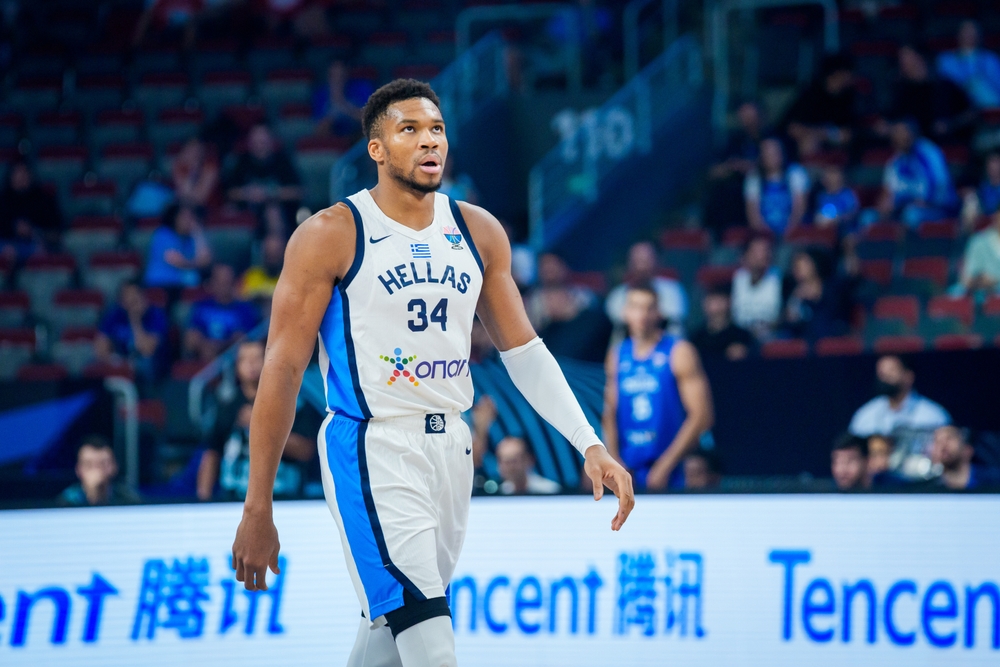
The trade sending Giannis Antetokounmpo to the Miami Heat became official on Monday, ending a 13-year chapter that transformed the Milwaukee Bucks from one of the league’s less prominent franchises into an NBA championship organization and established one of the most beloved player-city relationships in recent basketball history.
Antetokounmpo marked the occasion with a video released on his social media accounts featuring a conversation with the Bucks’ longtime play-by-play announcer, in which he expressed his love for Milwaukee, thanked its fans, and made clear that the city will remain central to his identity regardless of where his career takes him. The farewell struck a tone of genuine warmth and gratitude rather than the more guarded language that typically accompanies major NBA departures.
The terms of the trade
Milwaukee agreed to trade Antetokounmpo and Bobby Portis to Miami in exchange for Tyler Herro, Kel’el Ware, Jaime Jaquez Jr., Kasparas Jakučionis, the 13th pick in the 2026 NBA draft, two additional future first-round picks, a pick swap, and a second-round pick. The deal was agreed upon last month and took effect Monday when the transaction became official at the start of the new league year.
The Bucks used the 13th pick acquired in the deal on a forward from Tennessee, giving them an immediate developmental piece to build around as they enter a post-Giannis era with young talent and significant future draft capital.
What Giannis meant to Milwaukee
Antetokounmpo leaves the Bucks as the franchise’s all-time leader in every major statistical category, including points, rebounds, assists, blocks, minutes played, and triple-doubles. He was selected by Milwaukee in 2013 as a teenager from Greece who had spent most of his childhood in Athens without Greek citizenship, and he grew into one of the most dominant players of his generation while becoming an ambassador for a city that does not typically command national attention.
The Bucks’ general manager described the decision to trade him as among the most difficult the franchise has ever made, framing it as the outcome of a judgment about what was best both for the organization’s future and for Antetokounmpo himself. He spoke about a 13-year partnership that extended well beyond the basketball court and described Antetokounmpo’s impact on the franchise, the locker room, and the Milwaukee community as lasting and transformative.
The franchise highlighted the 2021 NBA championship, Milwaukee’s first in 50 years, as the defining achievement of his tenure, a moment that Antetokounmpo himself referenced in his farewell video when describing what he hoped bringing a title to the city had meant to its people. He connected that achievement to the blue-collar identity he sees in Milwaukee, describing the city’s fans as people who work hard and give their earnings to support their team, and saying he tried to represent that ethic in how he approached his own career.
What comes next
Antetokounmpo joins a Miami team that is building toward contention around his arrival, adding a two-time league MVP and championship winner to a franchise with its own recent tradition of building competitive rosters around elite talent. He is still 31 years old and capable of driving a championship push for a new organization.
Milwaukee now faces the less glamorous work of rebuilding around the assets acquired in the deal and the young players already on the roster, a transition that the franchise’s general manager framed with cautious optimism while acknowledging the magnitude of what the organization is attempting to replace. No statistical category, draft pick, or roster combination substitutes for a generational talent, but the Bucks made the decision and now must execute on the path they have chosen.
