


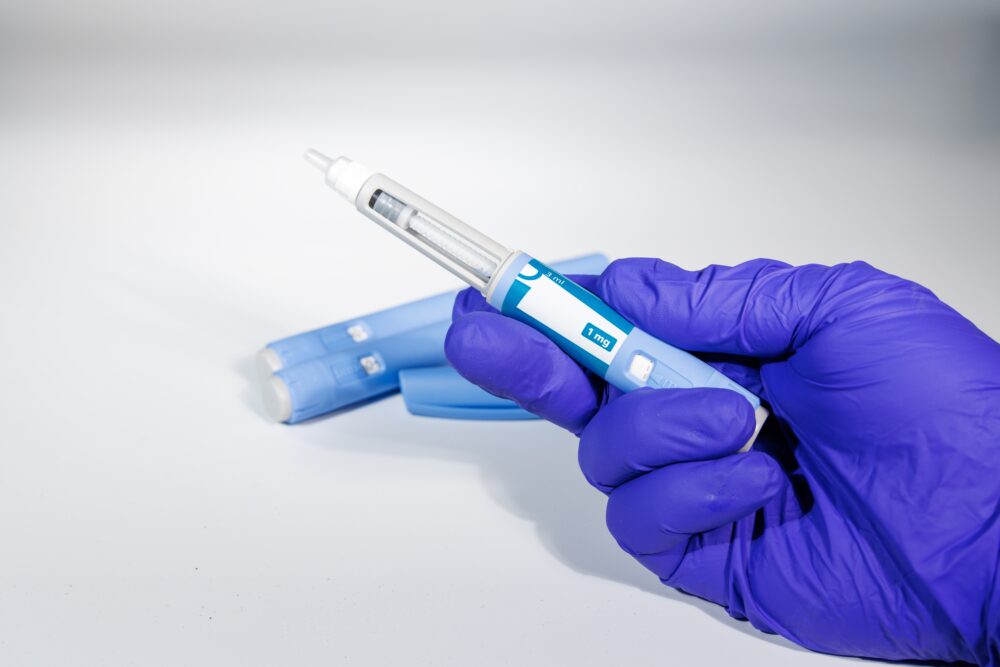
GLP-1 medications like Ozempic, Wegovy, Mounjaro and Zepbound have become some of the most widely used drugs in the country, with roughly 12% of American adults currently taking one according to the 2025 KFF Health Tracking Poll. They have also become some of the most expensive, with out-of-pocket costs that can exceed $1,000 per month for patients without adequate insurance coverage. Even with insurance, monthly costs can run into the hundreds of dollars.
The good news is that you may be able to deduct GLP-1 expenses on your federal tax return. The less straightforward news is that whether you qualify depends on why the drug was prescribed, how you file your taxes and whether itemizing actually makes sense for your financial situation. Here is what you need to know.
How the medical expense deduction works
Before getting into GLP-1 specifics, it helps to understand how medical expense deductions work in general. The IRS allows taxpayers to deduct unreimbursed medical expenses paid for themselves, their spouse and their dependents, but several important conditions apply.
First, you must itemize your deductions rather than claiming the standard deduction. For 2025 tax returns due April 15, 2026, the standard deduction is $15,750 for single filers and $31,500 for married couples filing jointly. Itemizing only saves you money if your total deductions exceed those thresholds, and roughly 90% of taxpayers take the standard deduction instead.
Second, only unreimbursed medical expenses above 7.5% of your adjusted gross income are deductible. On a $100,000 income, for example, the first $7,500 of medical expenses does not count. Only costs above that floor are deductible.
Third, the expenses must qualify as medical expenses under IRS rules, meaning they were incurred for the diagnosis, cure, mitigation, treatment or prevention of a disease as prescribed by a licensed clinician.
When GLP-1 drugs are tax deductible
The IRS will generally treat a GLP-1 medication as a deductible medical expense when two conditions are both true: a licensed medical provider has diagnosed you with a specific disease, and a GLP-1 was prescribed to treat that disease.
The clearest examples include type 2 diabetes, where drugs like Ozempic were originally developed and approved. If your doctor diagnosed you with diabetes and prescribed a GLP-1 to manage it, your unreimbursed costs are deductible provided you itemize and exceed the 7.5% threshold.
Obesity also qualifies, because the IRS recognizes it as a chronic medical condition. If your provider diagnosed you as obese and prescribed a GLP-1 as part of a weight-loss treatment plan, the expense is deductible. The same logic applies if a GLP-1 was prescribed to address a related condition such as hypertension, where weight loss is part of the treatment plan.
When GLP-1 drugs are not tax deductible
The deduction does not apply to medications prescribed purely for general weight loss without a specific medical diagnosis. If your doctor recommended shedding pounds to improve your overall health but did not formally diagnose a disease, the IRS does not consider that a qualifying medical expense.
This creates a meaningful gray area for GLP-1 prescriptions obtained through telehealth platforms and filled by compounding pharmacies. Many of these services connect patients with a licensed clinician who reviews self-reported health information and determines whether a GLP-1 is appropriate, but that process typically involves an assessment rather than a formal diagnosis. Without a diagnosed condition, the expenses generally would not qualify for the deduction.
Using an HSA or FSA for GLP-1 costs
If your GLP-1 was prescribed to treat a diagnosed condition, you can pay for it using a health savings account or flexible spending account, both of which use pretax dollars. Keep in mind that you cannot then also deduct the same expense on your taxes. Because HSA and FSA contributions are already tax-advantaged, taking an additional deduction for those same costs is not permitted.
For many people, maximizing HSA contributions is the more tax efficient strategy. In 2026, HSA contribution limits are $4,400 for individual coverage and $8,750 for family coverage. Contributing the maximum lowers your taxable income immediately, and withdrawals used for qualifying medical expenses including GLP-1 drugs are completely tax-free. Unlike FSAs, HSA funds roll over year to year regardless of whether you switch plans.
Your provider may need to supply a letter of medical necessity to support HSA or FSA reimbursement for GLP-1 costs, and having that documentation on file is also useful in the event of an IRS audit.
Will deducting GLP-1 drugs actually lower your tax bill
For most taxpayers, probably not on its own. The combination of needing to itemize, clearing the 7.5% AGI floor and having total deductions that exceed the standard deduction is a high bar. If you also have significant mortgage interest, state and local tax deductions or other qualifying expenses, GLP-1 costs could tip the balance in favor of itemizing. But for the majority of people paying for these medications, the standard deduction will still yield better overall tax savings than itemizing would.
