


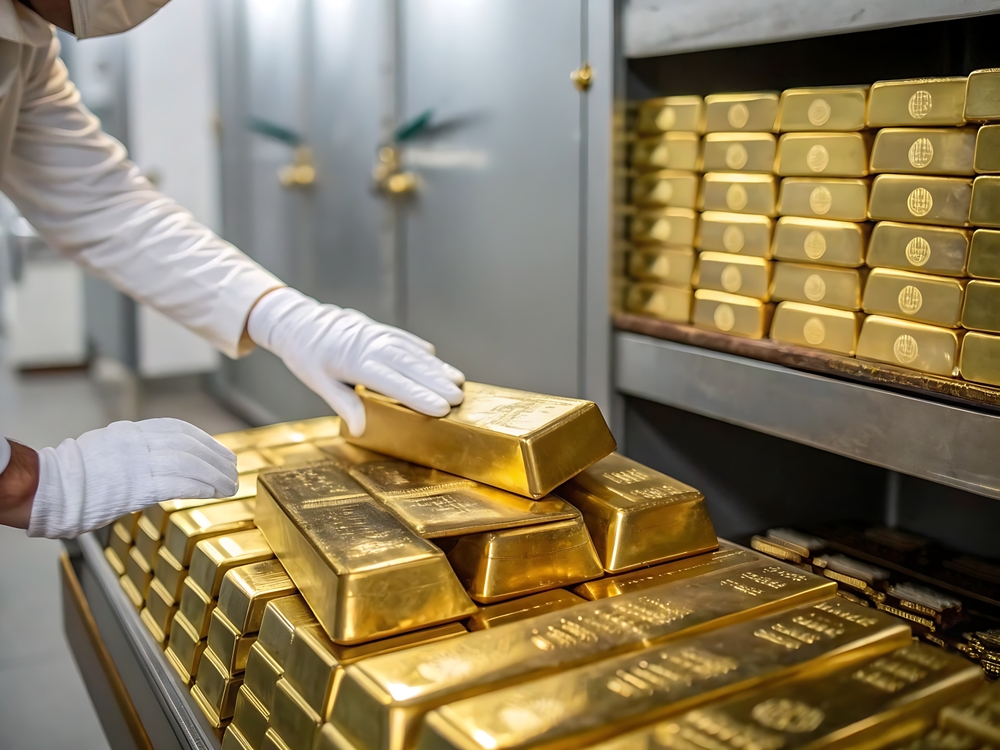
After a brutal rout last month, dip-buyers are jumping back in and the precious metal is staging a dramatic comeback
The gold market finally caught its breath
on Monday after what can only be described as an absolutely bonkers week. Bullion climbed above the $5,000 per ounce milestone, recovering some serious ground after getting absolutely pummeled at the end of January. Think of it like watching your favorite team down 20 points at halftime, then storming back to make things competitive again. Gold has now reclaimed roughly half of the losses it suffered during that historic crash from its all-time high on January 29. Meanwhile, the dollar weakened, which generally makes gold more attractive to international buyers.
Here’s the thing: nobody’s sure if this recovery is the real deal or just a temporary bounce. Ahmad Assiri, an analyst at Pepperstone Group Ltd., nailed the million-dollar question. He pointed out that gold’s ability to hold above that $5,000 barrier “will be critical in determining whether the market can transition from a reactive bounce to a more sustainable advance.” Translation? The metal needs to stick around this level and stop doing the yo-yo thing if it wants to convince investors this rally is legit.
China’s central bank keeps buying the dip in ways that suggest they’re not panicking about the turmoil. Over the weekend, data revealed that the People’s Bank of China extended its gold purchases for a 15th consecutive month. This isn’t some accident it’s a calculated move. According to the official Securities Times, these purchases will keep happening, but they’re keeping them small enough that they won’t cause wild price swings themselves. Basically, China’s playing the long game, quietly diversifying its assets while everyone else is freaking out about volatility.
Gold was supposed to be unstoppable before everything went haywire. The precious metal had been on a record-breaking run that made investors feel like they’d discovered the holy grail of finance. Geopolitical tensions had everyone spooked, the “debasement trade” (the idea that currencies are getting weaker so you should own hard assets) was in full swing, and people were worried the Federal Reserve might lose its independence. Then a tsunami of speculative buying hit, and suddenly traders were treating gold like it was a meme stock. The party didn’t last. Gold and silver both crashed spectacularly at the end of last month. US Treasury Secretary Scott Bessent actually blamed “unruly” trading in China as a reason for all the wild price swings that followed.
The volatility has been absolutely nuts
But Wall Street’s biggest players aren’t hitting the panic button. Deutsche Bank, Goldman Sachs, and Pictet Asset Management have all publicly backed bullion to recover eventually. Their reasoning makes sense: long-term demand drivers are still there. People are still worried about concentrating too much wealth in US assets, policy uncertainty keeps creeping in, and central banks around the world keep buying gold like it’s going out of style. That kind of structural support doesn’t just disappear because of a bad month.
China just raised some serious alarms
about US Treasury exposure, and it’s worth paying attention. Chinese regulators have quietly advised financial institutions to pump the brakes on their holdings of US government bonds. Why? They’re nervous about concentration risk and market volatility. According to people familiar with the matter, officials basically told banks: buy fewer Treasury bonds and if you’ve already overloaded on them, start trimming. This kind of policy shift from the world’s second-largest economy doesn’t happen for trivial reasons. It signals real concerns about where global capital should be flowing.
Silver‘s been the wild child in all this chaos. The white metal has experienced even more dramatic swings than gold partly because it’s smaller, more speculative market that gets amplified by momentum trading. Silver shot up as much as 6% on Monday alone, climbing above $82 an ounce. But here’s the brutal part: silver has still lost more than a third of its value since hitting its record peak. That’s the kind of ride that makes investors question their life choices.
The big picture here is that precious metals remain caught between two competing forces. On one side, you’ve got the long-term structural reasons to own gold and silver: currency debasement concerns, geopolitical risks, and central banks diversifying away from traditional reserves. On the other side, you’ve got the reality that these markets can move with startling ferocity when speculation takes over. For now, the dip-buyers are winning. Whether that lasts depends entirely on whether gold can hold this $5,000 level and convince the market that the worst is actually behind us.
