


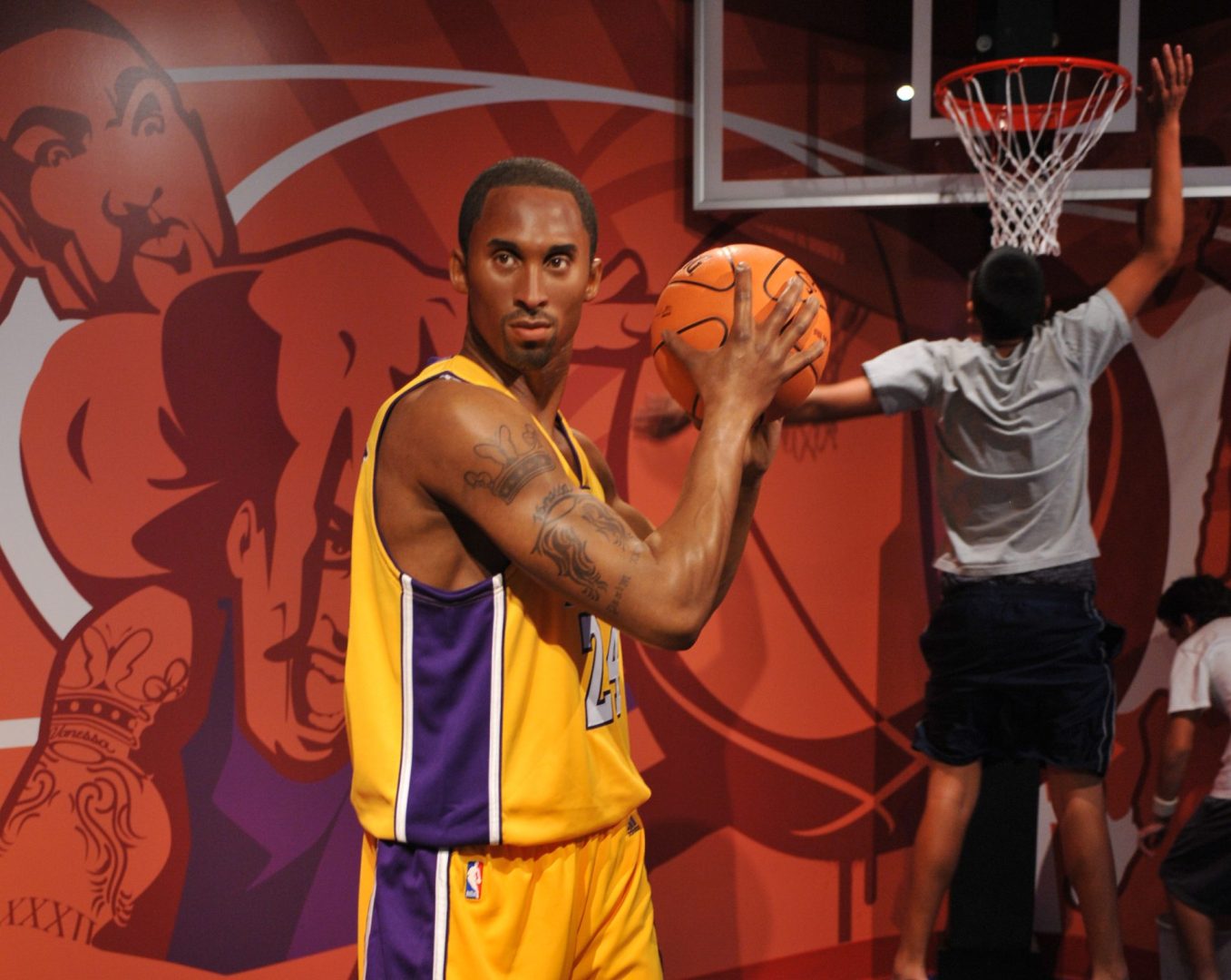
There are superstars, and then there are icons. Kobe Bryant belonged to a category so rare that even the people who shared a court with him were occasionally caught off guard by the scale of his global reach. Nowhere was that more apparent than in China, where his name carried a weight that transcended basketball and crossed into something closer to mythology.
Former NBA center Adonal Foyle, who spent 12 seasons in the league primarily with the Golden State Warriors, got a firsthand look at just how deep that reverence ran. During his time in China, Foyle noticed something that struck him as both funny and profound. Fans in the country associated the sight of tall, athletic Black men so strongly with Bryant that his name became almost reflexive. It did not matter who was actually standing in front of them. The response was the same, an immediate and enthusiastic invocation of Kobe.
For Foyle, it was a moment of genuine clarity. Outside the United States, Bryant was not simply one of the best players in the world. He was the singular face of the sport, the one name that needed no last name, no context, no introduction.
Kobe and the 2008 Beijing Olympics
Dwyane Wade arrived at the 2008 Beijing Olympics as one of the most decorated players in the game. A champion, an All-Star, a player widely recognized as one of the best shooting guards of his generation, Wade had every reason to expect a warm reception from Chinese fans during the Games.
What he found instead was a masterclass in humility.
Walking alongside Bryant through the Olympic Village and into public spaces, Wade watched as crowds surged not toward him but past him, their attention locked entirely on his teammate. The experience, by his own account, was genuinely eye-opening. It was not that Wade was unrecognized or disrespected. It was simply that Bryant occupied a different stratosphere in that country, one that no level of NBA stardom could easily reach.
What made the moment even more striking was discovering why that connection ran so deep. Bryant, who had grown up in Italy and developed an almost instinctive feel for language and culture, was able to speak to fans in their native tongue. He moved through those spaces not as a visiting American celebrity but as someone who had genuinely invested in understanding the people around him. That kind of effort does not go unnoticed, and in China, it had built something extraordinary over the years.
Kobe’s complicated love for China
Bryant’s relationship with China went far beyond endorsement deals and marketing appearances. He saw the country as something more personal, a place where the love of the game was pure and the appreciation for him felt genuine and unfiltered. He is said to have seriously considered finishing his playing career there or in Italy, the country where his passion for basketball first took root, rather than simply riding out his final seasons in the NBA.
That kind of emotional investment was rare for a player of his stature, and it spoke to something essential about who Bryant was. He did not just want to be celebrated. He wanted to connect.
A legacy written across cultures
The stories that Foyle and Wade carry from their time alongside Bryant in China say something important about what made him singular. Records and scoring titles and championship rings tell one version of his story. But the version that his peers remember most vividly is the one where a man walked into a foreign country and was greeted like he had never left.
That is not something that can be manufactured or marketed. It is earned, slowly and genuinely, over a lifetime of showing up as more than just a basketball player.
