


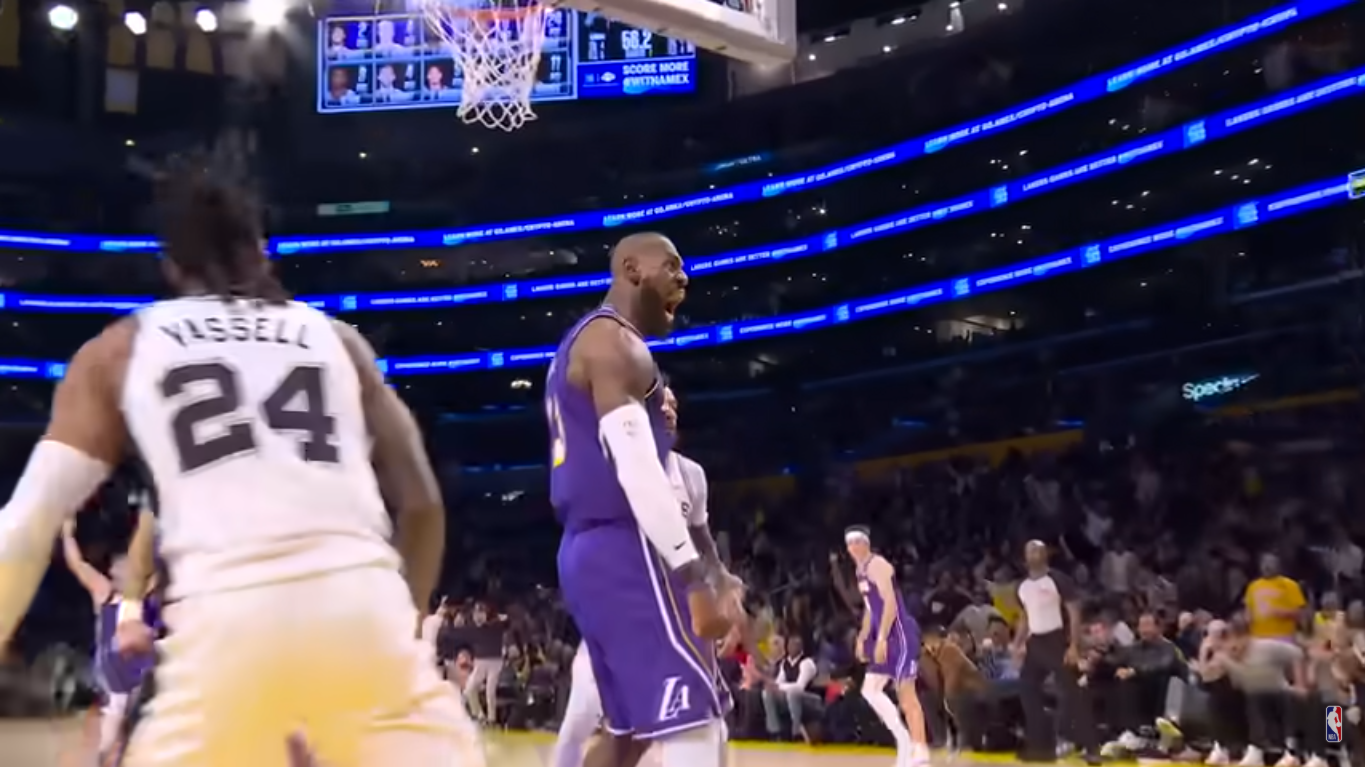
Tuesday’s 136-108 loss to San Antonio proved the 65-game eligibility rule doesn’t care about legacy or history
For 21 straight seasons, LeBron James was named to an All-NBA team
That’s more than two decades of consistency, elite production, and dominance at a level that basically no other player has sustained. Then Tuesday night happened. James sat out his 18th game of the season with left foot arthritis, and suddenly, mathematically, impossibly, his historic streak became official history. The Lakers lost to the Spurs 136-108, but that score barely matters. What matters is that James has played so few games he’s now at around 44 games played that he can’t reach the 65-game threshold required for All-NBA eligibility. The rule doesn’t negotiate. The rule doesn’t care about 21 consecutive seasons of excellence.
The real disaster is that James isn’t even the only star sitting out
Luka Doncic has missed three straight games with a left hamstring strain that the Lakers keep calling “mild” despite him being sidelined. Austin Reaves is managing a left calf injury. Marcus Smart is dealing with right ankle soreness. Deandre Ayton is nursing right knee soreness. This isn’t an injury list it’s a casualty report. When your franchise player, your star wing, your veteran defender, and your promising young center are all unavailable, you’re not just missing players. You’re missing the foundation of your entire offense and defense.
The 65-game threshold rule exists for exactly this reason: to incentivize players to show up
The NBA adopted this rule for the 2023-24 season with one clear message: if you want All-NBA recognition, you need to play 65 games minimum. Period. No sympathy. No debate. James can’t reach that number anymore. Even if he returns tomorrow and plays every remaining game, the calendar makes it mathematically impossible. That’s how rules work. They don’t care about your legacy.
But here’s where it gets complicated: the coaches disagree about whether the rule is actually fair
Lakers coach JJ Redick suggested before the Spurs game that the 65-game threshold should be more of a guideline than a hard rule. Drawing on his experience voting for awards in media, he pointed out that guys used to get consideration in the 54-to-56-game range. His argument is basically: the rule exists, but voters should have some discretion.
Spurs coach Mitch Johnson has a different take. He actually supports the spirit of the rule. “I think the intention behind the rule makes sense,” Johnson said. His point is that playing 82 games of regular-season basketball is genuinely brutal. Players push through bumps, bruises, injuries the mental and physical toll is real. Incentivizing guys to show up and play matters. It’s a skill to push through adversity.
But Johnson also admitted the rule can be cruel
“It obviously stinks for guys who have really great years,” he acknowledged. He pointed to Victor Wembanyama as the perfect example: Wembanyama played only 46 games last season after a February injury, yet he led the league in blocks at 3.8 per game and was still considered a legitimate Defensive Player of the Year candidate by many voters. Great season, missed most of the year, still deserved consideration.
Doncic is walking the same dangerous line
He’s missed 11 games and can only miss six more before becoming ineligible. The “mild” hamstring strain has kept him out three straight games, which is a pretty serious indicator that it’s not actually mild. He was able to run Monday and was planning contact drills Tuesday, but his status for Thursday’s Dallas game and Sunday’s All-Star Game remains uncertain. The fact that he was the leading All-Star vote-getter for the first time in his eight-year career over 3 million votes means fans desperately want to see him healthy.
Rookie Adou Thiero returned from his MCL sprain, scoring three points in 10 minutes. Small victories in a season that’s becoming increasingly desperate.
