


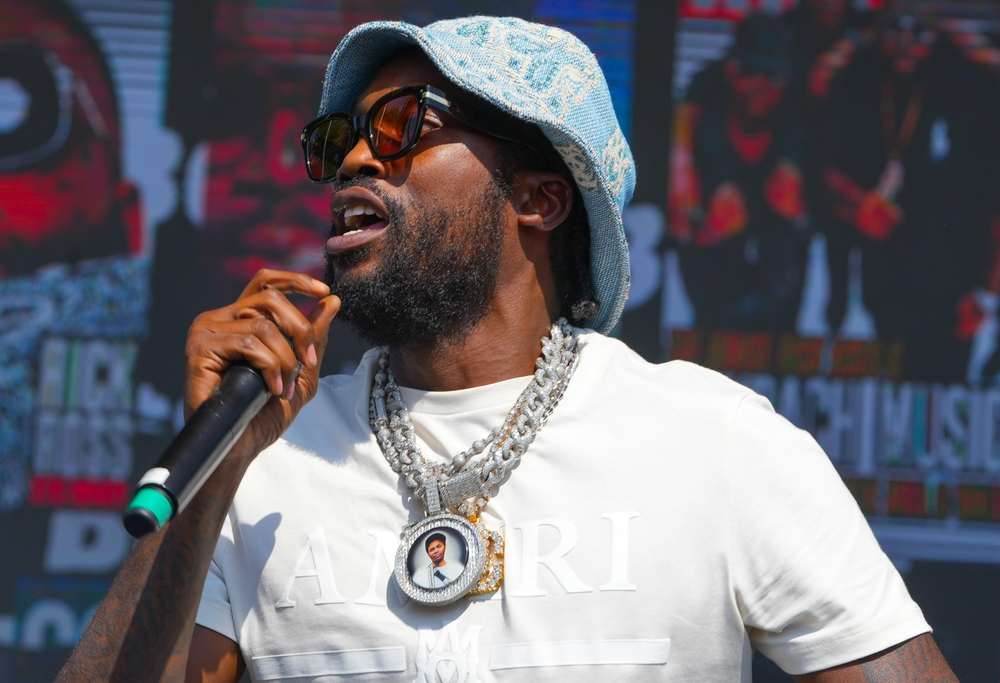
Meek Mill is not interested in letting a narrative run unchecked. The Philadelphia rapper took to social media this week with a series of pointed posts firing back at what he calls deliberate propaganda aimed at undermining his career — and the response lit up the hip-hop community almost immediately.
The trigger was a clip from the March 28 episode of the Brilliant Idiots podcast, where Charlamagne Tha God claimed that Meek Mill never fully recovered from his rap battle with Drake over a decade ago. The comment, amplified widely across social platforms, was the kind of take that he was clearly not going to let slide.
His response was direct, detailed, and unapologetic.
What Meek Mill Said and Why It Hit Different
Meek pushed back hard on narratives he believes are being used to discredit his success, calling out what he described as high-profile figures amplifying rumors without evidence — including one who he says later asked him to appear on their show.
But the response was not just defensive — it was a full accounting. Meek laid out his business moves, his technology deals, his brand partnerships, and his ongoing support of other artists. He challenged anyone following along to look at the full picture rather than the one being painted for them.
The posts spread rapidly, with fans and critics alike weighing in on whether Charlamagne’s original take was fair or simply reductive. For many, Meek’s response landed as one of his most compelling public moments in years — not because of the drama, but because of how grounded it was in actual accomplishments.
The Drake Battle That Would Not Stay Buried
The 2015 rap battle between Meek Mill and Drake remains one of the most discussed moments in modern hip-hop history. He accused Drake of using a ghostwriter — a claim that ignited one of the era’s most public feuds. Drake responded with diss tracks. The internet largely sided with Drake at the time, and the narrative of Meek losing that battle has followed him ever since.
What that narrative consistently overlooks
- Multiple successful albums and projects released after 2015
- A prison sentence and release that reshaped his public profile entirely
- Co-founding REFORM Alliance, one of the most prominent criminal justice organizations in the country
- A growing independent music catalog with full creative control
- Confirmed plans for three to four new projects in 2026 alone
The idea that one rap battle — over ten years ago — defines the entirety of a career that has included all of the above is a framework Meek Mill is done accepting.
The REFORM Alliance Work That Gets Overlooked
Meek Mill co-founded REFORM Alliance alongside Jay-Z and entrepreneur Michael Rubin, an organization that advocates for policy changes addressing what it describes as a broken supervision system affecting millions of people.
At a 2025 gala, he helped raise $20 million for REFORM Alliance, with funds directed toward passing legislation aimed at making probation and parole less punitive and more focused on second chances. He has also referenced raising over $50 million in total through the foundation and driving tangible changes to probation laws at the state level.
That work does not get factored into the ‘Meek never recovered’ conversation — and that omission, more than anything else, is what appears to have pushed him to respond publicly.
What Meek Mill Is Building in 2026
Beyond the social media fire, Meek is clearly in an active and focused phase. He recently joined LinkedIn, citing frustration with AI bots and shallow discourse on other platforms, and outlined plans that include a documentary, a clothing brand, a beverage company, and AI education initiatives in underserved communities.
Operating as an independent artist, Meek has confirmed plans for multiple projects in 2026, signaling one of the most active creative stretches of his career.
The propaganda, as he calls it, may be loud. But the work speaks louder — and Meek Mill is making sure everyone knows exactly where to look.
