


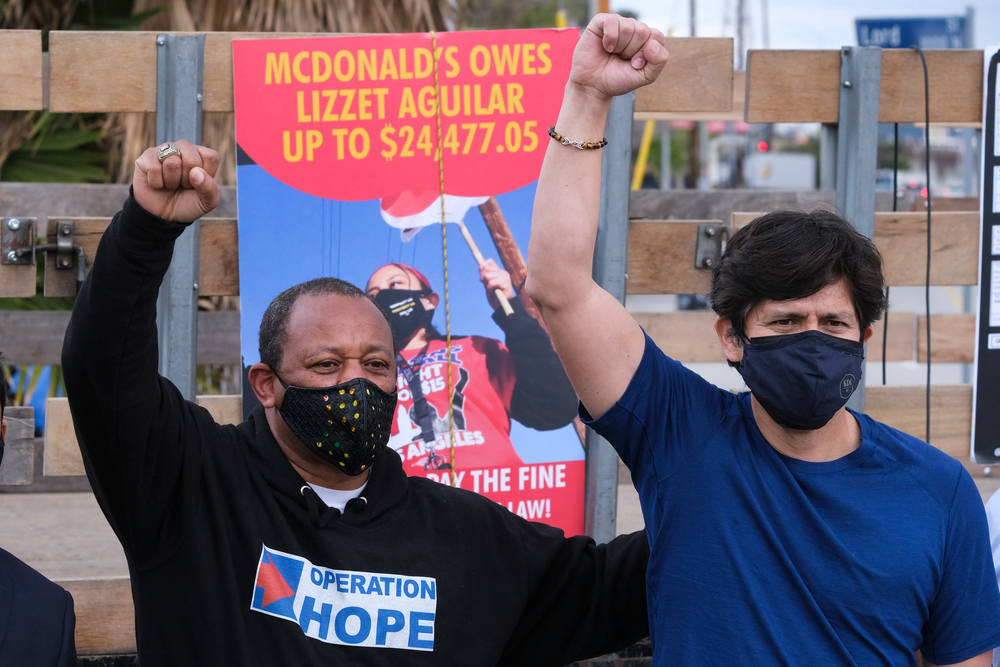
Civil rights activist Najee Ali has sent an open letter to Steve Ballmer, owner of the Los Angeles Clippers and the Intuit Dome, asking him to use his influence to address what a growing coalition describes as a public safety failure in Inglewood, California. The letter, signed by Ali and several community and faith leaders, follows the death of Bryan Bostic, an African American man who died while in the custody of the Inglewood Police Department after a routine traffic stop.
Bostic was a father, a son, and a brother. His death has sharpened an already tense conversation around policing in the city, and his coalition is now directing that pressure toward one of Inglewood’s most prominent investors.
The demands behind the letter
The coalition is asking Ballmer to advocate for two specific measures. The first is the immediate adoption of body-worn cameras for all Inglewood police officers. The second is the restoration of an independent Police Oversight Commission, a body that has not convened in nearly nine years.
Ali, who serves as senior organizer for the Los Angeles chapter of the National Action Network, co-signed the letter alongside Pastor Jonathan Moseley, western regional director of the National Action Network; Cheryl Branch, CEO of Los Angeles Metropolitan Churches; and Yolanda Davidson Carter, a lifelong Inglewood resident. Together, they argue that the absence of these accountability tools has left both residents and visitors at risk.
The letter was dated March 24, 2026.
Why Ballmer is being asked to get involved
The coalition’s decision to approach Ballmer is deliberate. The Intuit Dome, which opened in 2024, has transformed Inglewood into a destination for millions of fans and families attending Clippers games, concerts, and other large-scale events. His letter acknowledges Ballmer’s investment in the city and his broader philanthropic work through the Ballmer Group, framing both as evidence that he already understands what it means to take responsibility for a community.
The argument is straightforward: a businessman willing to spend billions building infrastructure in a neighborhood has a stake in whether that neighborhood is safe. The coalition contends that Ballmer’s voice, directed at city leadership, could carry weight that community advocates alone cannot.
Ali’s group has also stated it is prepared to move forward with a public awareness campaign alerting Intuit Dome visitors to ongoing safety concerns in the area if no meaningful action is taken.
Najee and the case for outside pressure
The coalition’s approach reflects a broader strategy in civil rights organizing: finding pressure points beyond the institutions being challenged. Inglewood’s city government and police department are the direct targets of the policy demands, but the letter to Ballmer is a recognition that corporate influence can sometimes move faster than formal political processes.
The absence of body cameras and an oversight commission in a city that hosts this level of public activity is the coalition’s core argument. Inglewood is not a small town operating with limited resources. It is home to one of the most expensive arenas ever built, a short drive from SoFi Stadium, and a city that has been repositioned as a hub for major entertainment and sports. The gap between that profile and its current accountability infrastructure is what His coalition is trying to close.
The coalition is requesting a direct meeting with Ballmer to explore how his leadership can support that effort. Contact for the coalition was provided as (323) 275-8219.
