


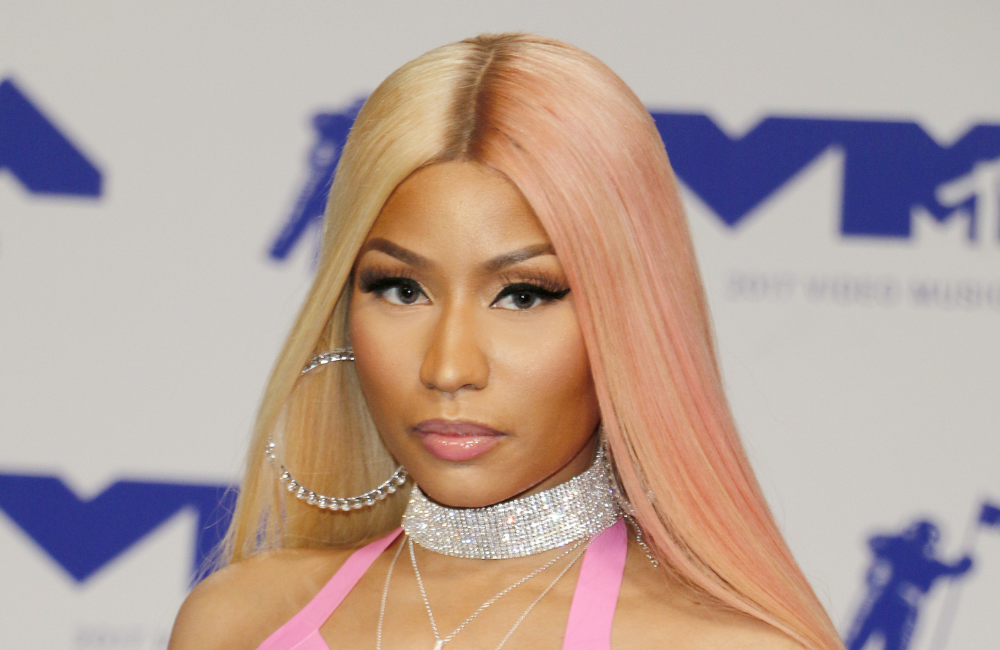
Nicki Minaj has spent her career making shrewdly timed moves. She aligned herself with the right collaborators at the right moments, cultivated one of the most loyal fan bases in popular music and read the cultural current with the precision of someone who understood that timing in pop music is everything. That track record makes her recent political turn all the more striking, because by almost any measure, the timing could not be worse.
Since late 2024, Minaj has positioned herself as a prominent supporter of conservative causes, amplifying right-wing talking points on social media, endorsing contested legislation, adopting the preferred language of the Trump political universe and appearing at high-profile conservative events. The shift has been consistent and sustained, not a one-off comment but a prolonged realignment that has drawn significant attention from fans, critics and political observers alike.
The problem is not just what she aligned with. It is when.
The window that closed
Minaj’s most visible embrace of the movement came in December at a major conservative gathering, where she spoke enthusiastically about the energy she perceived on the right. In the immediate aftermath of the 2024 election, that read was not entirely wrong. The Democratic coalition was fractured, the cultural mood was shifting and the right was riding a wave of political momentum that felt, for a moment, like it might define the next several years.
That moment did not last. By early 2026, Trump’s approval rating had fallen to 36 percent in major polling, the lowest point of his second term. His disapproval rating climbed to 59 percent in a Fox News survey, the highest recorded across either of his terms. His numbers on the economy dropped below levels recorded under his predecessor. Among voters between 18 and 29, he was running 30 points underwater, a dramatic reversal from just a year earlier when that gap was only 7 points.
Cultural allies who had leaned into the administration’s orbit began quietly distancing themselves. The enthusiasm that had briefly made conservative alignment feel like a countercultural statement was dissipating, replaced by the more familiar pattern of governing unpopularity that tends to follow any administration into its second year.
Minaj arrived at the party as the guests were leaving.
A career built on better instincts
What makes the misstep notable is the standard she set for herself. Throughout her career, Minaj demonstrated a remarkable ability to navigate complex and sometimes contradictory spaces without losing ground. She built her early profile by working with major figures at the peak of their influence. She understood how internet culture and fan mobilization worked before most of her contemporaries did. She absorbed the social and cultural energy of the 2010s and positioned herself within it in ways that extended her relevance well beyond what the industry expected.
She even managed to attach herself to deeply controversial collaborations and come out ahead, including a chart-topping release with a rapper who was widely considered untouchable at the time of the project. The bet paid off. Most of her bets did.
The conservative turn is a different story. The fan response has been pointed. An online petition created by supporters calling for her to be deported back to her native Trinidad had accumulated more than 90,000 signatures as of this writing, a number that reflects genuine disillusionment rather than casual trolling.
What comes next
There is a version of this story where Minaj recalibrates, reads the room and finds a path back toward the broader audience that made her one of the most commercially dominant figures in modern music. Artists have navigated harder reversals. But the political space she has entered tends not to reward course corrections. The pattern across the MAGA era has been one of escalation rather than retreat, with figures who enter the movement finding the exit considerably harder to locate than the entrance.
For someone whose entire brand was built on adaptability, that rigidity may be the most costly part of the pivot. The political moment she bet on proved shorter than she anticipated, and in pop music as in markets, timing is the one thing money cannot buy back.
