


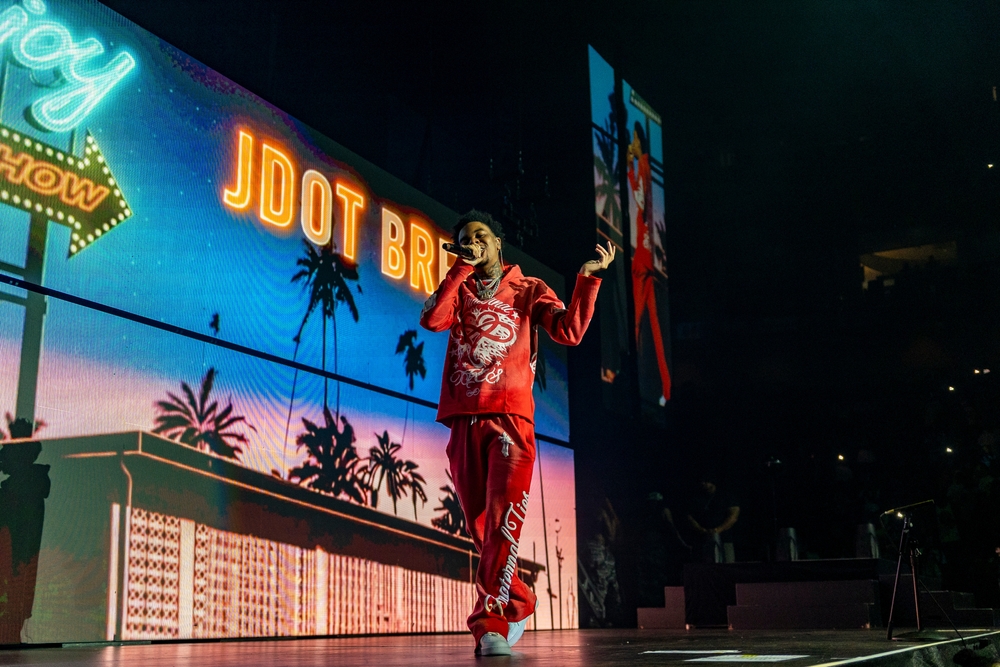
Hip-hop lost one of its most emotionally fearless voices on Feb. 18, 2026. Lil Poppa, born Janarious Mykel Wheeler in Jacksonville, Fla., was pronounced dead at 11:23 a.m. ET at Fulton County in Atlanta. He was 25 years old. The Fulton County Medical Examiner’s Office has since confirmed his death was ruled a suicide. The music world, and especially the Black community that embraced him deeply, is reeling.
For a rapper whose entire artistry was built on turning private pain into shared truth, the loss carries an almost unbearable irony. Lil Poppa was not just a rising name in hip-hop — he was one of the most emotionally honest storytellers his generation had produced. His death leaves a silence where there was once a voice that made millions feel less alone.
From Church Pews to the National Stage
Lil Poppa’s path into music began in the pews of a Jacksonville church, where he first started writing rhymes as a child. That foundation gave him something rare — a melodic, introspective approach to storytelling that felt rooted in something real. At just 15 years old, he released his debut track Fall Off on Aug. 19, 2016, immediately capturing the attention of a Jacksonville rap scene that could already sense something different about him.
What distinguished him from the start was his willingness to go where most artists would not. Mental health, grief, survival, street-level suffering — these were not decorative themes in his music. They were the architecture of it. Songs like Love and War and Pain All Gone resonated far beyond his hometown, earning recognition from major publications like Pitchfork and eventually landing him a coveted spot on Yo Gotti’s Collective Music Group in 2022.
A Lil Poppa Catalog Built to Last
His albums Beyond Bulletproof and Heavy Is the Head cemented his status as a pioneer of pain rap — a subgenre he helped define through sheer emotional authenticity. His most recent album, Almost Normal Again, released in 2025, featured collaborations with Yungeen Ace and Mozzy, and showcased an artist still evolving, still reaching. His final single, Out of Town Bae, dropped just days before his death on Feb. 13. He had a show scheduled at the Fillmore in New Orleans on March 21 — a date he will never reach.
The catalog he leaves behind is not small. It is not incomplete in the way that feels tragic only because of promise. It is a full, breathing body of work from an artist who poured everything he had into every release.
A Community Shattered by Grief
The reaction from Jacksonville and across the broader hip-hop world has been immediate and deeply felt. Rappers Dej Loaf, Mozzy and Nardo Wick shared tributes online. Great Day Records CEO Caroline Diaz, who worked with Lil Poppa during the early stages of his career and served as A&R on four of his projects, expressed devastation on social media. Lil Duval, a fellow Jacksonville native, wrote a moving tribute reflecting on their bond and a conversation they had just weeks before his passing — one where Lil Poppa spoke of visiting soon.
His Instagram, which had amassed over one million followers, became a digital memorial overnight. In one of his final Instagram stories, Lil Poppa wrote that he was searching for peace of mind. That detail has taken on a profound and heartbreaking weight.
What His Legacy Demands Going Forward
Lil Poppa’s death arrives at a moment when the conversation around mental health in the music industry has never been more urgent — and yet still falls far short of what artists like him needed. He spent years giving listeners the language to name their own pain. The question his passing forces is whether the industry, the community and the culture can extend that same care back to the artists carrying those burdens privately.
His influence on the next generation of emotionally driven hip-hop artists is already embedded. Young rappers across Jacksonville and beyond have cited him as a foundational voice — proof that vulnerability is not weakness, but power. That legacy will not fade. If anything, it will deepen as fans return to his music with a fuller understanding of what he was living through when he created it.
Lil Poppa was 25. He deserved more time.
If you or someone you know is struggling, please reach out to the 988 Suicide and Crisis Lifeline by calling or texting 988. Help is available 24 hours a day, seven days a week.
Source: Hot 97, AllHipHop
