


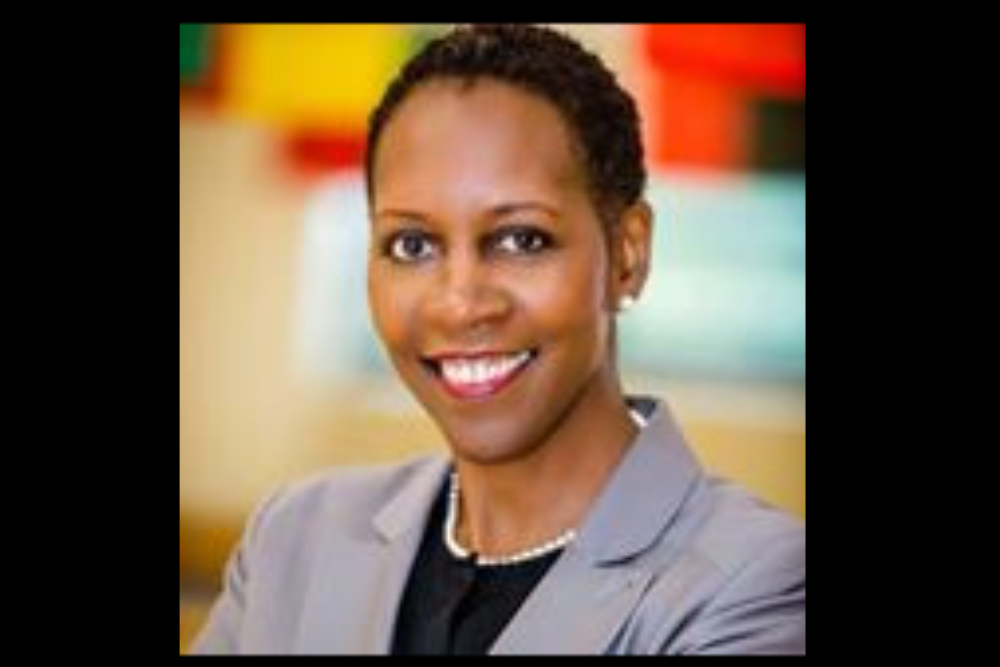
Most ministers spend their later careers settling into the traditions they built over decades. Rev. Dr. Wanda Bynum Duckett, at 64, went the other direction. She traded the formality of a conventional pulpit for something closer to a spoken word stage, and in doing so, she may be pointing toward what Black church looks like for the next generation.
Her approach has a name: Sacred Slam. It pulls from the rhythmic cadences of hip-hop and the performance tradition of slam poetry, and it frames all of it within Black Christian worship. The result is a service that sounds less like a Sunday morning broadcast and more like something that belongs in a café on a Friday night, which, occasionally, is exactly where it happens.
How Sacred Slam took shape
Duckett’s credentials are conventional enough. She holds graduate degrees from St. Mary’s Seminary in Baltimore and Wesley Theological Seminary in Washington, D.C., and she spent eight years as superintendent of the United Methodist Church’s former Baltimore Metropolitan District. That is not the biography of someone who set out to disrupt anything.
The pivot came after years of watching traditional worship fail to hold younger congregants. She began to notice that her preaching style, which carried a natural rhythm, landed differently with certain audiences. People snapped their fingers during her sermons. They leaned in. That response told her something about what people were actually looking for in a spiritual space.
From there, she built a structure around the instinct. Through her platform Spoken by Duckett, she leads workshops and coaching sessions designed to help others find their own poetic voices and bring them into faith settings. She draws a direct line between scripture and spoken word, arguing that the act of speaking creation into existence is the original form of the art.
Sacred Slam and the Black church tradition
This is not a break from Black church tradition so much as a return to one of its roots. The Black church has always held performance and oratory at its center. Figures like Rev. Jesse Jackson built their public ministries on the same principles of rhythm, repetition, and emotional resonance that define spoken word poetry. Duckett is extending that lineage rather than departing from it.
She has organized events like the Seven Last Words of Poetry nights on Good Friday, where attendees gather in a café-style setting with live music and a DJ and engage with scripture through verse. The format draws people who would not necessarily walk into a traditional Sunday service, which is precisely the point.
Reaching Gen Z without losing the congregation
The challenge for any minister trying to modernize is managing the tension between innovation and tradition. Not every longtime congregant has been immediately comfortable with the shift. Some have questioned how hip-hop and poetry fit within the expectations of a church service. Duckett has navigated that by keeping the theological foundation intact while changing the delivery.
Her longer vision reaches toward something closer to the poetry salons of the Harlem Renaissance, communal gatherings where creative expression and intellectual life overlapped. She wants younger poets introduced into faith communities not as a novelty but as a sustained presence, people who see artistic practice and spiritual practice as the same thing.
Gen Z has largely grown up outside institutional religion. Survey after survey shows declining church attendance among adults under 30, and the Black church is not immune to that trend. What Duckett is offering is not a marketing solution to a demographic problem. It is a theological argument that worship was never supposed to be one thing, and that the forms it takes should reflect the people doing it.
Sacred Slam is still a relatively young movement. But the audiences showing up, snapping their fingers, and staying through the whole service suggest it is filling a space that more conventional approaches have left open.
