


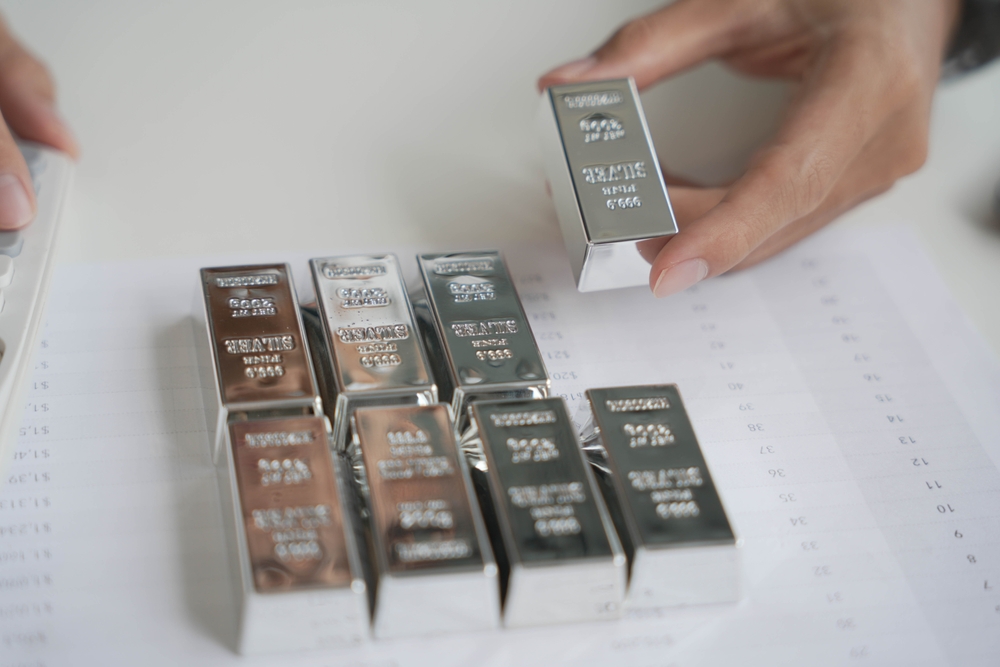
Silver got hammered in premarket trading Tuesday, and mining companies are paying the price. Spot silver fell 2 percent to trade around $74.85 per ounce while silver futures plunged 4 percent to $74.70. It’s another brutal day in what’s become a genuinely volatile month for the metal, with investors watching nervously as economic uncertainty continues to ripple through markets.
The timing is particularly painful because silver already had a horrific January. Silver futures crashed 30 percent that month, marking the worst single day since March 1980. That kind of collapse doesn’t just disappear from investor memory. It creates the kind of anxiety that leads to the selling pressure we’re seeing today.
Mining companies aren’t hiding their pain. Hecla Mining, which operates the massive Green Creek Mine in Alaska, dropped 3 percent in premarket trading. Endeavour Silver fell 3.5 percent. First Majestic Silver slid nearly 4 percent. Coeur Mining lost 3.4 percent. Teck Resources and Silvercorp Metals each dropped roughly 3 percent. Wheaton Precious Metals fell over 2 percent. These aren’t small declines—they’re the kind of moves that signal real concern about precious metals demand going forward.
Why silver keeps getting punished
The core issue driving silver down is the same thing that’s been driving it down for weeks: a stronger U.S. dollar. When the dollar strengthens, precious metals become more expensive for international buyers, which kills demand. Back in late January, silver prices tumbled when investors reacted to news that President Donald Trump had nominated Kevin Warsh to lead the Federal Reserve. That nomination spooked markets because it implied potential monetary policy shifts that could strengthen the dollar.
Silver did rebound in early February, offering hope that the worst was behind us. But Tuesday’s premarket drop suggests those hopes were premature. The volatility continues, and mining companies dependent on steady silver prices are getting battered in the process.
Deutsche Bank analysts added some perspective in a note published Tuesday, saying silver was currently “trading $7 below its real adjusted price in 1790.” That’s a genuinely striking comparison. It means silver is historically cheap right now, at least according to real-adjusted pricing models. But knowing something is undervalued doesn’t necessarily help investors or miners when price momentum is moving in the wrong direction.
Gold is taking hits too, but less severe
Gold wasn’t immune to Tuesday’s selling pressure. Spot gold dropped over 1 percent to $4,931 per ounce while gold futures lost nearly 2 percent to trade at $4,952. These declines are less dramatic than silver’s, which is typical during precious metals corrections. Gold tends to hold value better during volatility because it’s viewed as the ultimate safe-haven asset.
Silver ETFs got hit harder than the metal itself. ProShares Ultra Silver fell 7 percent in premarket trading, while iShares Silver Trust and ABRDN Physical Silver each dropped just over 3 percent. These leveraged and physical silver vehicles amplify the underlying metal’s moves, which is why investors see bigger swings in the ETF space.
The one bright spot in the chaos
Amid all this selling pressure, there’s at least one genuine business deal getting done. Australian mining giant BHP sealed a long-term silver streaming agreement with Wheaton Precious Metals. BHP will receive an upfront payment of $4.3 billion in exchange for delivering silver produced at its Antamina mine. That kind of substantial agreement suggests that despite current market weakness, there’s still fundamental belief in long-term silver demand and value.
The deal is structured as a streaming arrangement, which means Wheaton gets a percentage of future silver production rather than one-time purchase. That structure keeps both companies aligned on the asset’s long-term value. Even with silver trading weak today, major mining operations are still betting that precious metals remain strategically important.
