


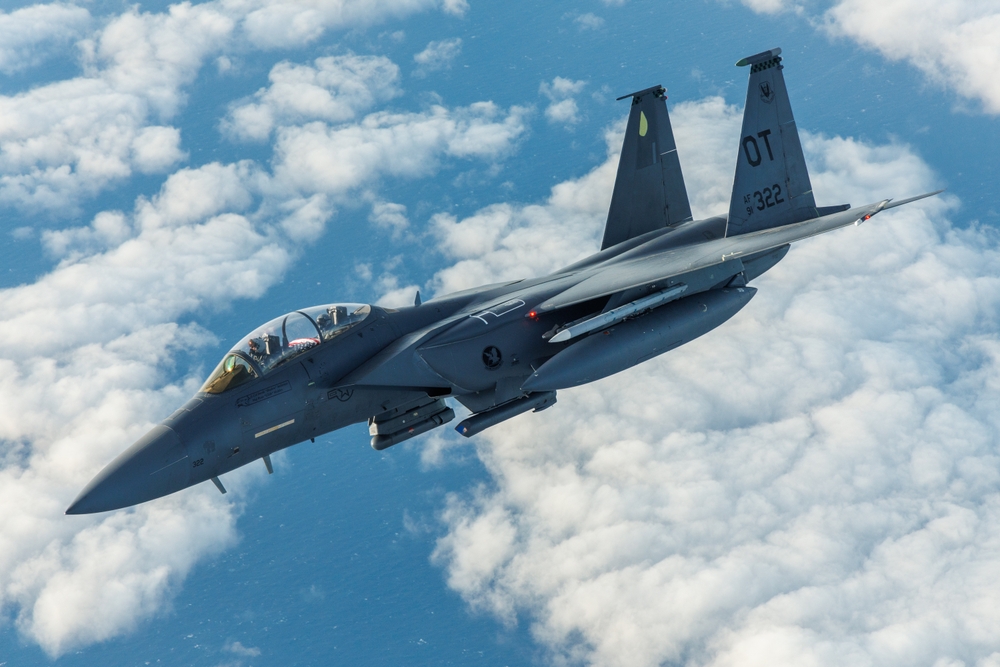
The California National Guard‘s 144th Fighter Wing has mobilized for one of its most critical missions, securing the airspace above Super Bowl LX. As the Patriots and Seahawks prepare to clash at Levi’s Stadium this Sunday, an elite squadron of F-15 pilots maintains a vigilant watch from above, ready to launch within minutes should any unauthorized aircraft breach the protected zone around the Super Bowl venue.
The Federal Aviation Administration has imposed a sweeping 30-mile no-fly radius around the Santa Clara stadium, creating an aerial fortress that prohibits all aircraft from entering during Super Bowl game time. The North American Aerospace Defense Command oversees this restricted zone, monitoring every signal and movement in the sky. Any violation triggers an immediate response protocol that could see fighter jets streaking through California skies faster than Super Bowl fans can finish their halftime snacks.
Fighter Jets on Hair-Trigger Alert for Super Bowl
The 144th Fighter Wing operates under extreme readiness conditions, with pilots prepared to scramble their F-15s at any moment during the Super Bowl. These aviators have spent months drilling for this exact scenario, running countless simulations to sharpen their reflexes and coordination. Lt. Col. Daniel Behrens, a seasoned pilot with the wing, draws parallels between his team’s preparation and that of the athletes competing in the Super Bowl below. The teams practice relentlessly before kickoff, and so do the guardians of the sky above them.
When an intruder enters the forbidden airspace during the Super Bowl, the response mechanism activates with startling efficiency. Col. Joel Pauls, who commands the 144th Fighter Wing, describes how pilots can transition from rest to airborne interception in mere minutes. Someone might be resting in the alert facility one moment, then suddenly racing toward an intercept with radio communications already underway. This remarkable speed ensures that any potential threat faces immediate confrontation before it can endanger the 70,000 Super Bowl fans packed into the stadium.
Drones Emerge as Primary Super Bowl Threat
The proliferation of consumer drones has created a new challenge for Super Bowl aerial security teams. Col. Pauls points to the surge in recreational drone usage nationwide as a growing source of concern for military air defense operations. These small, agile devices can slip through traditional radar systems and pose unique risks in densely populated airspaces. During major events like the Super Bowl, even a well-intentioned hobbyist flying a drone to capture Super Bowl footage could create a dangerous situation requiring immediate military intervention.
The 144th Fighter Wing recently conducted training exercises with the Civil Air Patrol, practicing interception protocols against simulated threats ahead of the Super Bowl. NBC journalist Courtney Kube observed these drills firsthand as pilots pursued mock targets including small Cessna aircraft that might accidentally wander into protected territory. The exercises demonstrated how pilots establish communication with wayward aircraft, identify themselves clearly, and escort the intruders safely out of restricted zones without escalating tensions.
Armed but Focused on De-escalation
While the F-15s carry live weaponry capable of neutralizing Super Bowl threats, the pilots emphasize their commitment to peaceful resolution. Lt. Col. Behrens explains that although they fly armed air defense fighters equipped with live missiles, their communication style remains calm and professional. The goal is always to guide lost or confused pilots away from danger rather than resort to aggressive action. This measured approach reflects the extensive training these guardians receive, preparing them to make split-second decisions that could mean the difference between a minor incident and a catastrophe during the Super Bowl.
The Legendary F-15 Takes Center Stage
The F-15 fighter jet brings an unmatched pedigree to this Super Bowl security mission. With a combat record of 104 victories and zero defeats, the aircraft has earned its affectionate nickname as America’s sweetheart. Master Sgt. Sean Copus, who maintains these formidable machines as an avionics technician, highlights the unique blend of capabilities that make the F-15 ideal for homeland defense. The jet combines blistering speed with extended range, sophisticated weapons systems, and cutting-edge avionics that give pilots every advantage when protecting American skies.
As millions of viewers settle in to watch the Super Bowl unfold, few will think about the silent sentinels circling high above. The California National Guard’s 144th Fighter Wing represents an invisible shield, a layer of protection that allows Americans to gather and celebrate without fear. Their readiness, professionalism, and dedication ensure that the only surprises on this Sunday come from the action on the field, not from the skies above.
