


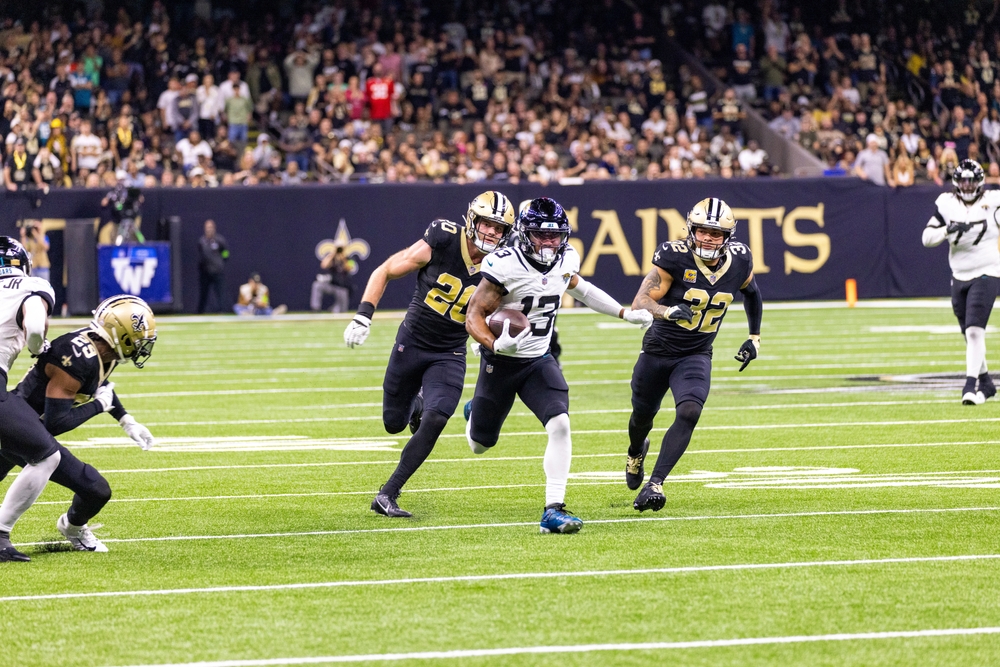
Taysom Hill confirmed Wednesday night that he will not be returning to the New Orleans Saints for a 10th season, closing one of the most unusual and beloved chapters in recent franchise history while leaving open what, if anything, comes next.
In a post to social media that marked his first public comments since the end of the 2025 season, he expressed gratitude to the organization and its fan base while acknowledging that he has spent the offseason trying to determine his future without yet landing on an answer. He said he did not want his silence to be misread as the season opens, and that putting his feelings into words has been difficult. A return to New Orleans, however, is not part of whatever path he chooses.
The statement carried the emotional weight of a goodbye even if Hill stopped short of calling it retirement. He described his nine years in the city as exceeding every expectation he had before arriving, praising the loyalty and passion of the fan base and saying the support shown to him and his family was genuinely unlike anything he had encountered. He said he could not move forward without first taking the time to say thank you.
What made Hill unlike any other
He earned the nickname Swiss Army knife because no job description fit him precisely. He lined up at quarterback, running back, tight end, wide receiver and on special teams during his time in New Orleans, sometimes in the same game or the same drive, creating matchup problems no conventional player profile could replicate.
The statistical record he leaves behind is one of a kind in the entire Super Bowl era. Hill is the only player in that span to have accumulated at least 1,000 yards each via rushing, receiving and passing. He is one of only five players in NFL history to have reached double digits in touchdowns in all three categories, achieving the rushing and passing milestones and then completing the set with his 10th career receiving touchdown in 2023.
When he crossed that threshold, he became the first player to accomplish it since Hall of Famer Frank Gifford, who had done so in 1957. The rarity of the achievement, spanning more than six decades of football, captures something essential about what Hill was.
The final chapter in New Orleans
His last season was shaped by the recovery he had been working through since a significant knee injury in December 2024. He began the 2025 campaign on the physically unable to perform list before returning to play in 13 games, including a final home game in December in which the coaching staff designed plays to help him reach career milestones and score a touchdown.
He said afterward that he could tell his coaches were looking out for him in those moments, and he described feeling moved by the recognition. He became visibly emotional after the game while reflecting on his career, though he declined at the time to say whether he was thinking about retirement.
The Saints general manager said Tuesday that he had recently spoken with Hill but declined to share details of that conversation. He later issued a statement praising Hill as a great teammate, an excellent leader and a mentor, and expressing confidence that a day would come to properly celebrate everything he had contributed.
How it all began
He came to New Orleans in 2017 when the Saints claimed him off waivers from the Green Bay Packers. He went on to play in 118 regular-season games and six postseason contests over the nine seasons that followed, accumulating a body of work that defied easy categorization.
Hill turns 36 next month. Whether he plays somewhere else this season or steps away from the game entirely, the answer to that question is one Hill himself says he has not yet found. What he has found, and what he communicated clearly on Wednesday, is that New Orleans gave him something worth being grateful for, and he wanted to say so before moving on.
