


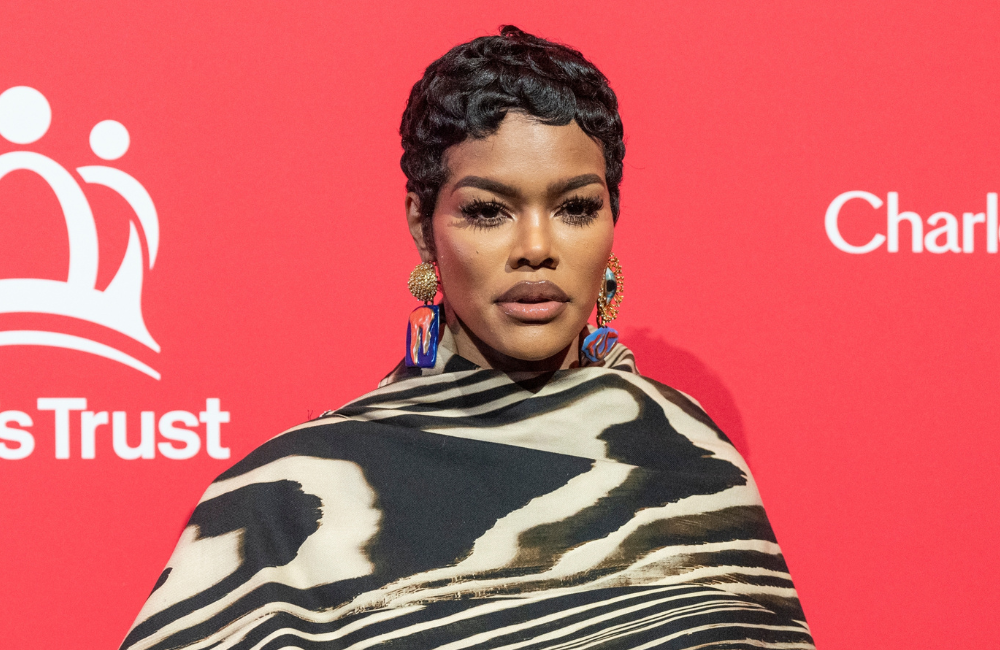
Teyana Taylor walked the red carpet at the 98th Academy Awards on Sunday, March 15, at the Dolby Theatre in Los Angeles wearing a black spaghetti-strap Chanel gown that left little question about who had shown up. A sheer panel exposed her famously sculpted midsection, adorned with black and pearl crystals and white accents. The skirt fell into black-and-white feathers before extending into a dramatic train. It was an entrance designed to be noticed, and it was.
The 35-year-old actress and R&B artist had earned her seat at the ceremony with a Best Supporting Actress nomination for her role as Perfidia Beverly Hills in One Battle After Another, a film that generated as much debate as it did acclaim throughout awards season.
A night of genuine emotion
Once inside the theater, Taylor made her presence felt in a way that had nothing to do with restraint. She was visibly and audibly supportive of the night’s honorees, reacting to the biggest moments with the kind of full-body enthusiasm usually reserved for the people winning. When Michael B. Jordan accepted the Best Actor award for his work in Sinners, Taylor was on her feet. When Amy Madigan took Best Supporting Actress for Weapons after more than four decades in the industry, Taylor again rose from her seat, cheering with unmistakable warmth for a veteran actress receiving a long overdue moment.
When One Battle After Another was called as Best Picture, Taylor joined the cast and crew onstage. In the rush of the moment she reached for director Paul Thomas Anderson in what read as an excited embrace, wrapping her arm around his neck and shoulders. Some online observers described it as a headlock. Others saw a woman in the middle of one of the best nights of her career reaching for the person she had made it with.
A backstage moment that changed the tone
The conversation shifted after the ceremony ended. Footage captured backstage at the Dolby Theatre showed Taylor visibly upset and confronting a male bodyguard, alleging that he had physically shoved her as she attempted to join her cast for a photograph. A Warner Bros. executive accompanying her was reportedly blocked as well. Taylor’s reaction in the footage was immediate and pointed. She called out what she described as a man putting his hands on a woman without justification, and she did not lower her voice to do it.
No formal statement from the parties involved had emerged by the following morning, but the footage spread quickly and became the second front in an already growing conversation about her evening.
The debate that followed
By the morning after, the discourse had grown into something larger than one night at one awards show. Critics online suggested Taylor had misread the room, with some framing the Oscars as a space that called for a different register of behavior. The comparison was quickly challenged by those who noted that director Ryan Coogler had been widely praised that same evening for speaking with unfiltered conviction, and that the two reactions differed primarily in who was doing the behaving.
The thread running through the more substantive part of the conversation was familiar and uncomfortable. Black women navigating elite predominantly white spaces are frequently asked to modulate their expression in ways that are not demanded of others. The same energy that reads as charismatic and passionate in one person can be coded as excessive or aggressive in another, and the coding tends to follow patterns that have little to do with what actually happened.
What the conversation is really about
At the center of everything is a straightforward fact. Teyana Taylor was nominated for one of the most competitive awards in Hollywood, starred in the film that won Best Picture, and spent the evening celebrating with genuine and unperformed joy. The backlash she received for how she occupied that space has renewed a conversation about respectability politics that the industry keeps circling without ever fully resolving.
The irony is not lost. On the morning after Hollywood’s biggest night, Taylor was among the most discussed names in the room, not just for a nomination, but for her presence, her personality, and the way she refused to make herself smaller. That, more than any trophy, may be the most enduring part of her Oscars story.
