


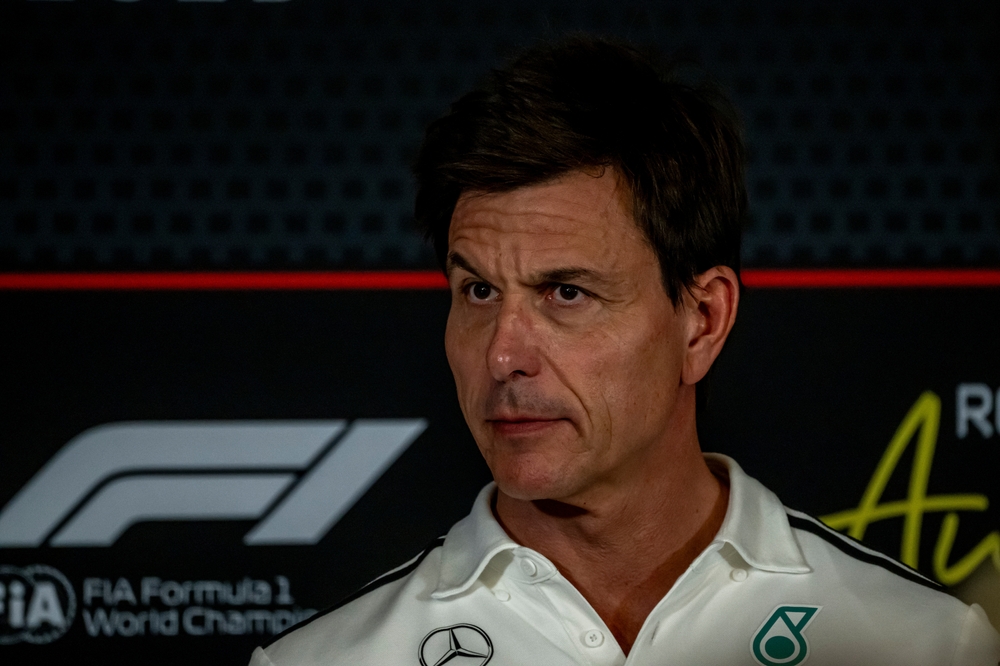
Mercedes team principal Toto Wolff is not dismissing Lewis Hamilton’s championship prospects, and after Sunday’s result in Barcelona, he has good reason to take them seriously. The man who guided Hamilton to six of his seven world titles said plainly this week that he knows what the seven-time champion is capable of when he gains momentum, and described the prospect of facing him in a title fight as something he would rather avoid.
Hamilton’s victory at the Barcelona-Catalunya Grand Prix was the first of the 2026 season for any driver not in a Mercedes. It moved him to within 41 points of championship leader Kimi Antonelli, the young driver who replaced Hamilton at Mercedes last year and had won five consecutive races before Sunday’s retirement with a power unit failure. That retirement, combined with Hamilton’s win, shifted the complexion of the championship in a single afternoon.
A title race that opened up in Spain
Hamilton currently sits third in the drivers’ standings, 41 points behind Antonelli and nine ahead of Mercedes driver George Russell. With 15 races remaining on the calendar, the margin is meaningful but far from decisive. A single retirement, as Sunday demonstrated, can erase 25 points from a championship leader’s advantage in an instant.
Wolff made that arithmetic explicit in his assessment of the title picture, noting that the gap between Hamilton and the lead is well within striking distance given the number of races still to be run. He framed Mercedes’ response as requiring consistent finishing, continued development of both car and power unit, strategic intelligence, and complete concentration. The subtext was clear: Hamilton presents a different kind of pressure than any of the other drivers currently in contention.
What Wolff knows about Hamilton under pressure
The warning Wolff issued was rooted in 12 years of working alongside Hamilton at Mercedes, a partnership that produced six constructors championships and an intimate understanding of how Hamilton responds when he senses an opportunity to close. Wolff described a pattern he had observed repeatedly over their time together, a point at which Hamilton’s campaign shifts from competitive to almost unstoppable, and suggested that point may be approaching.
Wolff said he was genuinely pleased to see his former driver win in Spain and credited a combination of factors for Hamilton’s resurgence. The current generation of Formula 1 cars, he suggested, suits Hamilton’s driving style more naturally than the previous era’s machinery, which was characterized by stiff setups and aerodynamic bouncing that made it difficult for some drivers to extract maximum performance. He also pointed to the apparent harmony between Hamilton and his race engineer at Ferrari as a meaningful factor in the recent improvement.
Personal stability as a performance driver
Wolff went further than technical analysis, touching on the role of personal circumstances in determining how a driver performs at the highest level. He reflected on his own experience of how a stable and supportive personal life translates into professional performance, and suggested that Hamilton appeared to be in a strong place across multiple dimensions simultaneously. When a driver’s emotional, personal, and professional situations align, Wolff argued, the results tend to follow.
Hamilton’s happiness on the Barcelona podium appeared to confirm that assessment. The challenge for Mercedes now is to maintain Antonelli’s development trajectory and Russell’s consistency while a resurgent Hamilton narrows the gap from third place. Wolff built Hamilton into a champion across more than a decade. He understands better than most exactly how difficult stopping him is once the momentum builds.
