


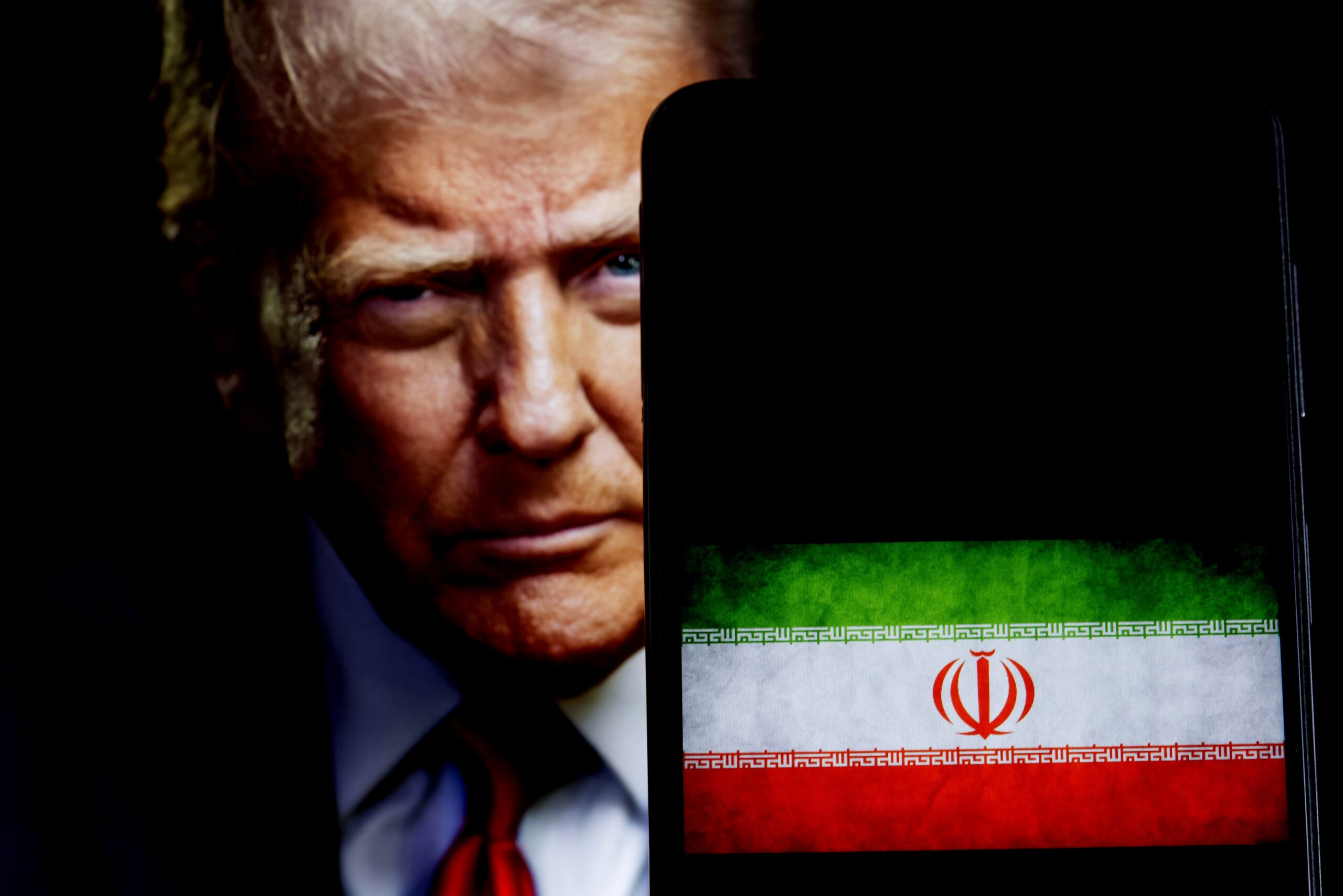
When asked Monday whether the conflict with Iran was winding down or escalating, President Donald Trump told reporters he could not say. The response captured the uncertainty surrounding one of the most consequential foreign policy moments of his presidency, as military pressure mounted and diplomatic efforts appeared to be losing ground.
Trump said at the same press conference that Iran could be removed from the equation in a single night and suggested that night might be Tuesday. He also reiterated a firm deadline of 8 p.m. Eastern time on Tuesday for Iran to reopen the Strait of Hormuz, warning that failure to comply would trigger a wave of strikes targeting energy facilities and bridges.
The military picture
Pentagon Secretary Pete Hegseth, appearing alongside Trump and Joint Chiefs of Staff Chair Gen. Daniel Caine, described Monday as the largest volume of strikes since the opening day of the operation. He indicated Tuesday would bring even more. The statements aligned with Trump’s increasingly urgent language and suggested that whatever diplomatic window may have existed was narrowing quickly.
Trump separately claimed that Iranian civilians were supportive of the strikes on their own infrastructure, characterizing them as willing to absorb the loss of power and basic services in exchange for freedom from the current government. The claim was made without supporting evidence.
Courts pushing back at home
While the military posture hardened abroad, a different kind of resistance was building domestically. Federal district court judges have been issuing rulings at an accelerating pace, challenging the legal basis for a number of the administration’s broader policy moves and at least temporarily blocking several of them. Legal analysts and former prosecutors described a judicial branch increasingly willing to assert itself against what they characterized as executive overreach, a dynamic that has drawn sharp responses from Trump and his allies.
A journalist threatened over a missing airman
Trump also moved to pressure the press on Monday, threatening to pursue criminal action against reporters who published details about a second American airman shot down by Iran on Friday. The airman, severely injured, reportedly concealed himself in a mountain crevice to avoid capture before a United States recovery team reached him under heavy fire. Trump framed the threat as a matter of protecting sensitive operations, but press freedom advocates characterized it as an attempt to intimidate sources and suppress coverage.
Political endorsements and economic warnings
On the domestic political front, Trump endorsed Steve Hilton, a former television host, in the California governor’s race. The move was seen by some Republican strategists as a potential liability, with concerns that an endorsement in the primary could reduce the party’s chances of breaking into the general election runoff in November.
In the financial world, JPMorgan Chase chief executive Jamie Dimon urged the White House to prioritize strengthening economic ties with American allies, warning of the consequences of neglecting those relationships. The remarks were widely read as a veiled rebuke of the administration’s approach to international partnerships and added to a growing list of establishment voices expressing concern about the direction of American foreign and economic policy.
Trump versus Starmer
Trump took another public swipe at British Prime Minister Keir Starmer during an Easter Monday event at the White House, this time drawing a comparison to Neville Chamberlain, the British leader whose name has become synonymous with failed appeasement. Starmer has declined to endorse the United States and Israeli military campaign against Iran, a position that has drawn repeated criticism from Trump. The latest remarks underscored the strain in the bilateral relationship, which has remained cool despite multiple attempts at diplomatic engagement between the two governments.
