


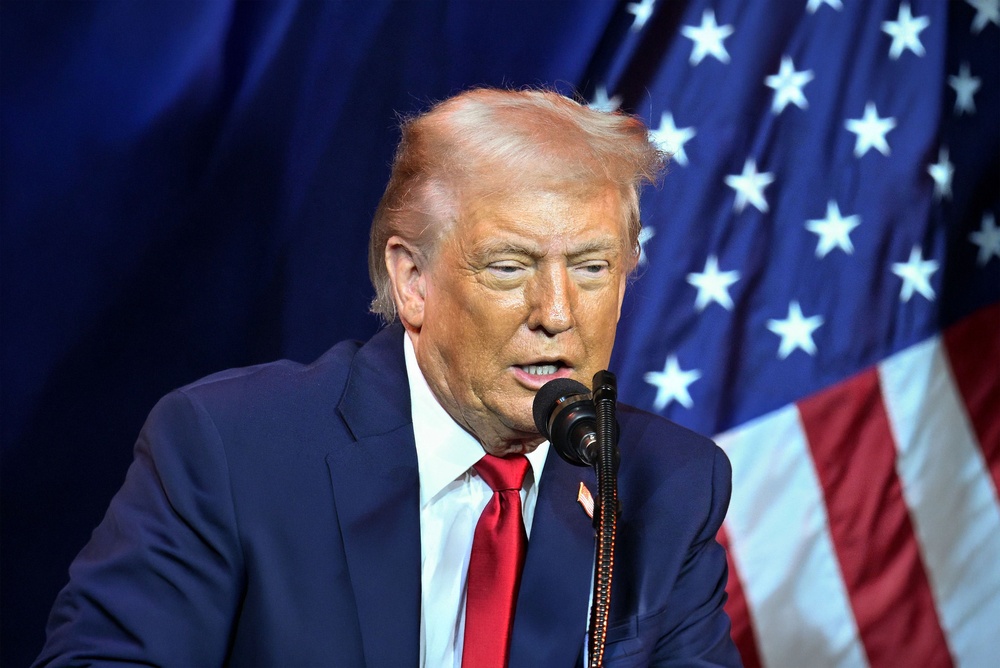
The specter of armed conflict between Washington and Tehran intensified this week as former President Donald Trump issued stark warnings about Iran’s nuclear ambitions while Supreme Leader Ayatollah Ali Khamenei doubled down on predictions of regional catastrophe should American forces strike.
Trump‘s latest remarks followed months of deteriorating relations, marked by American airstrikes on Iranian nuclear installations and a brutal government crackdown on demonstrators that human rights groups say has claimed thousands of lives. The former president made clear that diplomatic patience has limits, suggesting military options remain firmly on the table.
American Naval Power on Display
Speaking to reporters, Trump dismissed Khamenei’s warnings with characteristic bluntness, pointing to the formidable American naval presence now positioned within striking distance of Iranian shores. The deployment represents one of the largest concentrations of military assets in the region in recent years, featuring aircraft carriers and advanced weaponry capable of crippling Iran’s nuclear infrastructure.
While Trump expressed preference for a negotiated settlement, he left little doubt about American resolve. The message was unmistakable. Iran faces a choice between compromise and confrontation, with the latter promising severe repercussions for the Islamic Republic.
The former president’s January comments calling for new leadership in Tehran have taken on fresh significance as popular unrest continues roiling Iranian cities. Trump directly addressed protestors, promising that assistance would arrive, though he offered few specifics about what form such support might take. This rhetoric echoes decades of American policy debates about whether Washington should actively pursue regime change in Iran or focus solely on containing its nuclear program.
Diplomatic Channels Remain Frozen
Iranian Foreign Minister Abbas Araghchi recently confirmed that no talks with Washington have been scheduled, though he stopped short of ruling out future dialogue entirely. This standoff reflects the fundamental mistrust defining relations between the nations since Trump withdrew from the nuclear agreement in 2018.
That deal, formally known as the Joint Comprehensive Plan of Action, had imposed strict limits on Iranian enrichment activities in exchange for sanctions relief. Its collapse removed critical guardrails, allowing Tehran to resume advancing its nuclear capabilities while leaving Washington with fewer diplomatic tools.
Trump’s Military Threats Escalate Tensions
Trump’s claim last week that a massive armada was steaming toward Iran raised alarm bells internationally. He drew parallels to recent American military operations in Venezuela, suggesting similar decisive action could unfold against Iranian targets if provocations continue.
Tehran responded with equal force. Ali Shamkhani, a senior advisor to Khamenei, warned that any American attack would trigger immediate and comprehensive retaliation. Iranian officials have repeatedly threatened to close the Strait of Hormuz, destabilize neighboring countries, and activate proxy forces throughout the Middle East.
Nuclear Ambitions Drive Crisis
At the heart of this confrontation lies Iran’s nuclear program, which has expanded significantly since the deal’s collapse. Western intelligence agencies believe Tehran has accumulated enough enriched uranium to produce multiple weapons should it choose to do so, though Iran maintains its program serves purely civilian purposes.
Trump has made preventing an Iranian bomb a centerpiece of his Middle East policy, arguing that a nuclear-armed Tehran would destabilize the entire region and threaten American allies. Critics counter that his confrontational approach has only accelerated Iranian progress toward weapons capability.
Regional Implications Loom Large
The current crisis extends far beyond bilateral tensions. Israel, Saudi Arabia, and other regional powers watch nervously, knowing that any conflict would likely draw them in. Oil markets have already shown volatility, with prices spiking on fears that Iranian retaliation could disrupt global energy supplies.
Meanwhile, Russia and China continue backing Tehran diplomatically, complicating any potential international consensus on punitive measures, even as Democrats in the United States urge restraint and renewed diplomatic engagement. This great power dimension adds layers of complexity to an already dangerous situation.
As rhetoric intensifies, the window for diplomacy appears to narrow. Both sides have staked out maximalist positions that leave little room for compromise. Trump demands complete Iranian capitulation on nuclear enrichment and regional behavior, while Khamenei insists on American acceptance of Iranian sovereignty and security needs.
The international community faces a grim choice to accept the growing risk of military confrontation or find creative diplomatic solutions that address legitimate concerns on both sides. Previous efforts at mediation have failed, leaving few obvious paths toward de-escalation.
What remains clear is that the current trajectory leads toward conflict rather than resolution. Whether cooler heads prevail or threats materialize into actual warfare will determine not just the fate of Iranian nuclear facilities, but potentially the stability of an entire region already scarred by decades of conflict.
