


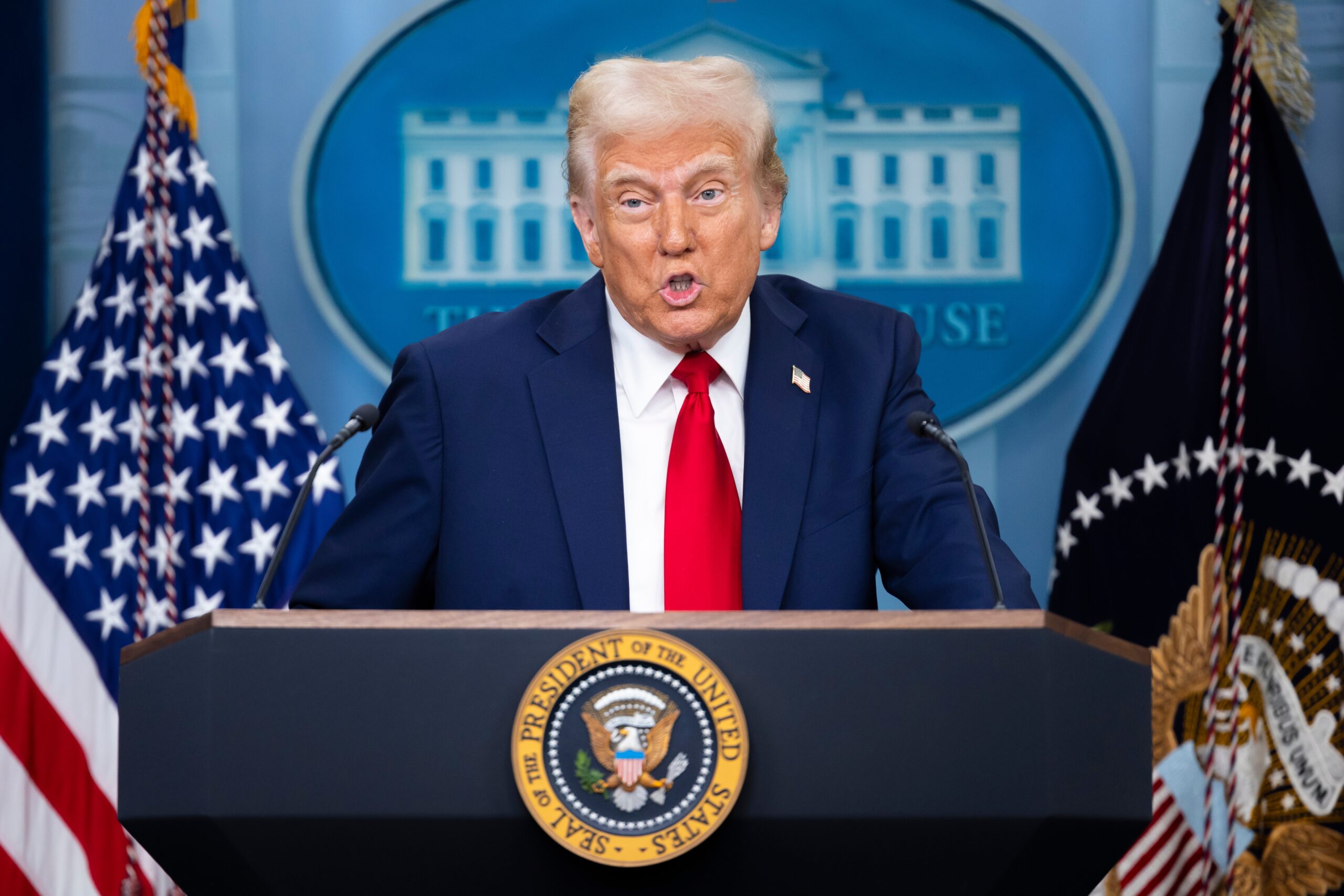
President Donald Trump said Thursday, Nov. 5, that an agreement to end Russia’s war in Ukraine could become a much bigger deal, one that might involve all of Europe. He made the comment at the White House after meeting Kirill Dmitriev, an envoy for Russian President Vladimir Putin, but gave no details. Ukrainian representatives were also in Washington that day, and Trump said he did not meet with them.
Within a day, European leaders pushed back, Ukraine said it knew little about the plan, and the Kremlin said it had no details either. The reactions came just days before U.S.-mediated talks between Ukraine and Russia resume in Abu Dhabi, the first round in that format since February.
What is Trump’s ‘all of Europe’ deal?
The clearest outline came from Trump envoy Jared Kushner in a post on X. He described a broader European security framework built around five goals. Those goals are permanent security consultations, reliable crisis communication, more military transparency, matching steps by each side to lower the risk of escalation, and a lasting framework for stability in Europe.
Kushner wrote that NATO would remain central to Europe’s defense. He said every country would keep control over its own security and alliances, and no country would get a veto over another country’s choices. Talks will continue through what he called the Shell Bay format, named for envoy Steve Witkoff’s golf club in Florida, where U.S. and Ukrainian negotiators met in November 2025. Kushner said European partners would be consulted on the sidelines in Abu Dhabi and brought in more directly if progress is made.
Supporters say the plan echoes Cold War arms control and confidence-building diplomacy. Russia strategist Glen Howard told RFE/RL that the plan could reassure Ukraine and Europe while also putting pressure on Moscow.
Why did Europe push back on Trump’s plan?
Speaking in Warsaw on Friday, EU foreign policy chief Kaja Kallas said Europe already has a security system and that the real problem is Russia breaking the treaties behind it. She said Putin has no veto over European security and that the EU would need to be involved for any deal to work. Polish Foreign Minister Radoslaw Sikorski said a deal made over Europe’s head would be impossible, not just unwise. Ukrainian Foreign Minister Andriy Sybiha said the focus should be on defending against Russia, not dividing Europe into spheres of influence.
Three European officials contacted by CNN said they did not know what Trump and Kushner meant. Ukrainian President Volodymyr Zelensky told CNN he knew few details and warned that any such deal would be complicated.
Europe’s concern has history behind it. Before the full invasion in 2022, Russia demanded that NATO pull its forces out of countries that joined the alliance after 1997. NATO refused.
Where do Trump, Europe and Russia actually agree?
Most coverage has missed one point. All three sides are saying versions of the same thing. Kushner says no country gets a veto. Kallas says Putin gets no veto. Kremlin spokesman Dmitry Peskov said Russia will need to talk with Europe about security sooner or later.
The real dispute is over who sits at the table. Europe is not part of the Abu Dhabi talks, and Peskov said it cannot join because the three-party format was already agreed. He also said Europe hasn’t named a negotiator. Everyone agrees Europe should be in the room eventually. Nobody agrees on when or through whom.
What happens next in Trump’s Ukraine talks?
The Abu Dhabi talks are expected to begin Nov. 10. CNN reports Moscow is sending Vladimir Medinsky, who led its delegation at earlier talks, to head its team. Trump also spoke by phone with German Chancellor Friedrich Merz.
Opinions on Trump’s approach are sharply divided. The administration argues that a broad framework could end the war and lower the risk of a future one, and Trump predicted that everyone would be happy with the result. Critics see more risk. In a CNN analysis, Nick Paton Walsh argued that loose talk of a deal could encourage Putin to push harder on the battlefield. Democratic investigators have asked whether business deals Dmitriev has promoted could benefit people close to Trump. Supporters respond that talking directly with Moscow is the only realistic way to end a war now nearing its fifth year.
The Abu Dhabi round will be the first real test of whether this framework goes anywhere.
