


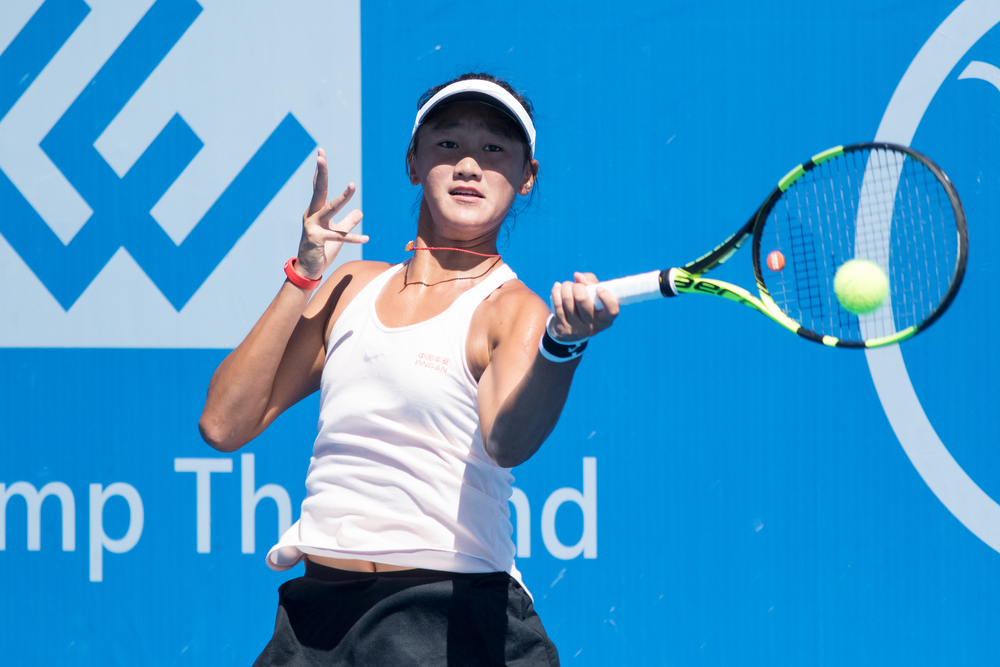
Wang Xiyu won Asian Games women’s singles gold in Nagoya on Friday, beating compatriot Zhang Shuai 6 to 2, 6 to 1 in an all Chinese final that also secured her an automatic place at the 2028 Olympics in Los Angeles.
What did the win deliver?
Two things at once. The medal and a guaranteed Olympic berth, which removes the ranking pressure most players carry into a qualification cycle. For a player ranked outside the top 50, locking in a Games place three years out is arguably worth more than the gold itself.
Who did she beat?
Someone she described as a mentor. Zhang Shuai is 37 and a two time Grand Slam doubles champion who has guided younger Chinese players for years. Wang Xiyu said she respects her deeply, that what Zhang has been through is itself a form of encouragement, and that the greatest respect she could show on court was to play her best. She also described Zhang as a figure who holds the team together and shows younger players how to support one another.
Was the match close?
No. A 6 to 2, 6 to 1 scoreline in a final between players who know each other well suggests one arrived with considerably more in reserve, which matches a 25 year old facing a 37 year old across two sets.
How did she reach the final?
By beating the pre tournament favourite. She defeated Alex Eala of the Philippines 3 to 6, 6 to 3, 6 to 2 on Thursday, recovering from a set down against a player ranked 18th in the world. Eala took bronze, as did the other losing semifinalist.
What did that cost Eala?
Possibly $10,000. She skipped the China Open in Beijing to play in Nagoya and represent her country, and may face a fine for withdrawing from a mandatory 1000 level WTA event. She had said publicly that the decision was not taken lightly. Players at her ranking carry commitments that make national representation a choice with a price rather than an assumption.
Is this Wang’s first Olympics?
Her second. She lost in the third round in Paris two years ago to Iga Swiatek, which is not an unreasonable place to exit. Arriving at a second Games with qualification already settled is a different proposition from arriving having scrambled for it.
Why does an automatic berth matter so much?
Because Olympic qualification in tennis runs through rankings and national quotas, and countries with deep fields can leave strong players out. China has several women near the relevant threshold, which means a guaranteed place removes a genuine risk rather than a theoretical one.
What comes next?
Nothing immediate on this stage. Wang Xiyu returns to the tour with a title that does not count toward her ranking and a Los Angeles place that does not expire.
