


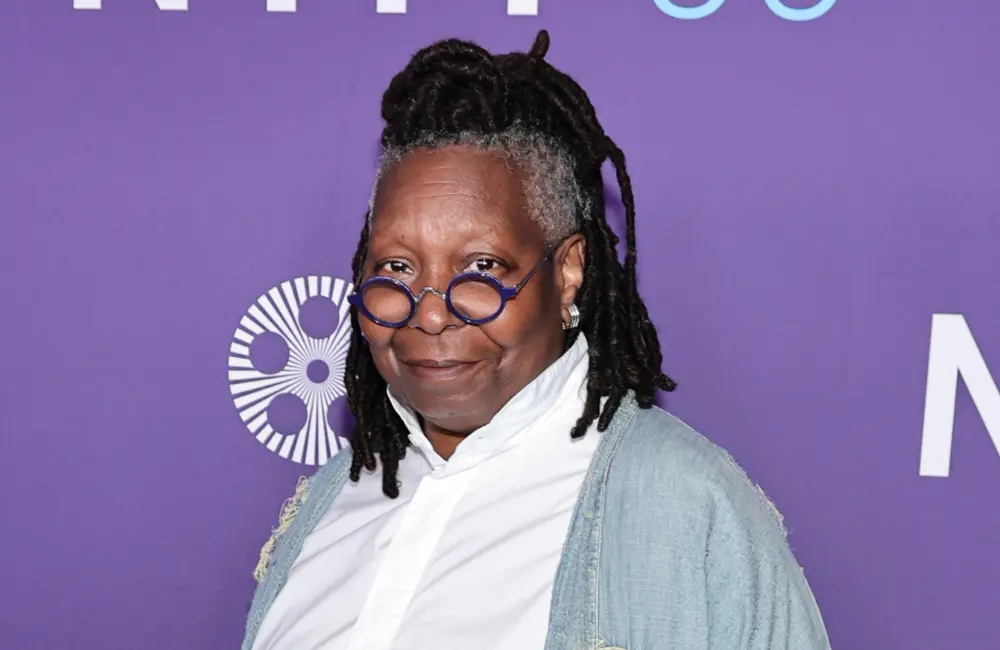
A conversation about political realignment turned into one of the most charged moments of the season on The View when cohosts found themselves sharply divided over how to handle Marjorie Taylor Greene’s evolving stance on Donald Trump. What started as a policy discussion quickly became something far more personal, and moderator Whoopi Goldberg had to step in before things went any further off the rails.
The episode opened with Whoopi framing a broader question for the table: could Americans from opposite ends of the political spectrum find common ground in their opposition to Trump, even if they agreed on little else? Greene, the Georgia politician who spent years as one of Trump’s most visible and vocal allies, has in recent months begun publicly criticizing the president. The shift raised an uncomfortable but unavoidable question about whether that kind of change deserves to be welcomed or treated with deep suspicion.
A table divided on forgiveness and strategy
Joy Behar made her position clear almost immediately. She argued that anyone willing to distance themselves from Trump should be embraced, framing the moment as a potential strategic opening for those who oppose his agenda. Welcoming people who have changed their minds, she suggested, is simply smart politics.
Sara Haines landed somewhere in the middle. She said she could accept specific policy shifts but was not ready to offer a full embrace of a figure whose record she viewed as deeply troubling on multiple fronts, particularly around issues tied to antisemitism during Greene’s political career.
Sunny Hostin was the most unyielding voice at the table. She pushed back hard against the idea of extending any meaningful welcome, arguing that people who supported Trump through multiple election cycles did so with full knowledge of who he was. For Hostin, the damage already done was not something that a change of rhetoric could simply erase. She called it unforgivable and held that position firmly even as the debate intensified around her.
Whoopi draws the line
The tension peaked when conservative panelist Alyssa Farah Griffin, a former Trump White House staffer who has long staked out an anti-Trump position at the table, weighed in on Behar’s side. Before Griffin could finish her thought, Hostin cut in with a pointed challenge that stopped the conversation cold. That was the moment Whoopi stepped in directly, urging Hostin to let Griffin speak and telling her plainly to calm down.
Griffin went on to make a practical case for coalition building, suggesting that Democrats who have explicitly ruled out Trump voters as a base of support have paid a price for that strategy at the ballot box. She pointed to the 2024 election as evidence that opposition to Trump alone was not enough to win, and argued that growing a coalition required accepting people who had once been on the wrong side.
Hostin was unmoved. She maintained that Trump had not changed and that those who voted for him bore responsibility for what followed.
Whoopi closes with a challenge
Whoopi brought the segment home not with a verdict but with a challenge directed at viewers and at Greene’s former supporters alike. She suggested that the real value in Greene speaking out was not about personal redemption but about reach. If someone who once stood firmly in Trump’s corner was now saying something was wrong, that message carried weight precisely because of where it was coming from. The goal, in Whoopi’s framing, was not a warm reunion but a practical one: get the message out to the people who needed to hear it most.
It was a measured close to a conversation that had been anything but, and it was a reminder of why Whoopi’s role at the table matters most when the temperature rises.
