


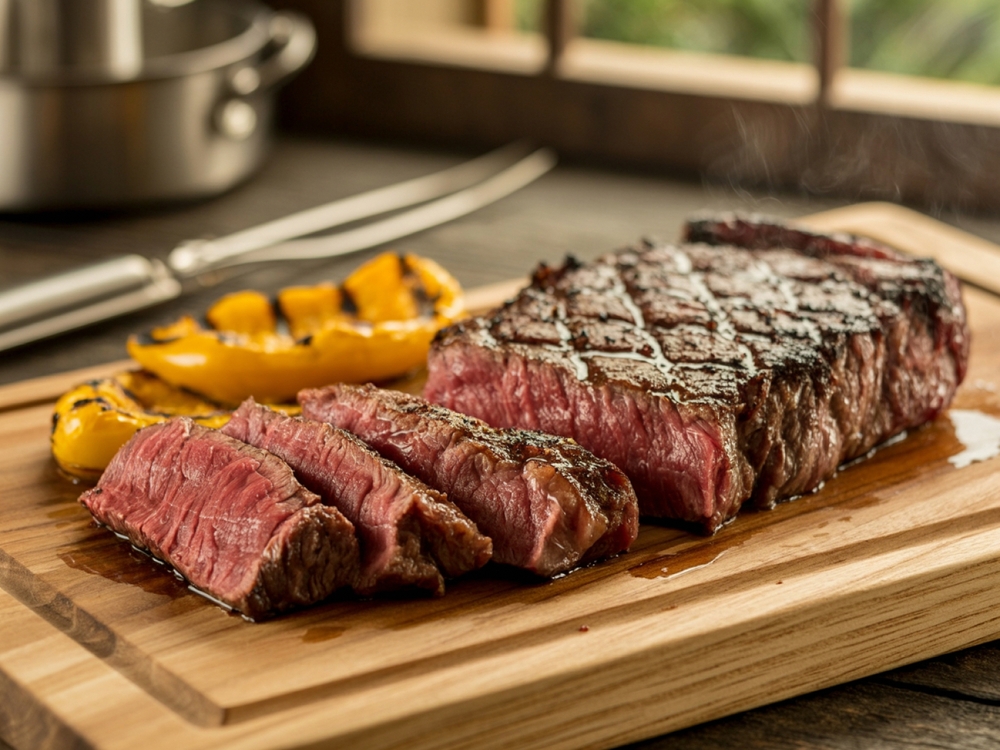
801 Restaurant Group, the Kansas-based operator behind the upscale 801 Chophouse chain, filed for Chapter 11 bankruptcy protection on April 10 in the U.S. Bankruptcy Court for the District of Kansas. The filing lists assets of nearly $15 million against liabilities of $18.7 million, with creditors’ claims that include more than $3 million in lease guarantees and a $1.8 million claim from the U.S. Small Business Administration.
The company, which is represented by Brown and Ruprecht PC, did not specify what led to its financial difficulties. Chapter 11 allows a business to continue operating while it reorganizes its debt obligations, and 801 Restaurant Group has indicated that its remaining locations are expected to stay open during that process.
What the 801 Chophouse closure in Minneapolis signals
The group operates eight 801 Chophouse locations across Denver, Des Moines, Kansas City, Leawood, Minneapolis, Omaha, St. Louis, and Tysons Corner in Virginia. It opened its first location in Des Moines in 1993 and has built a reputation around aged USDA prime cuts, Japanese and domestic Wagyu beef, in-house pastry desserts, small-batch bourbons, and an award-winning wine list. Menu prices reflect that positioning, with its Rosewood Ranches American ribeye at $145 and a dry-aged porterhouse at $143.
Before the chophouse bankruptcy filing, the company had already closed 801 on Nicollet, a newer concept on the ground floor of the U.S. Bancorp Center in downtown Minneapolis. That space had previously operated as 801 Fish, which opened in late 2e023 and shut down in mid-2025. Signs posted at both entrances cited unspecified circumstances for the closure. Before 801 Fish, McCormick and Schmick’s had occupied that corner of Nicollet Mall for years before exiting during the pandemic.
Beef prices are reshaping the steakhouse business
The backdrop to this filing is a cattle market under serious strain. The U.S. beef cattle herd fell to 86.2 million head as of the latest U.S. Department of Agriculture count, a 75-year low. That supply crunch has pushed steak prices to $12.73 per pound in March 2026, a 16% increase, while ground beef reached $6.70 per pound. A decade ago, ground beef averaged $3.75 per pound.
For restaurants built around premium cuts, those numbers are not just inconvenient. They are existential. As input costs rise, menu prices follow, and at a certain point, consumers pull back. That dynamic has been playing out across the broader steakhouse sector for several years now.
801 Chophouse is not alone in this struggle
The Chophouse restaurant industry has seen a wave of Chapter 11 filings in recent years, including major chains like Red Lobster and Hooters. Steakhouses specifically have faced compounding pressure from rising costs and shifting dining habits.
Outback Steakhouse closed 41 locations in 2025 after identifying underperforming restaurants with aging leases. Fleming’s Prime Steakhouse, also operated by Bloomin’ Brands, announced the closure of its Houston location on April 18, 2026, after 25 years, citing a decision not to renew its lease.
McCormick and Schmick’s, once a 60-location chain, fell to 13 restaurants by the end of 2025 after sales declined by more than 10% in 2024 alone.
The pattern suggests that the economics of the full-service steakhouse model are under fundamental pressure, not just cyclical stress. Whether 801 Restaurant Group can navigate its restructuring and stabilize its eight remaining locations will depend on how aggressively it can renegotiate its obligations and whether consumer demand for premium beef holds at current price points.
