


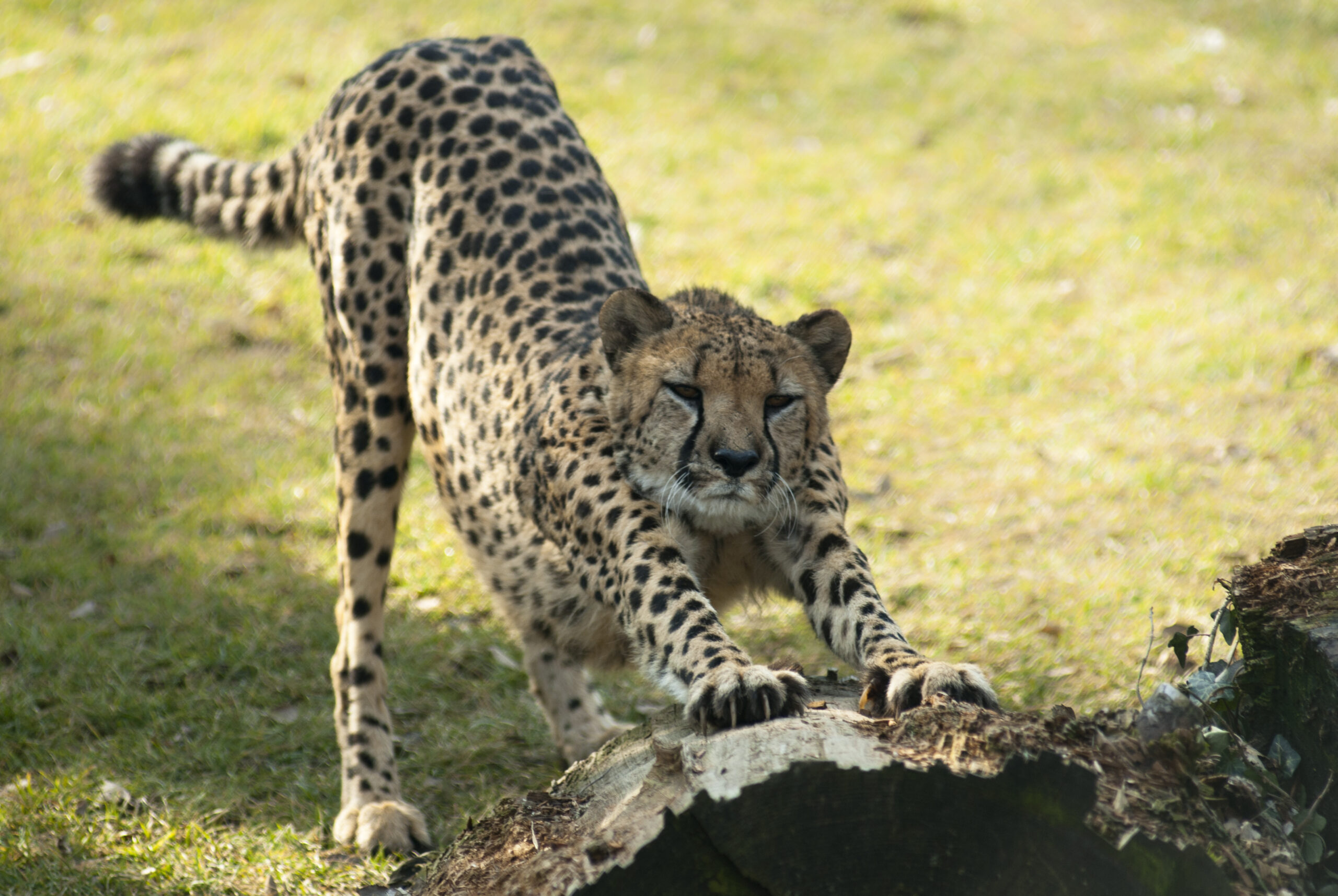
The caves near Arar, a quiet city in northern Saudi Arabia, weren’t supposed to hold any secrets. Scientists from the National Center for Wildlife were doing routine wildlife surveys in 2022 and 2023 when they stumbled onto something that had no business being there seven naturally mummified cheetahs, tucked inside five separate caves, soft tissue and all. Nobody ordered that discovery. It just showed up.
Now, after analyzing the DNA of three of those mummies, researchers are sitting on findings that could completely reshape how and which cheetahs get reintroduced to the Arabian Peninsula. And honestly? The story is wilder than anyone expected.
A case of mistaken identity for an entire subspecies
For years, scientists assumed the only cheetah that ever called Saudi Arabia home was the Asiatic cheetah, Acinonyx jubatus venaticus a critically endangered subspecies with a small surviving population clinging to existence in Iran. That was the accepted narrative. Case closed, or so everyone thought.
Then the DNA results came back and flipped the script entirely. Two of the oldest mummified specimens weren’t Asiatic cheetahs at all. They were genetically closer to Acinonyx jubatus hecki the Northwest African cheetah. An African subspecies, found in caves in Saudi Arabia. The Arabian Peninsula, it turns out, wasn’t just a pit stop. It was a crossroads.
The findings, published in January in the journal Communications Earth & Environment, mark the first documented case of natural mummification in cheetahs and the first physical proof that multiple cheetah subspecies once roamed this part of the world. It’s the kind of discovery that makes researchers do a double take and then do it again.
A timeline older than you’d think
Alongside the seven mummies, researchers also found skeletal remains of 54 additional cats within the same cave system. Scientists dated five of those skeletons, with the oldest clocking in at roughly 4,000 years. Two of the analyzed mummies, however, dated to somewhere between 130 and 1,870 years ago meaning cheetahs were alive and well in Saudi Arabia far more recently than anyone had assumed.
That detail matters more than it might seem. It shifts the conversation from ancient history to near-recent ecology, and that changes what’s possible when it comes to conservation planning.
Cheetahs once covered a sweeping range across Africa and parts of Asia. Today, they survive in just 9% of that historic territory. In the Arabian Peninsula specifically, they were declared locally extinct in the 1970s. But the presence of younger remains tells a different story one where these animals weren’t just ancient visitors but relatively recent residents.
Why cave mummies are such a big deal for science
Extracting complete genome sequences from naturally mummified large felines had never been done before. The conditions inside those hyper-arid Saudi caves essentially did the preservation work that scientists usually have to engineer in a lab. The result is an unprecedented genetic snapshot of a lost population.
Beyond the DNA itself, the fact that these cheetahs were using caves is its own puzzle. Cave-dwelling is not cheetah behavior not even close. Researchers are actively investigating why these animals were there in the first place, and whether there’s a pattern to it.
What this means for bringing cheetahs back
Here’s where it gets exciting. The discovery doesn’t just tell scientists what once was it gives conservationists a roadmap for what could be again.
Saudi Arabia has made major strides in wildlife protection, with large, managed reserves replacing the overhunting and land degradation that historically gutted the region’s animal populations. Prey species like gazelles are already being successfully restored. The primary threats that once made cheetah survival impossible habitat loss, human encroachment, competition from lions have been significantly reduced.
The presence of young animals among the cave remains is particularly telling. These weren’t cheetahs passing through on some ancient migration route. They were breeding. They were raising families. They were building lives in the desert. That kind of evidence transforms cheetah reintroduction from a hopeful conservation idea into something grounded in hard, genomic fact.
Knowing which subspecies actually thrived in this landscape means that any future reintroduction effort can prioritize ecologically appropriate animals rather than importing cheetahs from completely different environments and hoping for the best. That’s the difference between a scientific plan and a gamble.
The Arabian Peninsula, long written off as a dead end for big cats, is starting to look more like a bridge one that’s worth rebuilding.
