


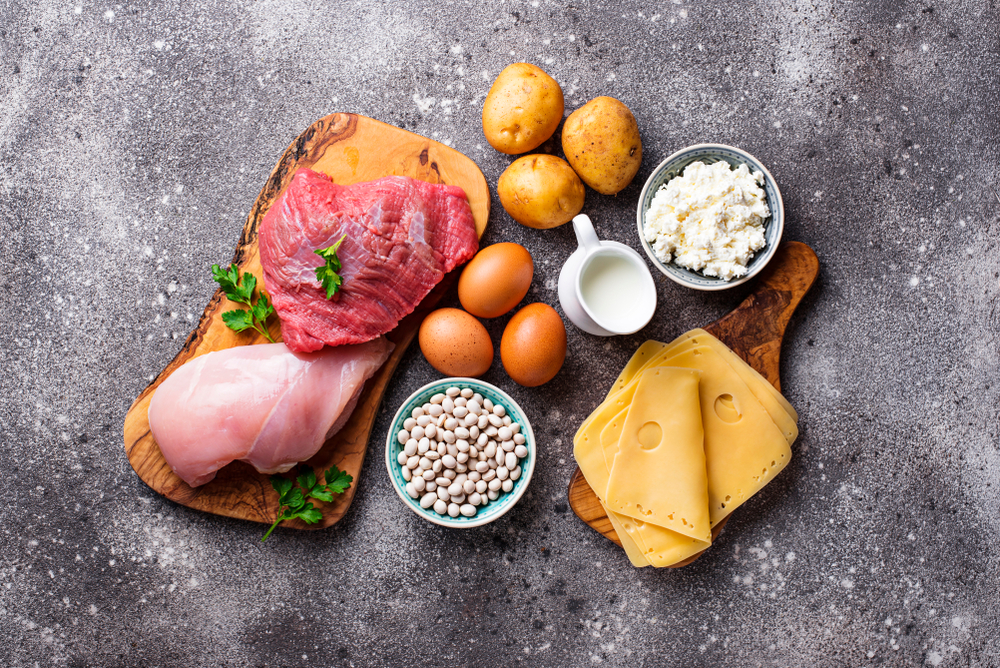
For decades, gym culture operated on a widely accepted rule: the body can only utilize somewhere between 30 and 40 grams of protein in a single meal. Anything beyond that threshold, the thinking went, was simply burned off as fuel or otherwise wasted. The practical implication was that protein intake should be spread evenly across four to six meals per day to maximize muscle building, a structure that worked well for people with flexible schedules but left little room for anyone eating differently.
The problem, it turns out, is that this rule was never really tested in a rigorous way. It was an inference drawn from older, limited research rather than a conclusion supported by direct measurement. New data is now telling a very different story.
What a closer look at 100 grams revealed
A recent study examined what actually happens inside the body when protein intake goes well beyond the traditional ceiling. Researchers divided 36 resistance-trained men into three groups, giving one group no protein after a workout, a second group 25 grams and a third group 100 grams. Muscle protein synthesis was then tracked across a 12-hour window using a method called stable isotope tracing, which follows ingested protein as it moves through the body rather than simply estimating what might be happening.
The results challenged nearly everything the fitness world had assumed. Rather than matching the 25-gram group and plateauing, the 100-gram group showed higher rates of muscle protein synthesis throughout the entire measurement period. The gap between groups actually widened over time, and because the researchers stopped measuring at 12 hours, the anabolic effect may have continued beyond that point.
Equally important was what happened to the excess protein. Rather than being oxidized at high rates, as the old model predicted, the additional amino acids were being put to use. Oxidation accounted for less than 15 percent of the surplus intake, meaning the vast majority of that 100-gram dose was contributing to something productive in the body rather than disappearing.
What this means for how you eat
The practical implications extend well beyond competitive athletes. For people who follow intermittent fasting, have demanding schedules that make multiple meals difficult or simply prefer eating fewer larger meals, these findings offer meaningful reassurance. A single protein-rich meal could sustain an anabolic state for potentially half a day, which makes the idea of needing to eat six times a day to protect muscle gains look considerably less urgent than it once did.
The study also found something unexpected in the area of connective tissue. Protein synthesis in tendons and ligaments, structures that had long been considered largely unresponsive to protein feeding, also increased in the higher-intake group. That finding matters not just for people focused on muscle growth but for anyone interested in staying durable and reducing injury risk over time.
The limits of one study
Intellectual honesty requires noting what this research does not prove. The study involved 36 young men, a narrow demographic that limits how broadly the findings can be applied. Women, older adults and people with different training backgrounds may respond differently, and further research will be needed to confirm whether these results hold across a wider population.
The takeaway is also not that meal timing and protein distribution are irrelevant. Spreading protein intake across well-timed meals likely still offers benefits for people who can manage it consistently. But the idea that the body ruthlessly discards protein beyond an arbitrary cutoff has been significantly undermined.
The body, it turns out, is considerably more flexible than the old rules suggested. Rather than capping out and throwing the rest away, it simply takes its time, working through what it has been given across hours rather than minutes. For anyone who has spent years stressing about hitting precise protein windows, that may be the most useful thing the research has to offer.
