


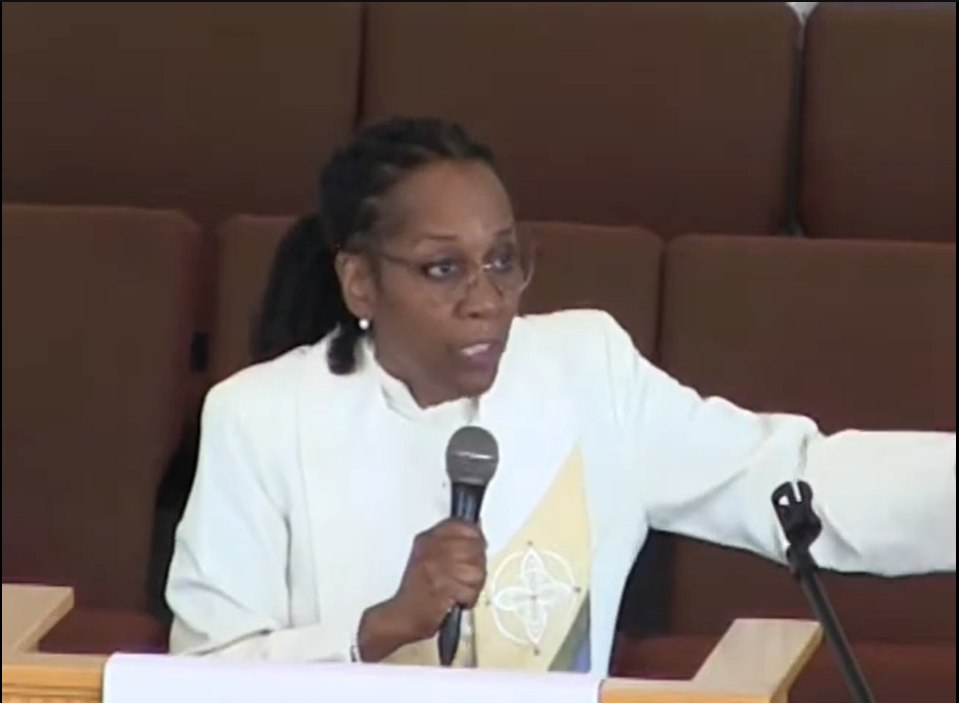
Rev. Dr. Wanda Bynum Duckett is not slowing down. She is speeding up and she is doing it with a rhythm that sounds less like a traditional Sunday sermon and more like a spoken word set at a packed poetry venue.
Duckett, an ordained United Methodist minister with graduate degrees from St. Mary’s Seminary in Baltimore and Wesley Theological Seminary in Washington, D.C., spent years working within the structures of institutional religion. She served as superintendent of the United Methodist Church’s former Baltimore Metropolitan District for eight years a role that placed her among the more prominent voices in her denomination.
But somewhere along the way, she began to feel called in a different direction. Not away from the church, but deeper into it through a door most congregations had never thought to open.
That door led her to poetry, hip-hop and what she now calls Sacred Slam.
What Sacred Slam actually is
Sacred Slam is not a performance gimmick or a one-time event. For Duckett, it is a full worship philosophy one rooted in the belief that the spoken word has always been divine.
She draws a direct line between scripture and the oral traditions that have long lived in Black culture, pointing to the lyrical cadences of figures like Rev. Jesse Jackson as evidence that the Black church has always had poetry in its bones. The difference now is that she is naming it, claiming it and building an entire ministry around it.
Under her creative ministry brand, Spoken by Duckett, she leads workshops and coaching sessions designed to help others find their own poetic voices and use them in service of their faith. She has also organized events like the Seven Last Words of Poetry nights held on Good Friday, where worship happens in a café-style setting complete with live music and a DJ a far cry from the stiff formality that has driven many younger believers away from organized religion.
Why Gen Z is actually showing up
One of the more telling signs that Duckett’s approach is working came not from a survey or a church membership report, but from the sound inside a sanctuary. During one of her rhythmic sermons, congregants particularly younger ones began snapping their fingers. It was a small moment, but it meant everything.
That kind of instinctive, cultural response told her she was speaking a language her audience already knew. For Gen Z and millennials, many of whom have grown up with hip-hop as a primary emotional and philosophical framework, hearing those same cadences in a worship space can feel like finally being seen.
Duckett has leaned into that connection deliberately. Rather than asking young people to adapt to the church’s existing language, she has brought the church to meet them in theirs.
Echoes of the Harlem Renaissance
Duckett’s larger vision extends beyond individual services. She imagines a network of gatherings modeled after the poetry salons of the Harlem Renaissance spaces where creativity, community and faith intersect without hierarchy or pretense.
In those salons, the art was the theology. Langston Hughes, Zora Neale Hurston and their contemporaries were not just writers; they were prophets of a culture finding its footing. Duckett sees that same potential in today’s young Black poets and artists, and she wants the church to be the room where they are welcomed, not just tolerated.
She is actively working to introduce younger poets to faith communities, building bridges between two worlds that have often eyed each other with suspicion.
A movement still in motion
Not everyone in traditional church settings has embraced Sacred Slam with open arms. Some congregants remain uncertain about where hip-hop ends and worship begins. But Duckett has continued steadily, making the case through the work itself rather than through argument.
Her ministry is a living demonstration that Black church tradition is not a fixed artifact to be preserved under glass. It is a living, breathing expression of a people’s relationship with the divine and it has always made room for new voices, new rhythms and new ways of saying the oldest truths.
Sacred Slam is one of those ways. And Rev. Dr. Wanda Bynum Duckett is making sure it is heard.
