


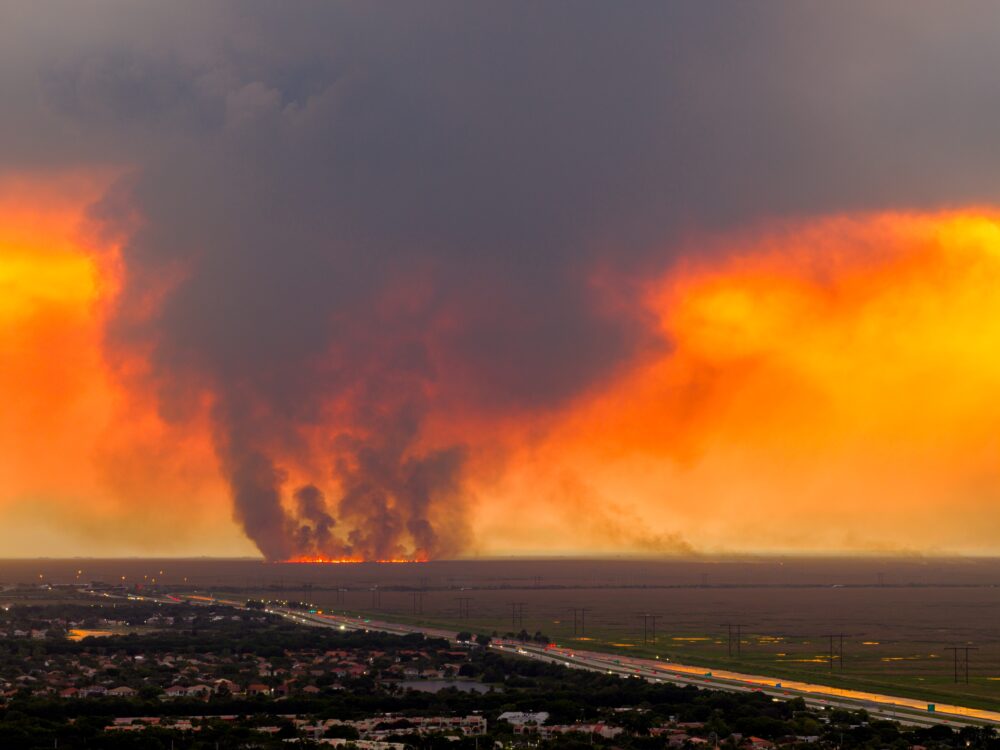
A series of fast moving wildfires have swept through the Southeast, leaving a trail of destruction across Georgia and northern Florida. More than 50 homes have been reduced to ash, hundreds of families have been forced to flee and officials are now managing what has become one of the most severe wildfire crises either state has seen in years.
The fires, accelerated by an extreme drought and strong wind conditions, prompted Georgia Gov. Brian Kemp to declare a state of emergency covering more than half of the state’s counties. For many residents in affected areas, the speed of the flames left little time to react.
A drought unlike anything the region has seen
The conditions driving the fires have been building for months. According to the National Weather Service, southeastern Georgia has received only 11 inches of rain since September nearly 15 inches below normal. That prolonged dryness has turned the region’s pine and hardwood forests, along with its swampy lowlands, into highly flammable fuel.
In response, the Georgia Forestry Commission enacted a burn ban across southern Georgia a first in the commission’s history covering a 30 day period to prevent additional outbreaks from igniting. The commission has described the landscape as extraordinarily vulnerable, with fire behavior becoming increasingly unpredictable as dry conditions persist.
Florida has faced a similarly grim situation. The state has been in a drought for roughly 18 months, according to the state agriculture commissioner, and firefighters there have been battling more than 130 individual wildfires that have collectively burned through approximately 39 square miles. Officials have described it as one of Florida’s worst wildfire seasons in decades.
Communities scramble to evacuate
Georgia’s two largest wildfires have burned through more than 33 square miles combined. The fire in Brantley County alone is threatening around 1,000 homes and expanded sixfold within just half a day, sending residents racing to gather what they could before flames cut off their routes.
Evacuation orders have been expanded in Brantley County as the situation continues to develop. Some residents reported receiving little to no advance warning before the fires reached their neighborhoods, leaving them with almost no time to prepare. Families have been seen loading cars with photographs, pets and essential documents as flames crept toward their properties. No major injuries have been reported as of the latest updates, though the situation remains extremely volatile.
Smoke blankets major cities
The impact of the fires has extended well beyond the burn zones. Thick smoke has drifted north and east, reaching major metropolitan areas including Atlanta, Savannah and Jacksonville. Air quality in parts of south Georgia has reached unhealthy levels, and the Atlanta Fulton County Emergency Management Agency has issued warnings urging residents to limit outdoor exposure.
Health officials have warned that the smoky conditions are expected to continue through the week as dry weather persists across the region. Residents with respiratory conditions, the elderly and young children are considered especially vulnerable and have been advised to remain indoors when possible.
Federal aid and the road ahead
FEMA has approved grants to help both Georgia and Florida manage firefighting operations and recovery efforts. State and local crews, along with federal resources, are working to establish containment lines and protect structures still in the path of the blazes, though the combination of low humidity and wind gusts has made that work significantly more difficult.
Local officials have been candid about what they believe is the most critical need right now, rain Forecasters, however, have not offered much immediate hope, with dry conditions expected to hold for the foreseeable future.
For the families who have already lost their homes and the hundreds more still waiting to learn whether theirs are standing, the days ahead remain deeply uncertain. What is certain is that the scale and speed of these fires have underscored just how dramatically prolonged drought can reshape the risk landscape and how little warning a community sometimes gets before everything changes.
