


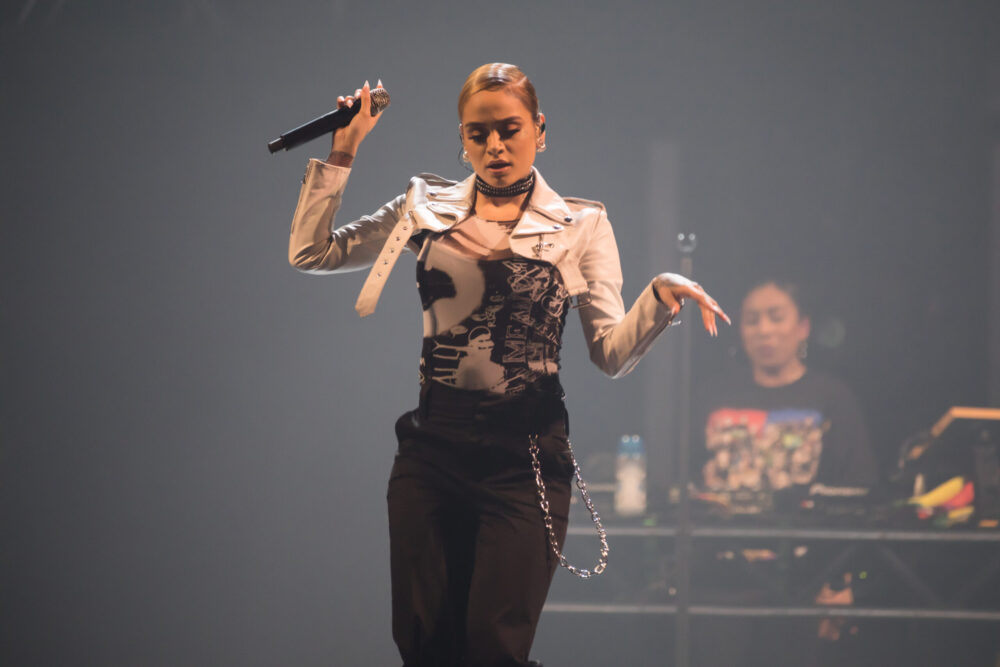
There is a version of Kehlani that almost did not make it here. She has said as much herself. On April 22, in an interview timed to the release of her self-titled album, the R&B artist spoke at length about her diagnoses of bipolar disorder and borderline personality disorder, what getting those answers felt like, and how she has spent the past year rebuilding around them.
The timing was not incidental. Kehlani first disclosed both diagnoses publicly in April 2025, around her 30th birthday. What followed was not a crisis but a reckoning, one that she has since channeled directly into her music, her routines, and the way she moves through relationships.
The diagnoses gave her language for what she had been living
For Kehlani, the moment of diagnosis carried two things at once: relief and responsibility. Having a name for what she was experiencing helped explain years of emotional intensity and behavioral patterns that had been difficult to understand, for her and for the people closest to her. It also made avoidance harder. Treatment became non-negotiable.
Her approach to mental health management now spans medication, therapy, and somatic therapy, a body-based practice that focuses on how emotional experiences live in the nervous system. She has spoken about developing what she calls a tool belt of awareness, a personal system for catching early warning signs before they escalate.
Kehlani asked the people around her to watch for the signs
Part of what makes her framework functional is that it extends beyond herself. Kehlani has been direct with friends and family about what to look for when she is not regulating well. Disrupted sleep, rapid speech, and impulsive decision-making have all been flagged as signals worth addressing early.
That kind of transparency requires a degree of trust that does not come automatically. She has built it deliberately, treating her inner circle as part of a support structure rather than simply an audience for her life.
Global anxiety pushed her toward professional help
Kehlani also pointed to external forces as contributors to her mental health challenges. Emotional responses to global instability intensified her anxiety and paranoia, eventually reaching a threshold that made professional intervention feel not just helpful but necessary.
That admission is worth noting in a cultural moment when many people are processing similar responses to world events in private, without access to the resources she found. Her willingness to name the external dimension of her struggles adds texture to a conversation that often focuses only on individual pathology.
‘Folded’ won two Grammys. Kehlani called it surreal
Earlier in 2026, Kehlani won her first Grammy Awards, taking home Best R&B Performance and Best R&B Song for Folded. She described the experience as surreal, a word that makes sense when placed against the backdrop of everything she was managing at the time the song was recorded and released.
The wins arrived in a year already marked by significant personal work. That the professional recognition came alongside, rather than instead of, that work seems to be the part she finds most meaningful.
Her self-titled album arrives April 24
Kehlani, her upcoming self-titled project, drops April 24. The album is expected to reflect the full scope of what she has been working through, not as confession but as documentation of someone who did the difficult internal work and came out with something to show for it.
Self-titled albums tend to signal a particular kind of artistic moment, one where an artist feels stable enough in their identity to put their name on the whole thing. For Kehlani, that stability has been earned in a specific, measurable way.
Her openness about bipolar disorder and BPD has already shifted how some of her listeners think about their own experiences. That is rarely the goal when someone chooses to speak publicly about mental health, but it is often the result.
