


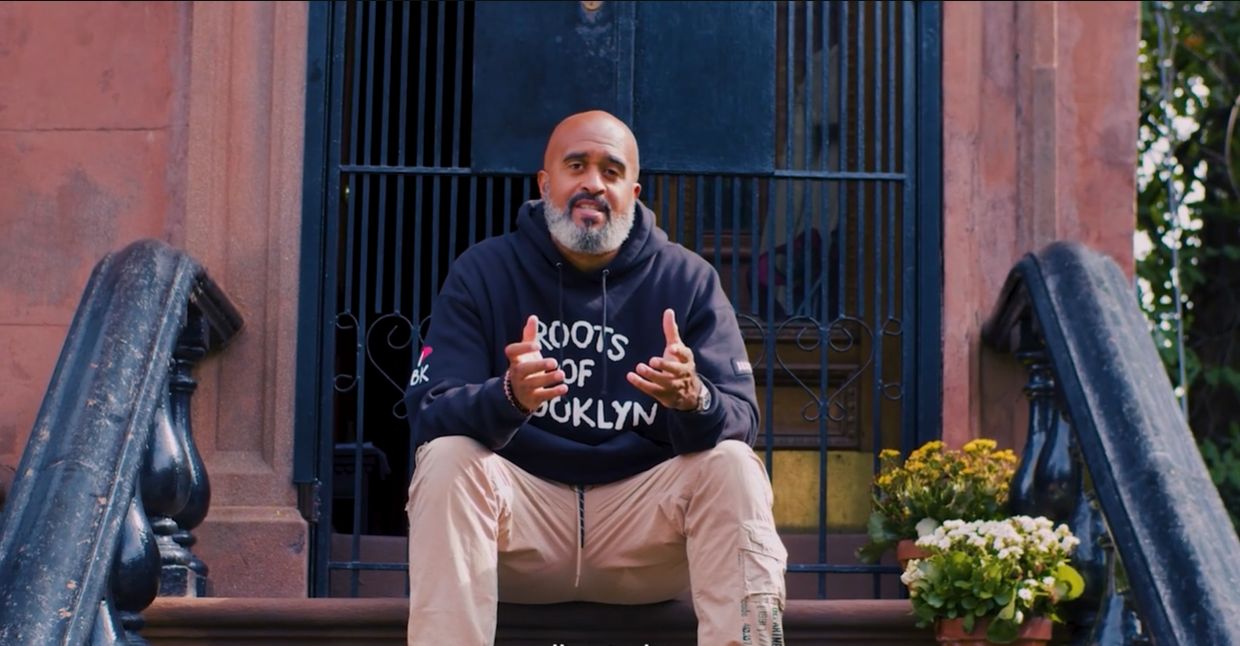
Long before Marlon Rice decided to run for office, he was already doing the work. A lifelong resident of Bedford-Stuyvesant, Rice has spent decades building programs, organizing events, and showing up for the Brooklyn community he calls home. Now, with the June primary approaching, he is channeling that experience into a bid for New York’s District 25 State Senate seat, where he is challenging three term incumbent Jabari Brisport.
For Rice, this campaign is not a departure from the community work he has always done. It is an extension of it.
From creative writing classes to the campaign trail
Rice’s path to this moment is anything but conventional. In the early 2000s, he worked as an education department vendor, teaching creative writing and urban hydroponics to young people in the community. In 2012, he founded Good People NYC, an event production company best known for organizing the Stoop Set block party summer series a beloved fixture in the neighborhood that drew residents together around shared culture and community pride.
Since 2021, he has served as director of event services for the Bedford-Stuyvesant Restoration Corporation, where he has helped develop programming that speaks directly to the needs and experiences of local residents. It is a resume built not in boardrooms or political offices, but on the streets and stoops of the neighborhood he is now seeking to represent.
The issues driving his campaign
District 25 spans a range of Brooklyn neighborhoods including Bed Stuy, Clinton Hill, Brownsville, and Ocean Hill and the economic contrasts within its boundaries are significant. Affluent brownstone blocks sit alongside numerous New York City Housing Authority developments, and roughly 25% of children and seniors in the district live below the poverty line.
Rice has built his platform around the issues he says are most urgent for residents who have too often been overlooked. His priorities include expanding pathways to homeownership, securing repairs and renovations for NYCHA residents, preserving the cultural heritage of the district’s historically Black neighborhoods, reducing unemployment, protecting small businesses from rent increases and rising energy costs, and fighting deed theft targeting aging homeowners. He has been particularly vocal about advocating for Brownsville and Ocean Hill, areas he says have been consistently deprioritized despite their deep need for investment and representation.
Shaped by the community that raised him
Rice’s commitment to these issues is personal. He grew up watching his mother, a former paralegal, and his stepfather, a police officer, navigate the challenges of Brooklyn in the 1980s a decade marked by economic hardship, rising crime, and neighborhood instability. His stepfather became a trusted and beloved figure on their block, earning the informal title of neighborhood mayor for the way he looked out for those around him.
Rice also points to the influence of local leaders including the late Albert Vann and Pan Africanist Jitu Weusi as formative figures in his understanding of what Black political leadership can and should look like. That foundation, he says, informs not just what he wants to accomplish in office, but how he intends to go about it with accountability to the community first.
Confronting gentrification without illusions
Rice does not traffic in false promises when it comes to the question of gentrification. Brooklyn’s demographic transformation over the past decade has been dramatic, and he is clear eyed about what cannot be undone. Tens of thousands of Black residents have left the borough over the past 10 years, and Rice acknowledges that reversing that displacement entirely is not realistic.
What he believes is possible and what he intends to fight for is protecting the Black and Brown homeowners who remain, ensuring they have the legal protections, financial resources, and political representation needed to stay rooted in the community their families built. That means resisting deed theft, expanding affordable housing options, and making sure that state budget priorities reflect the actual needs of District 25 residents rather than broader national political agendas.
Finding common ground across a changing district
Rice also sees an opportunity to build unlikely coalitions. The same forces driving long-time residents out of Brooklyn soaring rents, a lack of affordable housing, inadequate public services are the same ones frustrating newer arrivals who came to New York with hopes that the city’s reality has not matched. That shared experience, Rice believes, creates real potential for unity across demographic lines.
His approach to state budget priorities reflects this broader thinking. While supportive of increased public investment in Medicare, education, infrastructure, and NYCHA, he has expressed caution about proposals like a broad wealth tax without a clear, detailed plan for how those funds would reach the specific communities that need them most.
What his candidacy represents for District 25
At its core, Marlon Rice’s campaign is an argument that the people most affected by a community’s problems should have the loudest voice in solving them. With a career built on service, a family history rooted in Brooklyn, and a platform focused squarely on the residents who have been left behind, Rice is making the case that District 25 is ready for a different kind of representation one that starts and ends with the neighborhood itself.
