


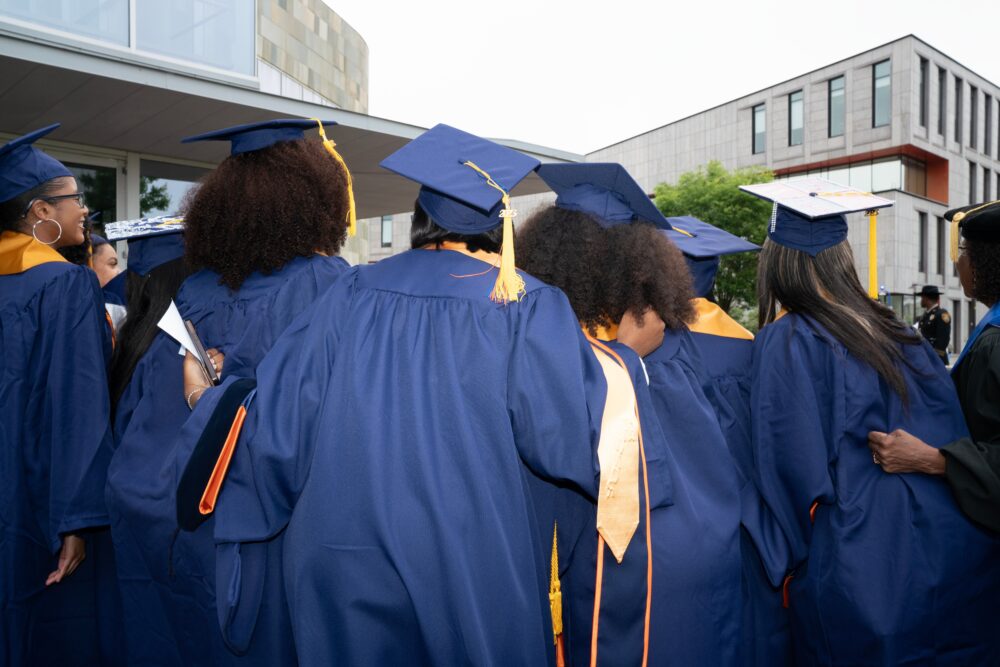
For generations, historically Black colleges and universities have served as vital institutions of learning and cultural affirmation for Black Americans. Now, a compelling new study suggests that the advantages of attending one of these schools may reach far beyond the classroom potentially shaping the cognitive health of alumni well into their later years.
The research, published on JAMA Network Open, examined data from 1,978 Black American adults who attended college between 1940 and 1980. Of those participants, 35% had attended an HBCU. The study also factored in individuals who had gone to high school in states where HBCUs were present, offering a broader view of how racialized education policies shaped long-term outcomes.
What the research found
The central finding of the study is significant: HBCU attendance was associated with stronger cognitive performance compared to peers who attended predominantly white institutions, commonly referred to as PWIs. That advantage held firm across different time periods, including among those who graduated both before and after the 1954 Brown v. Board of Education ruling that aimed to end racial segregation in public schools.
Black adults around the age of 62 who had attended HBCUs demonstrated notably better memory and overall cognitive function than their counterparts who had gone to PWIs. The research team behind the study included experts from Rutgers University, the University of Alabama Birmingham, Columbia University, Boston University and Harvard University a collaboration that lends considerable weight to its conclusions.
Dr. Marilyn Thomas, an assistant professor of medicine at the University of California, San Francisco, was among those who highlighted the breadth of the findings, noting that the cognitive advantages were observed consistently across multiple time periods studied.
The link to Alzheimer’s and dementia risk
The study arrives at a critical moment. Education has long been recognized as a protective factor against cognitive decline, including Alzheimer’s disease and related dementias, collectively referred to as ADRD. Yet despite this understanding, a troubling gap persists: Black Americans are at least twice as likely to develop Alzheimer’s compared to their white peers, even when accounting for college education.
More than 7 million Americans currently live with ADRD, and Black communities continue to bear a disproportionate share of that burden. Research like this helps illuminate why that gap exists and more importantly, what kinds of educational environments may help close it.
Why the environment of education matters
One of the more meaningful contributions of this study is that it moves the conversation beyond simply measuring years of schooling. For decades, researchers have used educational attainment as a straightforward metric, but this work challenges that approach by asking a deeper question: not just how long someone was in school, but what kind of environment they were educated in.
Dr. Thomas described the study as a meaningful first step in a larger inquiry, one that still needs to explore additional pathways such as the experiences of those who attended an HBCU for graduate school after completing undergraduate studies at a PWI.
The value of culturally affirming spaces
Perhaps the most resonant takeaway from the research is what it reveals about the power of belonging. The findings point to culturally affirming educational environments as active contributors to long term brain health not simply nice to haves, but measurable factors in protecting cognitive function over a lifetime.
For Black students who attended HBCUs, the experience of being educated in a space designed with their identity, history and excellence at the center appears to have left a biological imprint that endures for decades.
A reminder of what HBCUs have always known
The HBCU community has long understood the transformative power of these institutions. This study offers scientific reinforcement of what many alumni have spent years testifying to in personal stories: that where you learn matters, that feeling seen and affirmed matters, and that those experiences ripple outward into every corner of a person’s life including, it now seems, into the health of their aging mind.
As researchers continue to dig deeper into the connections between race, education and health outcomes, this study stands as a compelling reminder that investing in HBCUs is not only a matter of educational equity, it may be a matter of public health.
