


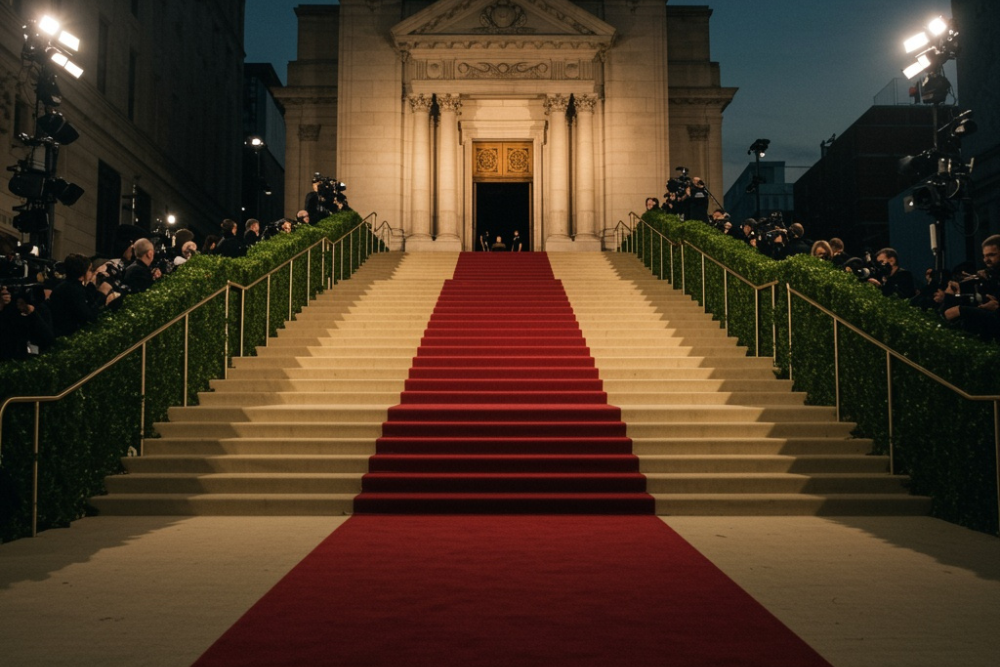
Every year, the Metropolitan Museum of Art’s Costume Institute hosts one of the most watched nights in fashion. Officially called the Costume Institute Benefit, the Met Gala raises tens of millions of dollars annually for the museum’s fashion archive and exhibition program. The red carpet imagery that floods social media each May is the public face of something far more deliberately constructed underneath.
The gala is tied directly to the Costume Institute’s annual exhibition, and the theme guests are expected to interpret through their outfits changes every year. The clothing worn on the steps of the Met is not incidental. It functions as a living extension of the curatorial work happening inside the building, with each look intended as a response to that year’s fashion history thesis.
Anna Wintour’s role at the Met Gala
No single person shapes the Met Gala more than Anna Wintour, the editor-in-chief of Vogue, who has chaired the event since 1995. Her authority over the evening extends well beyond logistics. Wintour controls the guest list, and her approval is required before any name is confirmed. She also signs off on outfits, meaning the clothes that appear on the red carpet have cleared her review before they ever leave the designer’s studio.
On the night itself, Wintour is the first to arrive and greets each guest at the top of the museum’s entrance stairs. Those interactions last roughly 20 seconds before guests move inside. Fashion houses that purchase tables, which can cost anywhere from $275,000 to $500,000, still need her endorsement before deciding which celebrities will represent them at the event. Individual tickets run between $30,000 and $50,000, making the financial barrier to attendance as exclusive as the invitation itself.
Met Gala rules most guests never discuss
Inside the gala, the rules are specific and largely unspoken. Phones are technically prohibited, and social media posts from inside the event are not officially permitted. The bathroom selfies and candid clips that occasionally surface online are considered small acts of rebellion against that policy, which is part of why they spread so quickly when they do.
Spouses and partners are typically seated apart from each other to encourage guests to move through the room and interact more broadly. Many attendees arrive in their statement looks and then change into something more practical as the evening continues, with the architectural or heavily structured pieces giving way to outfits that are easier to wear through a dinner and party.
The menu is built around the clothes. Dishes are selected to minimize the risk of stains, and ingredients like garlic are avoided to manage the practical realities of spending an evening in close proximity to some of the most expensive and delicate garments in the world.
Fashion and philanthropy under one roof
The Met Gala sits at an unusual intersection. It is a fundraiser with genuine cultural weight, a fashion event with an academic underpinning, and a social gathering with the guest list of a state dinner. The money it generates funds conservation work, acquisitions, and exhibitions that run year-round at the Costume Institute, making the spectacle of one evening in May responsible for a significant portion of what the department can accomplish the rest of the year.
The outfits, the themes, and the names on the steps are all chosen with intention. Nothing about the evening arrives by accident. What looks from the outside like a parade of celebrities in unusual clothes is, from the inside, a closely managed production in which every element connects back to a curatorial idea and a fundraising target.
Why the Met Gala keeps its grip on culture
Few events generate the same sustained cultural conversation that the Met Gala does, and the reasons for that go beyond the photography. The combination of restricted access, defined creative parameters, and Wintour’s unambiguous authority creates something that genuinely cannot be replicated. The guest list cannot be bought outright. The theme cannot be ignored. The approval process leaves no room for accidents.
That level of control is precisely what makes the images from the evening feel like they matter. In a media landscape where almost everything is accessible, the Met Gala has remained, by design, something that most people will only ever watch from the outside.
