


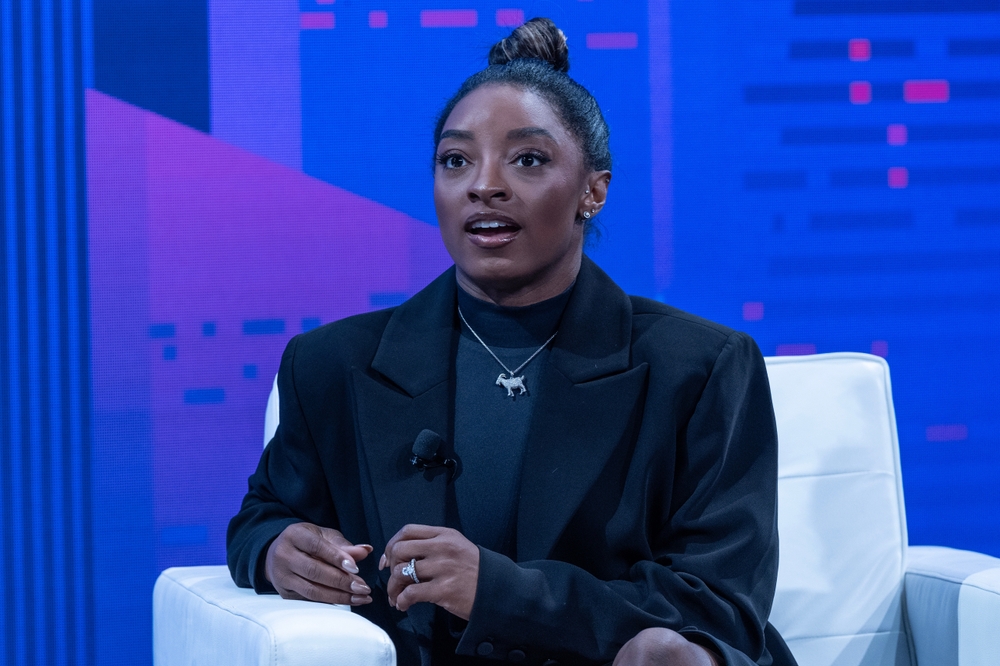
Simone Biles did not expect to walk into a firestorm when she decided to share what it cost her to attend a prestigious European awards ceremony. The legendary Olympic gymnast, who traveled to Madrid earlier this year for the Laureus World Sports Awards, posted a candid video breaking down her expenses for the night and asking whether the price tag she ended up with was somehow normal. The reaction she received suggested that many people had a strong opinion about that question, and not necessarily the one she was hoping for.
The total she revealed was twenty-three thousand dollars, covering her outfit, hair, makeup, security and other associated costs of appearing at the event. She framed it as sticker shock, the kind of relatable complaint about the rising cost of everything that tends to land well on social media. This time, it did not quite land that way.
What the Biles backlash actually revealed
The criticism that followed came from more than one direction. Beauty industry professionals pushed back on the implication that their rates were unreasonable, pointing out that the prices charged for red carpet hair, makeup and styling at events of that caliber reflect a significant amount of skill, preparation and professional experience. The suggestion that twenty-three thousand dollars was an outrage, they argued, missed the reality of what that labor is actually worth.
Media commentators piled on from a different angle. Several public figures pointed out that Biles, whose net worth has been widely estimated in the multi-million dollar range, was in a difficult position to generate sympathy over a bill that the vast majority of people will never come close to paying in any context. The criticism was not just that she spent the money but that she appeared to resent spending it, a combination that struck many observers as tone-deaf regardless of how casually she intended the comment.
How the Biles moment reflects a bigger conversation
What made the backlash stick is the same thing that makes most celebrity social media moments go sideways: the gap between how a comment is intended and how it reads to people on the other side of a screen. Biles likely meant the video as a lighthearted observation about the unexpected costs of public life. Her audience received it as a wealthy person complaining about paying professionals for their work.
The divide that opened up in the comments reflects something genuinely complicated about how celebrity wealth and working-class labor coexist in the same cultural conversation. Hair and makeup artists who work red carpet events are not hobbyists. They are skilled professionals operating in one of the most high-pressure and high-visibility corners of their industry, and their rates reflect that. Asking whether those rates are reasonable, in public, while also paying them, creates an awkward position that is hard to walk back.
Where Biles stands after the fallout
Biles has not backed away from her original sentiment. She made clear that the experience left her genuinely surprised by the cost of a single night out at that level, and she has not issued any apology or clarification that reframes the original video. Whether the moment fades quickly or lingers as a talking point about celebrity relatability will likely depend on what she does next and how willing the public is to extend grace to one of the most decorated athletes in American sports history.
For now, the conversation continues, and the twenty-three thousand dollar number is not going anywhere soon.
