


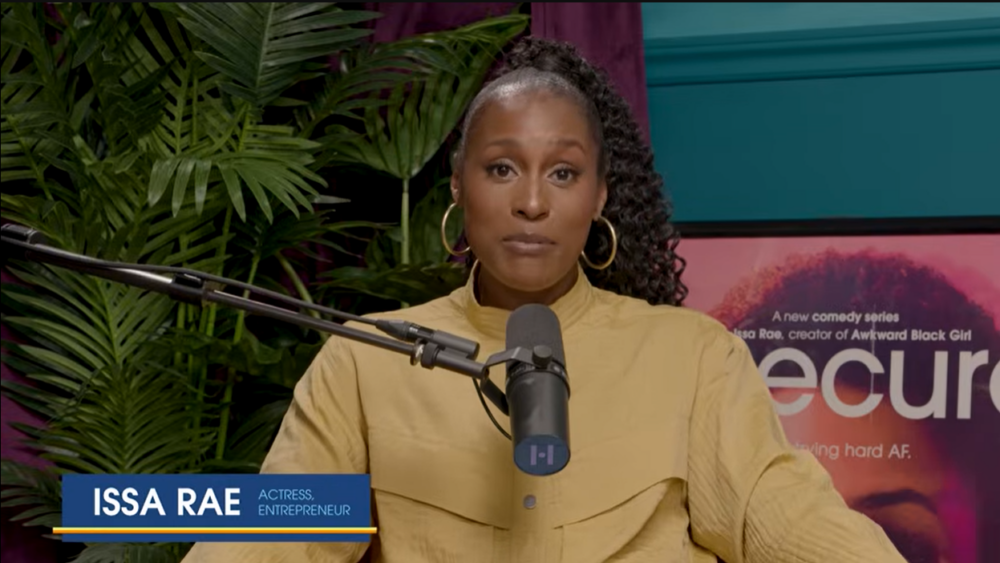
Four years after Insecure wrapped its celebrated run on HBO, Issa Rae is finally ready to peel back the curtain. The actress and creator has partnered with longtime showrunner Prentice Penny to launch Blocc Party, An Insecure Podcast, a new audio series dedicated to revisiting one of the most culturally resonant shows of the last decade.
The podcast gives fans something they have been waiting for since the finale aired in 2021 a candid, behind the scenes look at what it took to bring the series to life, and what it felt like to let it go. Rae opens up about the emotional weight of filming the final days of a show that became deeply personal to her and to the cast and crew who built it together. She describes the experience of closing that chapter as both heartbreaking and, in some ways, freeing a complicated mix of emotions that anyone who has ever poured themselves into a creative project will likely understand.
The conversations between Rae and Penny feel less like a formal retrospective and more like two collaborators finally getting to say everything they held back during production. They discuss pivotal moments from the series, share stories that never made it on screen and reflect on the decisions, big and small, that shaped the show into what it became.
Why Insecure still matters
When Insecure premiered on HBO in 2016, it arrived at a moment when representation in mainstream television was still a very active and urgent conversation. The show was notably the first on HBO to center a Black woman in a lead role since The No. 1 Ladies’ Detective Agency, a series that ran for just six episodes before being canceled in 2010.
The timing of Insecure was significant. It premiered during a period when the entertainment industry was still recovering from the losses that followed the 2008 television writers strike, which had contributed to the early end of several Black led series, including Girlfriends. Penny has spoken about how the cultural climate during the show’s development was defined by a hunger for visibility, a feeling that Black audiences and stories were largely missing from the television landscape despite clear demand.
Insecure answered that demand with specificity and warmth. It did not try to represent all Black experiences but instead told one particular story with honesty and wit, and in doing so created something that felt universal. Critics and audiences responded accordingly, and the show built a loyal following that still talks about it with real affection.
It also helped define what some critics now refer to as the last great era of appointment television a time when viewers scheduled their weeks around specific air dates and gathered online to process each episode together in real time.
A new chapter with Screen Time
Even as she looks back, Rae is very much focused on what comes next. On April 29, she launched Screen Time, a new microseries built entirely for TikTok and the streaming platform Prime Drama. The series has already attracted nearly 75 million views, a number that speaks both to Rae’s continued creative appeal and to the appetite audiences have for the kind of sharp, character driven storytelling she does well.
The first 27 episodes of Screen Time are each approximately one minute long, a format that reflects how dramatically media consumption has shifted, particularly among younger viewers. The second act of the series is set to debut on May 22.
The move into microcontent is a deliberate one. Rae has always been an early adopter in terms of format she built her early fanbase through YouTube before HBO came calling and Screen Time feels like a natural extension of that instinct to meet audiences where they are rather than waiting for them to come to her.
Still leading the conversation
What makes Rae’s current moment so worth paying attention to is the combination of things she is doing simultaneously. She is honoring the past by giving Insecure the reflective sendoff its fans deserve through the podcast, while also actively pushing her creative work into new territory with a format that most established creators have not yet mastered.
That balance between legacy and innovation, between looking back and moving forward is exactly what has kept Rae at the center of conversations about creativity, representation and the future of storytelling in American media.
