


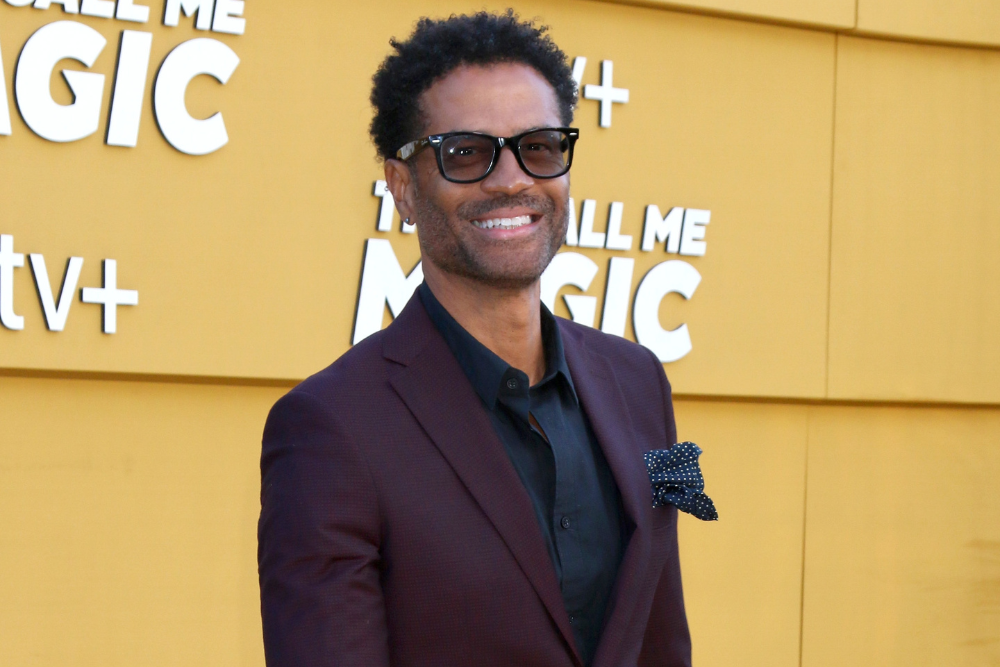
Eric Benét has reached the point in his life where holding back is no longer an option.
The R&B singer sat down with host Jasmine Sanders on the DL Hughley Show during BET Awards week and delivered one of the more substantive conversations to come out of the festivities touching on personal evolution, an unconventional wellness habit and two issues he believes the Black community can no longer afford to ignore: mental health and media ownership.
Turning 40 changed everything for him
For Benét, entering his 40s felt less like a number and more like a release. The pressure to self censor pressure he says once came from publicists and record labels who discouraged him from weighing in on anything remotely controversial is something he has left behind entirely. Where he once swallowed his words to keep the peace, he now speaks freely. That shift, he makes clear, was not impulsive. It was earned through years of experience and a growing awareness of what actually matters to him at this stage of his life and career.
His daily wellness habit starts with bare feet
Away from the spotlight, Benét has adopted a grounding practice that he credits with keeping him mentally and emotionally centered. The habit is simple: he goes barefoot and places his feet directly on the earth as part of his daily routine. To him, the practice is about more than physical sensation. It is about reconnecting with something ancient and stable at a time when the pace of modern life can feel relentless. He approaches it with a reverence for the natural world, viewing trees and the earth itself as carriers of a kind of wisdom that predates anything human beings have built.
It is a quiet, personal ritual but for Benét, it has become as essential as anything else in his day.
BET has gone 26 years without Black ownership and he wants answers
The most direct moment of the conversation came when Benét turned his attention to Black Entertainment Television. The network, which has long positioned itself as a home for Black culture and creativity, has not been owned by Black individuals for more than 26 years. For Benét, that is not a footnote it is a fundamental problem.
He acknowledged the contributions of executives like Debra Lee and Louis Carr, crediting them with meaningful leadership. But he was equally clear that leadership and ownership are not the same thing. Whoever holds ownership ultimately controls the direction of a network, the stories it chooses to tell and the ones it chooses to ignore. Without Black ownership, Benét argued, the narratives reaching Black audiences are being shaped by people who may not share their experiences, their values or their stake in the outcome.
His point is not abstract. The media that a community consumes plays a direct role in how that community sees itself and how the rest of the world sees it in return.
The silence around Black men’s mental health is costing lives
Perhaps the most personal and pressing thread of the conversation was mental health, and specifically the silence that surrounds it among Black men. Benét spoke from experience. For much of his life, he felt that emotional pain was something to be handled privately, processed alone and never exposed to anyone who might interpret it as weakness. It was a mindset he has since come to see as dangerous.
He now believes that leaning on family and trusted friends allowing others into the harder moments can accelerate healing in ways that isolation never will. His message, delivered during Men’s Mental Health Awareness Month in June, carries added weight given the documented rise in suicide rates among young Black men in recent years.
The ask is not complicated: reach out. Let people in. Recognize that asking for help is not a failure of strength but an expression of it.
A celebration worth having
Benét also made time to appreciate what the BET Awards represent a gathering that honors the full range of Black artistic achievement. With performers including Jill Scott, Cardi B, T.I. and French Montana on the lineup, the evening promised to honor both those who laid the foundation and those who are building on top of it. For an artist like Benét, who has been part of that continuum for decades, events like these serve as a reminder of how much has been created and how much remains worth protecting.
If you or someone you know is struggling, free and confidential support is available 24/7 by calling or texting the 988 Suicide & Crisis Lifeline.
