


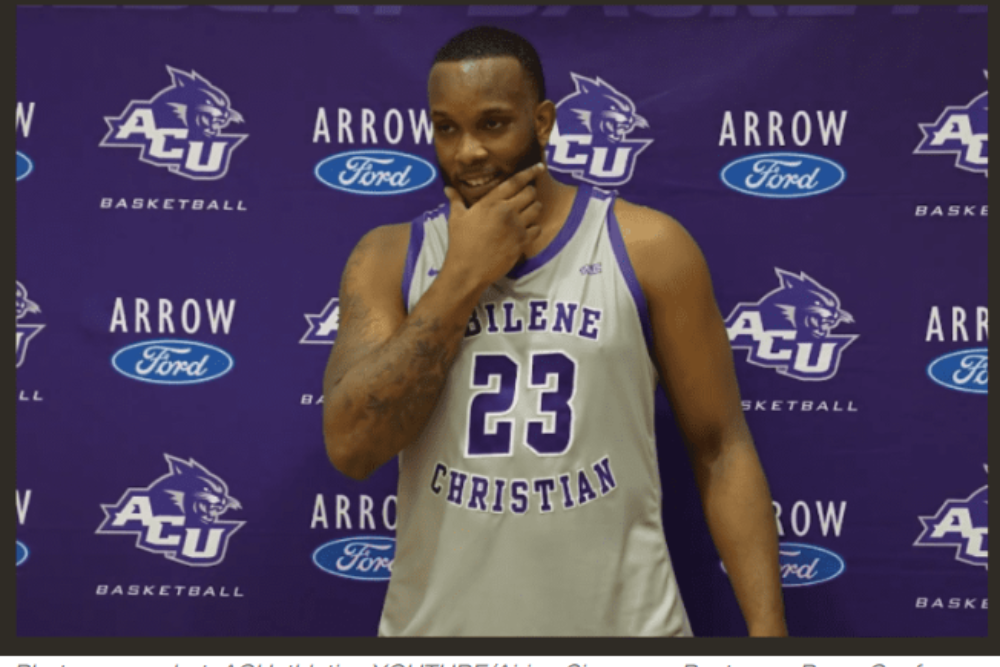
The NCAA permanently banned former Abilene Christian men’s basketball player Airion Simmons from all college athletics on May 15, 2026, following a formal investigation into his involvement in a point-shaving scheme during the 2023-24 season. The ruling came from the NCAA’s Division I Committee on Infractions and means Simmons will never again be eligible to compete at the college level. That ban, significant as it is, may ultimately be the least of his problems.
Simmons played for the Abilene Christian Wildcats from 2019 to 2024. The conduct at the center of the investigation centers on a single regular-season game in March 2024 against Tarleton State, a game Simmons agreed to lose on purpose in exchange for cash. What followed that agreement set off a federal investigation that has now reached well beyond Simmons himself.
How the Airion Simmons scheme worked
The case rests on three documented actions that investigators pieced together through interviews, surveillance, and grand jury testimony.
- Before the Tarleton State game, Simmons accepted $3,500 to intentionally underperform and passed sensitive internal team information to a bettor, including details about a hand injury he was managing and the status of a teammate who would not be playing. During the game, Simmons played 11 minutes, failed to score on either of his two shot attempts, and exited with that same hand injury.
- After the game ended, Simmons drove to a Dallas mall parking lot to collect his payment in person. In a December 2025 interview with NCAA investigators, he confirmed that he accepted the cash and acknowledged that he did not share any of it with the teammates he had recruited into the scheme.
- A federal grand jury indictment unsealed in Philadelphia in January 2026 charged Simmons with conspiracy to commit wire fraud, which carries a maximum penalty of 20 years in prison, and bribery, which carries a maximum of five years. Two bettors connected to the scheme were named in the same indictment.
The teammate who refused and then reported it
The investigation became public in September 2025 after a third Abilene Christian player came forward. That player had been approached by Simmons and another teammate and pressured to join the plan to lose a game for money. He declined. Later, he received a FaceTime call involving Simmons, the other teammate, and one of the bettors, during which the group made another attempt to bring him in.
He did eventually enter the game, but investigators determined that his participation had no meaningful effect on the outcome. By the time he took the court, the result had already been shaped by others. His decision to report the scheme to authorities is what triggered the full investigation.
Simmons cooperated with the initial NCAA interview in December 2025 but declined to participate further in the formal processing of the case.
A wider investigation with more bans coming
Simmons is the third student-athlete to receive a permanent eligibility ban as part of this investigation. Two former Fordham University basketball players were issued lifetime bans by the NCAA the previous month under the same probe. The broader federal case has exposed a network of gamblers who specifically targeted college players, offering cash payments in exchange for intentional underperformance, then placing bets against those players’ own teams to profit from sportsbooks.
The pattern is deliberate and organized. These were not opportunistic arrangements. Bettors identified players, made contact, negotiated payments, and collected on the outcomes. The Simmons case is one documented node in what investigators have described as a coordinated operation.
For the NCAA, the string of permanent bans reflects how the organization is responding to integrity violations as legal sports wagering expands across the country. More states have opened legal betting markets in recent years, and the volume of money moving through college sports has made the environment more attractive to exactly this kind of scheme.
For Simmons, the federal charges represent consequences that college athletics cannot come close to matching. A lifetime ban ends a career. A wire fraud conviction could end a decade of freedom.
