


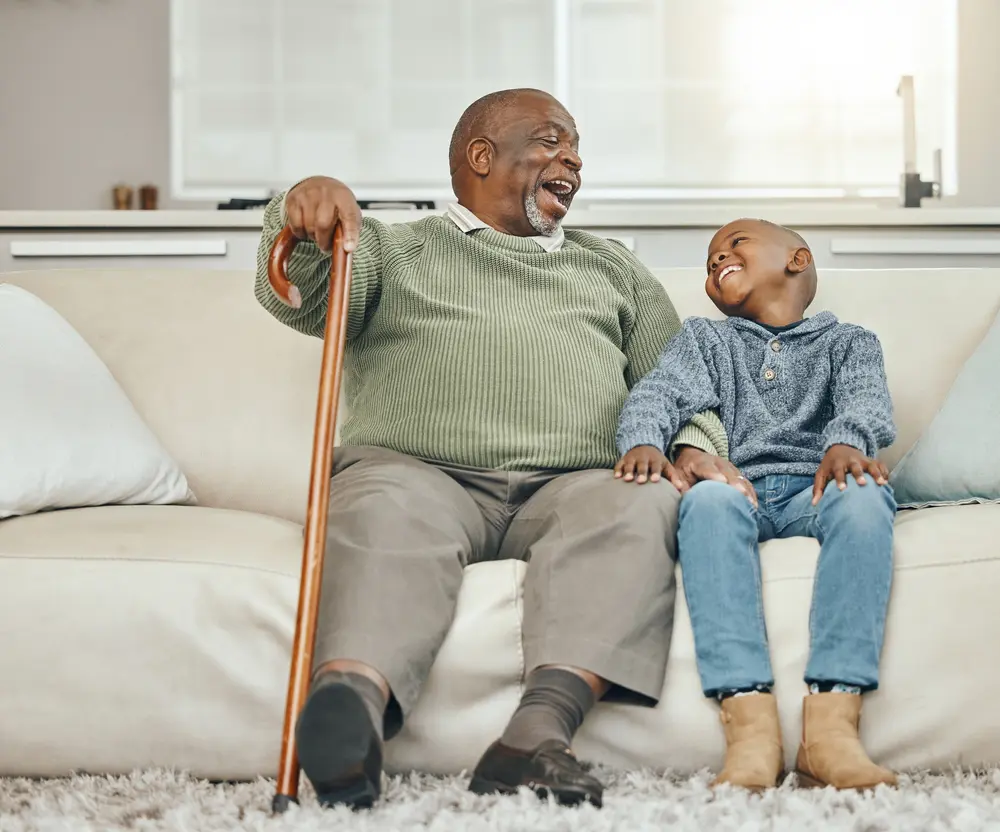
There is a particular kind of stillness that comes over people when they return to a place they loved as children. Not the big rooms or the impressive things. The drawer under the kitchen sink. The smell of the dish soap. The specific quality of light in one corner of the house on a winter afternoon. These are the things that stop people cold, sometimes decades later, in ways they cannot immediately explain.
Grandchildren are building that exact record right now. Every visit, every unremarkable Tuesday afternoon is being filed away somewhere they will not think to look until they are grown. The question was never whether they would remember you. They will. The question is what they will find when they go looking.
The feeling of walking into your house
Long before any conversation begins, children are absorbing the atmosphere of a place. The temperature. Whether the television is already on or the house is quiet. The particular sound of a door that always sounds the same way. Adults tend to scan a room and move on. Children absorb it and hold it at a depth most adults have largely lost access to.
Ask someone in their thirties to describe their grandparents’ home and they will not start with the furniture. They will start with a smell, a quality of light, the sound of a specific chair. They are not describing a place. They are describing a feeling that became permanently attached to a place, and by the time they are adults those two things are inseparable.
Your home is becoming that feeling for your grandchildren right now. It does not need to be large or especially tidy. It needs to be consistently, recognizably yours. That consistency is what they are keeping.
The small things that happened every single time
Not the holidays. The regular visit. The snack that only existed at your house. The game or the walk or the show that neither of you needed to discuss because it was simply what happened when they came over. You may not think of it as a ritual. It probably does not feel like one. That is fine.
What repetition does for a child is give them something they can count on. A single special occasion is an event, pleasant to recall. Something that happens every time becomes part of what they mean when they think about safety, or belonging, or being known by someone without having to explain themselves. The simpler the thing, the more reliably it does its work. The whole point is that it is always there.
Grandchildren who speak most warmly about their grandparents as adults are rarely the ones who went on the memorable trips. They are the ones who knew exactly what was going to happen the moment they walked in. That predictability was its own form of love.
The way you talked about other people
Children are listening to all of it, including the conversations that were not meant for them. When you spoke about a neighbor or a difficult family member or someone who let you down years ago, they were in the room taking notes in the quiet way children do. They were watching what adults do when things get complicated, when someone makes it hard, when fairness requires effort.
Whether you were the kind of person who could find something decent to say about someone who was not easy, or whether you held onto grievances and did not let go, that became part of their understanding of how people are supposed to move through the world. They are working out their own moral compass partly by watching yours, and years from now they will be telling their own children something about this.
The stories you told about when things went wrong
Especially the ones that did not make you look good. The job that fell apart. The decision you are still not entirely sure about. Most people skip those stories, worried about how they will come across. Those are exactly the stories that do the most lasting work.
Research into family storytelling and identity development has found that when older family members share the harder and more complicated chapters of their own lives, younger people develop a stronger sense of who they are and a greater capacity to handle their own difficult moments. What those stories give a child is not instruction. It is proof. Proof that someone they love already lived through something that went badly and came out the other side still standing and still willing to tell the story.
The grandparent who appears to have everything figured out is less useful than the person who was once young and uncertain and made a mistake and kept going. That version of you is the one they need to know.
How you were when things went wrong for them
Not what you said. How you were about it. Whether they needed to brace themselves before telling you something. Whether they left feeling like your opinion of them had shifted, or whether they could tell that nothing had changed. The grandchildren who reach for the phone to call a grandparent first when something goes wrong did not arrive at that instinct by accident. They learned over time that it was safe, that they could show up with the worst version of their week and still be genuinely welcome.
That knowledge gets built slowly, in a long series of small moments where someone simply stayed steady and did not make a hard thing harder.
What you are already giving them
The gifts will not last. That is not a criticism. It is simply what happens. The things purchased and wrapped and hoped over are often the ones they would struggle to name a year later.
But the smell of your kitchen will last. The thing you always did together. The way you told a story. The specific feeling of being somewhere that required nothing of them. The knowledge, never stated but simply known, that they could bring you the hard stuff and you would still be glad they came.
None of this costs anything or needs to be scheduled. Most of it is already happening. They are already keeping it. Just keep showing up to the regular Tuesday. That is genuinely the whole thing.
