


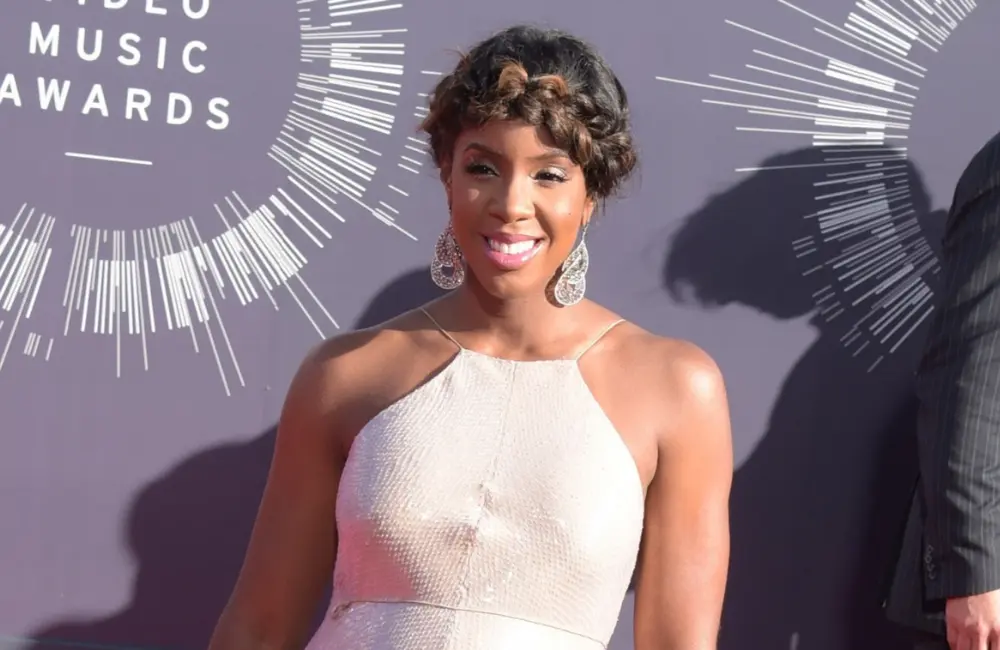
For a long time Kelly Rowland thought she simply had sensitive skin. The flare-ups behind her ears, between her eyes, along her neck and across her back were something she managed quietly, the way many people do, without a formal name attached to what she was experiencing. It was not until after the birth of her first child that a doctor gave her the word she had been missing.
That word was eczema and the moment she finally heard it changed how she thought about her skin entirely.
A pattern that started at home
Rowland traces her relationship with the condition back to watching her mother navigate something similar without ever fully understanding what it was. She recalls her mother developing patches of irritated skin in familiar places and accepting them as simply part of life, partly because access to medical care was limited and partly because the language to describe what was happening was never offered to her.
That experience is far from unusual. In many Black and brown households the instinct is to describe these kinds of skin reactions in the most general terms possible, as a rash, a flare, something that comes and goes without demanding too much attention or too many questions. The idea of advocating for a diagnosis or pushing a healthcare provider for clarity is not always something that feels accessible or even necessary.
Rowland sees her mother’s story as a version of her own and a version of many others still living without an answer.
What eczema actually is
The condition is more complex than its casual reputation suggests. It is a chronic inflammatory skin disease that involves disruption of the skin barrier and an immune response that can be triggered by a wide range of factors. Irritants, allergens, temperature changes and even stress can all play a role depending on the individual. Some people flare in winter when cold and dry air compromise the skin. Others find that heat and sweat are the culprits. For Rowland the trigger turned out to be something less obvious and more internal.
She tried a remedy someone recommended involving dramatic temperature shifts, moving from heat exposure into cold water in quick succession. Rather than helping, it made things significantly worse. The experience taught her something that medical professionals often emphasize but that people managing eczema on their own rarely hear early enough. Stress is one of the most consistent and underacknowledged drivers of flare-ups and what feels like a physical problem is often connected to what is happening emotionally.
Learning to listen to her own skin
Rowland describes eczema as having its own personality, unpredictable in where it appears and how it behaves but consistent in its relationship to her internal state. After years of trying to manage symptoms without a clear framework, she now approaches her skin health as something that requires the same intentionality she brings to other parts of her life.
That includes working with her doctor, incorporating appropriate treatment and being honest with herself about when stress is building in ways her skin will eventually reflect.
She also speaks about her scars with an affection that feels earned rather than performed. To her they are not flaws to minimize but markers of experience, evidence of a body that has been through something and kept going.
The glow she is actually after
The world knows Rowland for a particular kind of radiance, the kind that reads clearly on camera and on stage. But she is candid about the fact that what she is working toward now has less to do with surface appearance and more to do with the kind of health that shows up in ways that cannot be manufactured.
She describes true glow as something that comes from drinking water, nourishing the body, protecting mental health and being still enough to actually hear yourself. It is something she works on daily across every area of her life, as a mother, a wife, a businesswoman and a woman still figuring herself out in real time.
Her partnership around eczema awareness is an extension of that same commitment. She is not presenting herself as someone who has arrived at perfect health. She is presenting herself as someone still in the process and willing to talk about it honestly so that others feel less alone in theirs.
