


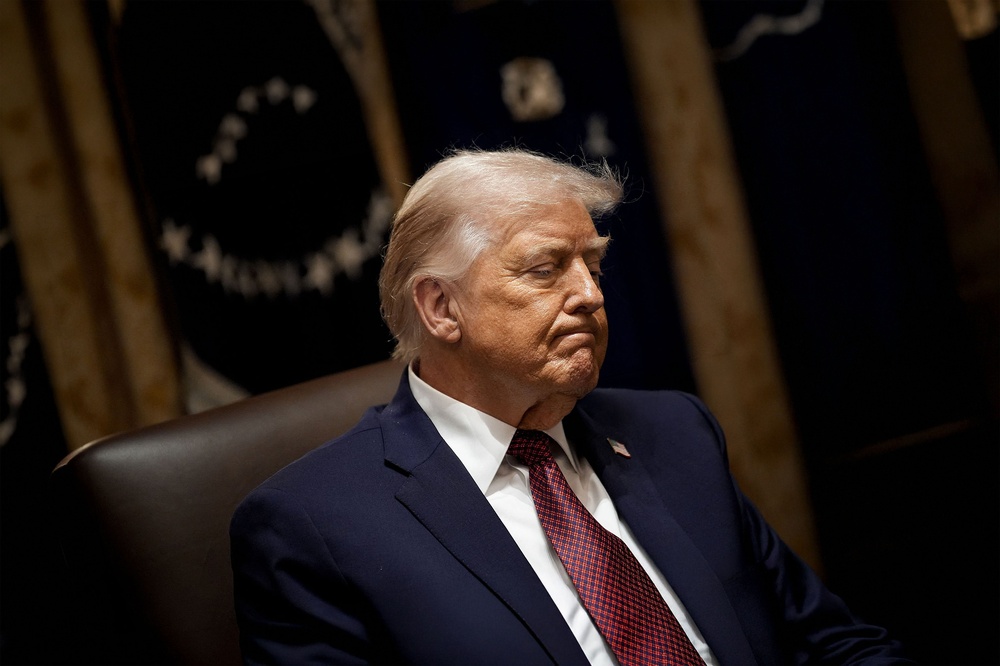
Donald Trump returned to Mount Rushmore this week as the country marked its 250th anniversary, standing before the carved likenesses of George Washington, Thomas Jefferson, Abraham Lincoln and Theodore Roosevelt on the eve of Independence Day. The evening did not go entirely as planned. Rain and hail moved through the area before the program began, sending attendees scrambling for cover ahead of Trump’s remarks.
The former president has plenty of things named after him at this point, from federal buildings to a naval vessel to an airport. But the one tribute that has eluded him for years is a spot on the mountain itself, carved into stone beside four of the nation’s most consequential presidents.
A decades old dream
The idea is not new. During his first term, Trump discussed the possibility with Kristi Noem, then a U.S. representative from South Dakota who later became his homeland security secretary. According to accounts from that period, Trump described joining the four presidents on the mountain as a personal dream, one he brought up more than once and seemed to take seriously.
That interest resurfaced publicly in 2020, when Noem gave Trump a model of Mount Rushmore that had been altered to include a fifth face resembling his own. Reports followed suggesting members of his team had floated the idea of an actual addition to the monument. Trump denied direct involvement in any such push, though he later suggested online that the concept had merit, pointing to what he considered a strong record in office.
Why the mountain says no
Whatever the political appetite, the geology tells a different story. Any physical change to Mount Rushmore would require approval from Congress, a hurdle on its own. But the bigger problem sits in the rock. Geologists have long noted that the granite surrounding the existing four faces is not stable enough to support new carving. Gutzon Borglum, the sculptor who led construction of the monument between 1927 and 1941, ran into the same limitation nearly a century ago, determining that the stone simply would not cooperate with further additions.
A bill that stalled
Political momentum has not been absent. Not long after Trump began his second term, Rep. Anna Paulina Luna introduced legislation that would have called for his likeness to be added to the mountain. The bill went nowhere, stalling out in the House Natural Resources Committee without a vote. Luna has since pursued other avenues to honor Trump, including a Nobel Peace Prize nomination.
Divided opinions in South Dakota
Reaction closer to home remains mixed. South Dakota Gov. Larry Rhoden said during the recent Independence Day event that he does not believe there is physical space for a fifth face, though he added that Trump or Ronald Reagan would be reasonable choices if room ever existed. Sen. Mike Rounds took a more cautious stance, saying the decision ultimately belongs to the American public rather than any single official.
Others closer to the monument’s identity have pushed back harder. Performers who portray Washington and Lincoln at the site have argued publicly that the memorial should stay exactly as it is, warning that any addition risks undermining what the mountain represents rather than enhancing it.
A legacy still being written
As Trump moves through his second term, the conversation about how history will remember him continues alongside everything else. Supporters see Mount Rushmore as a fitting capstone to that legacy. Critics, including some tied directly to the monument itself, see a line that should not be crossed.
For now, the four granite faces remain unchanged, just as they have for more than 80 years. Whether that ever shifts may depend less on any one president’s ambition and more on what the country as a whole decides it wants carved into its history.
