


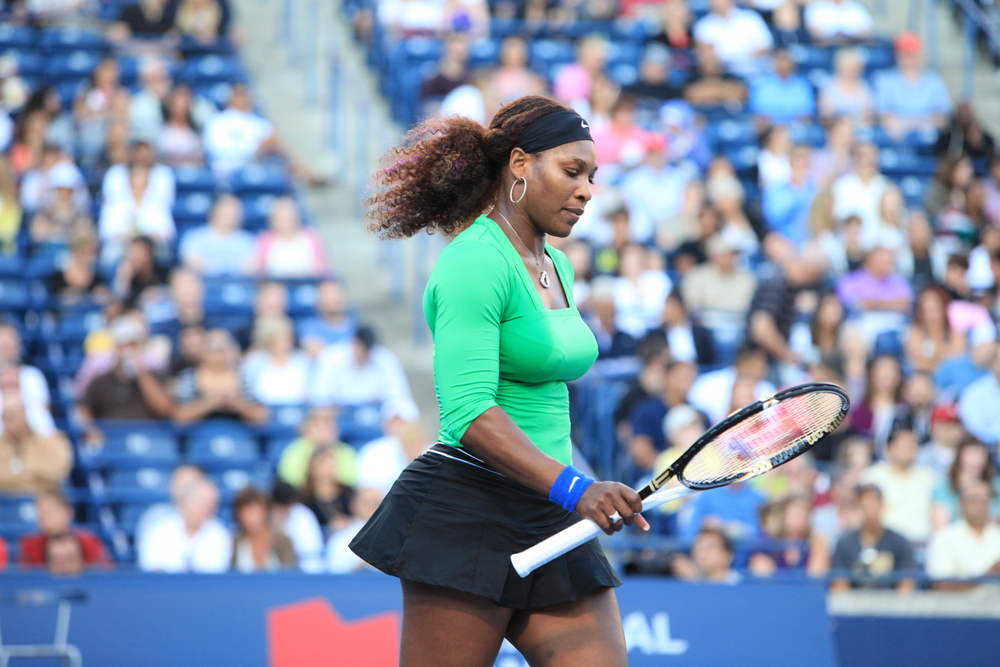
Serena Williams’ first singles match in nearly four years drew an average of 1.8 million viewers on ESPN, making it the network’s most-watched Day 2 in its history of covering the Wimbledon grass-court Grand Slam and demonstrating the enduring commercial power of the 44-year-old’s presence in professional tennis.
The match peaked at 2.1 million viewers at its most-watched point despite airing on a Tuesday afternoon in the United States, a scheduling window that typically limits television audiences for live sports. Williams was beaten 6-3, 6-7, 6-3 by 20-year-old Maya Joint of Australia in a three-set contest that showed the returning champion could compete meaningfully with a player less than half her age after nearly four years away from singles competition.
How the numbers compare to other major events
The viewership Williams generated for her first-round loss placed it above last year’s men’s semifinals at Wimbledon, which averaged 1.3 million viewers on the same network. The only Wimbledon match that outperformed it in recent memory was last year’s men’s final between the world’s two most prominent players, which drew nearly 2.9 million average viewers.
The broader Tuesday coverage on ESPN averaged 937,000 viewers, an increase of 55 percent compared to the equivalent day last year and the highest ever recorded for a Wimbledon Day 2 on the network. The lift was directly attributable to Williams’ match, which functioned as an anchor for the entire day’s programming.
Combined, the Monday and Tuesday coverage produced ESPN’s most-viewed opening round for Wimbledon on record, averaging 734,000 viewers across both days. Monday’s programming included the defending champion’s five-set first-round survival and a four-set win for a seven-time Wimbledon champion, both of which contributed to an unusually strong start to the tournament from a ratings perspective.
What the numbers mean for tennis
The viewership Williams generated for a first-round loss on a Tuesday afternoon in July reflects something that the sport’s commercial stakeholders have always understood intellectually but rarely seen demonstrated so clearly in a single match. Her presence creates an audience that extends well beyond the core tennis viewership, drawing people who follow her as a cultural figure regardless of whether they typically watch Grand Slam tennis.
That kind of crossover appeal is nearly impossible to manufacture through conventional sports marketing and represents one of the primary reasons the All England Club held open a wild-card spot for her until almost the last possible moment and why Wimbledon’s organizers described her return as the tournament’s most coveted ticket heading into the first week.
The knee injury and doubles uncertainty
Williams announced on Wednesday that she had tweaked her right knee toward the end of the first set against Joint, which led to her absence from the post-match press conference. Her status for the doubles competition she was scheduled to play alongside her sister Venus remains uncertain, with her agent indicating she was doing everything possible to be ready for that event while leaving open the possibility that the knee might prevent her from competing.
If Williams is unable to play doubles, her Wimbledon 2026 campaign will consist of the single match that produced the biggest Day 2 rating in the tournament’s ESPN history, a result that says everything about what she still means to the sport regardless of the score.
