


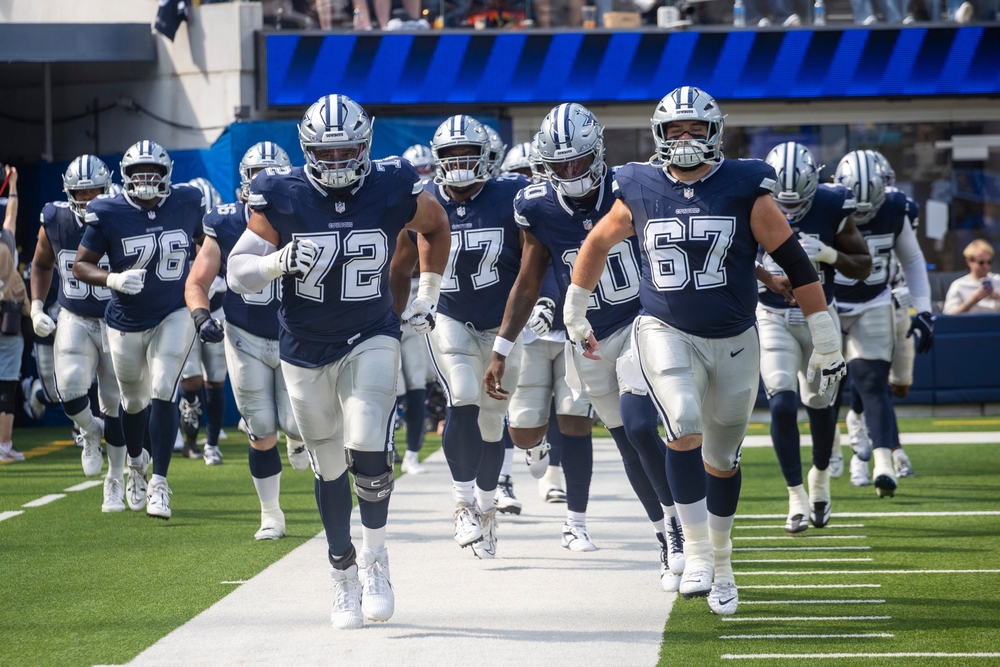
Former Dallas Cowboys defensive end Marshawn Kneeland, who died in November 2025 at the age of 24, was posthumously diagnosed with Stage 1 chronic traumatic encephalopathy after his family donated his brain to Boston University’s CTE Center for research.
The diagnosis, one of four stages of the progressive brain disease with Stage 4 representing the most advanced damage, was disclosed Tuesday alongside a statement from Kneeland’s family. They described the finding as providing important context about struggles he may have been facing, while emphasizing their desire to share the information to raise awareness about what athletes in football and other high-contact sports may experience. The family asked that Kneeland be remembered for who he was as a person rather than defined by the circumstances of his death.
What researchers said and what CTE research shows
The director of the Boston University CTE Center and chief of neuropathology for the VA Boston Healthcare System said she was not surprised by the finding. She noted that the progressive brain disease has been found in nearly half of the athletes the center has studied who died before the age of 30, underscoring how frequently early-stage CTE is present in young contact sport athletes even when there is no outward indication during their lifetimes.
She described the donations from families like Kneeland’s as essential to advancing the field’s understanding of the disease’s earliest stages, expressing confidence that the research is bringing scientists closer to the ability to diagnose CTE during a person’s life rather than only after death, and to developing effective treatments. Her team remains committed to finding a cure.
The center was also careful to note that the relationship between a CTE diagnosis and any individual’s death is not straightforward. The researchers stated explicitly that the causes of suicide are complex and involve many factors, and that a posthumous CTE diagnosis should not be interpreted as the cause of a person’s death.
A life that showed signs of struggle
Records obtained by journalists indicate that concerns about Kneeland’s mental health had been documented as early as his college years. Two separate incidents during his time at a Midwest university resulted in contact with law enforcement and mental health professionals, including one in which he was hospitalized after being found in a location and state of mind that indicated he was in serious distress.
Those earlier episodes were not widely known during his NFL career, and Kneeland was selected by Dallas in the 2024 draft, joining a Cowboys defense that had high expectations for his development as a pass rusher.
The circumstances of his death in early November 2025 involved a traffic pursuit in Texas, a crash, and officers who had received information suggesting he was experiencing a mental health crisis during that final night. He was 24 years old.
What the family hopes comes from this disclosure
Kneeland’s family, in choosing to donate his brain and to share the findings publicly, has made a deliberate decision to convert private grief into something they hope will benefit others. Their statement reflects a recognition that awareness about CTE and its potential presence in young athletes is still developing, and that each individual case that becomes part of the public record contributes to the broader understanding of what the disease looks like in its earliest stages.
The research at Boston University continues with hundreds of donated brains from athletes at various levels of contact sport. The Kneeland family’s contribution adds another data point to a growing body of knowledge that researchers hope will eventually allow for intervention during a person’s lifetime rather than only confirmation after death.
If you or someone you know is struggling, the 988 Suicide and Crisis Lifeline is available by calling or texting 988.
