


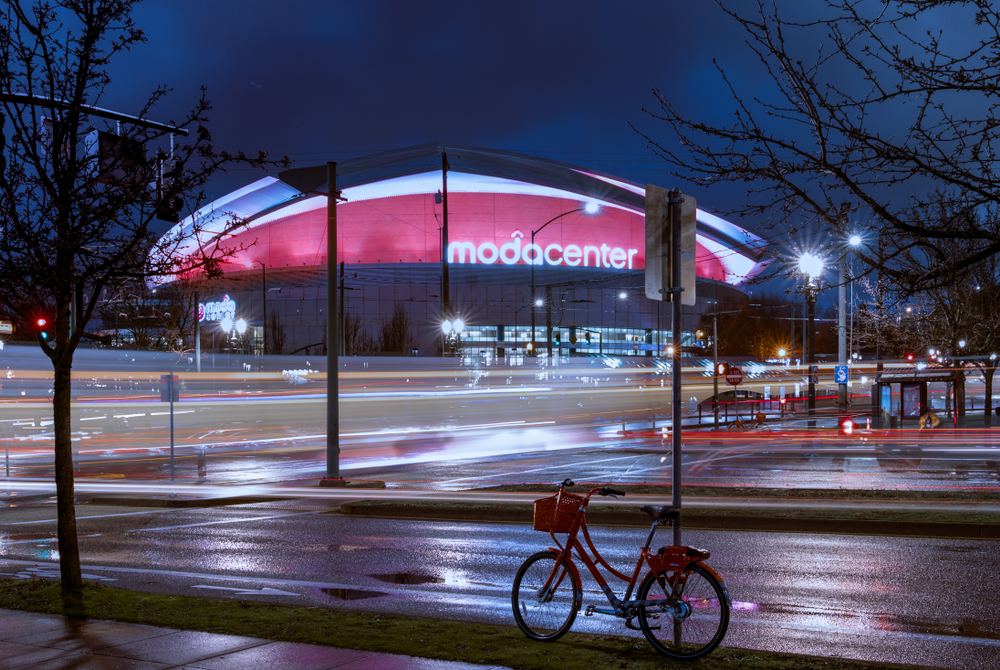
Trail Blazers representatives met with Portland city councilors Thursday to discuss the terms of a proposed $600 million renovation of the Moda Center and the public funding commitments needed to secure a long-term lease that would keep the team in the city through at least 2050.
The public work session highlighted the tension surrounding a deal that has moved slowly despite broad agreement on the basic stakes. A bridge lease between the team and the city expires in 2030, and both sides have an interest in resolving the arena question before that deadline forces a more difficult set of decisions. Oregon has already pledged $365 million toward the renovation project, contingent on Portland contributing $120 million and Multnomah County providing its own portion of the remaining funds.
New team owner Tom Dundon has indicated previously that he is willing to sign a 20-year lease that commits the franchise to Portland if the state, city and county together provide the renovation funding. The Moda Center is the oldest unupgraded arena in the NBA, and the push for renovation reflects competitive pressures and the broader trend toward modern arenas as revenue drivers.
A legal threat clouds the room
The Blazers’ president of business operations opened the work session by pressing the city to amend a provision in the existing bridge agreement that requires the Blazers to maintain the Moda Center as a first-class NBA arena. That language, which dates to the original 30-year-old lease, has been cited by at least one city councilor as a potential basis for legal action if the team is not meeting the standard.
He said that provision has been used as leverage in ways that have chilled the negotiating environment, and that no new deal would include similar language. He framed the clause as outdated and atypical even by the standards of the era when it was written.
The Blazers and their predecessors have contributed more than $1 billion toward the construction and maintenance of the Moda Center since the arena opened, positioning the team as a significant long-term investor in a facility that they cannot unilaterally improve without city partnership.
The mayor addressed the litigation concern directly in remarks at the work session, stating that the city is not contemplating a lawsuit against the Blazers or any related party. The clarification appeared intended to clear the air in advance of the funding votes that both county and city are scheduled to hold in the coming weeks.
The funding and lease picture
Multnomah County is scheduled to vote on its contribution to the renovation on Aug. 6. Portland’s city council is set to vote on the matter on Aug. 12. Together, those votes will determine whether the public funding structure Oregon has conditioned its own commitment on is in place, and whether meaningful lease negotiations can begin in earnest.
The Blazers said their view is that substantive negotiations cannot proceed until the bridge agreement is amended to remove the first-class standard provision. That position puts a procedural question at the front of the line before the financial terms of a new long-term deal can be seriously addressed.
What is at stake for the franchise
The Blazers are in the early stages of a rebuild under new ownership, and the arena situation is inseparable from the team’s long-term viability in Portland. The Blazers’ president described the new ownership as committed to Portland and to building a competitive team that the city can be proud of, framing the arena as foundational to that effort rather than a separate real estate negotiation.
A 20-year lease, if it comes together, would represent one of the longer venue commitments in professional basketball and would give Portland security about its NBA future well into the 2040s. Without it, the city faces the possibility of negotiating from a weaker position as the 2030 bridge lease expiration approaches, and the Blazers face uncertainty about long-term planning in a market where arena revenue is increasingly central to franchise finances.
Thursday’s work session did not resolve any of the outstanding questions, but it put the core issues on the table in front of elected officials who will have to vote on the funding in the weeks ahead.
