


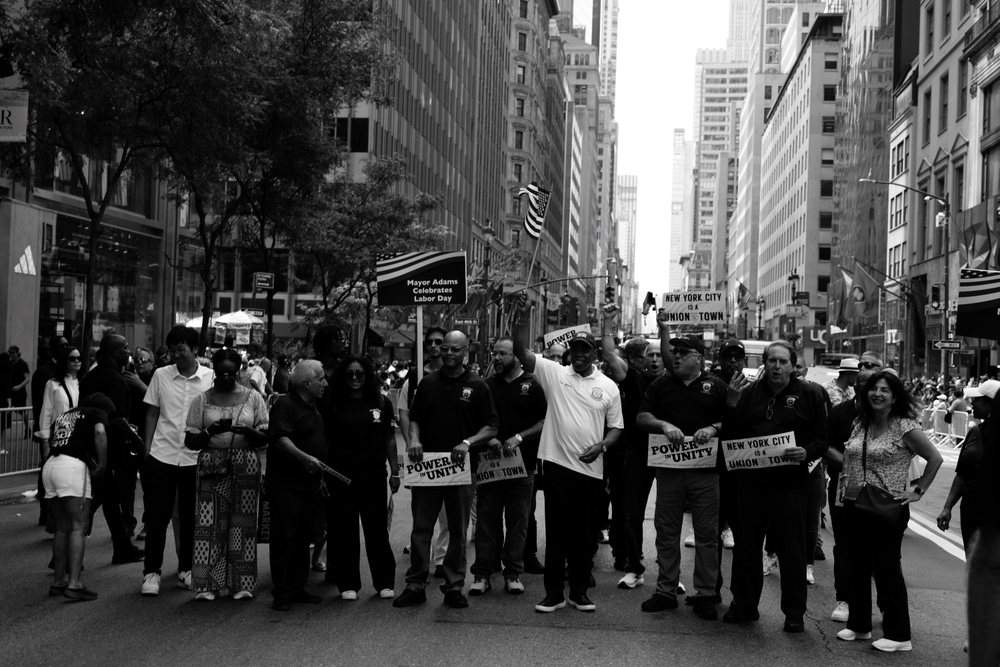
Their fight for fair treatment on the job reshaped labor rights for everyone
Every Labor Day, the country pauses to recognize the American workforce, but the legacy behind that recognition runs far deeper than most people realize. Long before modern labor protections existed, Black workers were already organizing, striking and demanding fair treatment on the job, often while facing exclusion from the very unions built to protect workers like them.
Understanding that legacy adds real depth to a holiday that has, for many, become more about a long weekend than the history that built it.
The early exclusion Black workers faced
A labor movement built without them
When the American labor movement began gaining momentum in the late 1800s, many of the era’s largest unions explicitly barred Black workers from membership. Skilled trade unions in particular often restricted access, leaving Black laborers concentrated in the country’s most dangerous, lowest-paying jobs with little organized protection behind them.
This exclusion forced Black workers to build parallel labor structures of their own, often without the recognition or resources white-led unions had access to, even as both groups were fighting many of the same battles over pay, safety and basic dignity on the job.
Segregated industries, shared struggles
Despite being locked out of mainstream unions, Black workers still faced the same dangerous conditions defining the era’s factories, railroads and mines. Long hours, unsafe equipment and no legal recourse for injuries were the norm across the labor force, regardless of race, even as Black workers carried the added weight of discrimination layered on top of already brutal conditions.
That shared struggle, even without shared organizing structures, laid early groundwork for a labor legacy that would eventually converge decades later.
The Brotherhood of Sleeping Car Porters
One of the most significant chapters in this legacy began in 1925, when A. Philip Randolph organized the Brotherhood of Sleeping Car Porters, the first Black-led labor union to receive a charter from the American Federation of Labor. Porters, who worked grueling hours for railroad companies with little pay and no job security, had long been denied a real seat at the table in broader labor negotiations.
The Brotherhood changed that, eventually winning a labor contract with the Pullman Company in 1937, a landmark moment that proved Black-led unions could achieve real, tangible victories against major employers. This win became a blueprint for future organizing, showing that persistence and collective action could overcome even deeply entrenched exclusion.
Randolph’s influence extended well beyond the porters themselves. His organizing work became a foundation for the broader civil rights movement, connecting labor rights directly to the fight for racial equity in a way that would shape decades of activism to follow.
Where labor rights and civil rights intersected
By the 1950s and 1960s, the legacy first built by the Brotherhood had grown into something larger, a recognition that economic justice and racial justice were deeply intertwined. Many civil rights leaders explicitly framed their work around labor rights, understanding that true equality required fair treatment both socially and economically.
The 1963 March on Washington for Jobs and Freedom captured this connection directly in its name, organized in part by labor leaders alongside civil rights organizers. The march’s demands included fair wages and job protections alongside its calls for civil rights, a pairing that reflected just how closely these two movements had become linked by that point.
Martin Luther King Jr. himself was assassinated in 1968 while in Memphis supporting a sanitation workers’ strike, a moment that underscored just how central labor rights remained to the broader fight for racial justice, even at the movement’s highest-profile moments.
Why this legacy still matters today
The legacy Black workers built during this era continues shaping labor conversations today. Modern debates around fair wages, workplace safety and union organizing often echo the same core demands raised by Black labor leaders decades earlier, a reminder that this fight never fully disappeared, even as its shape has evolved.
Black workers remain disproportionately represented in industries facing ongoing labor disputes, from warehouse and delivery work to healthcare and public service roles, making this history far more than a historical footnote. The disparities these workers organized against generations ago still show up in modern labor statistics, underscoring how much of that original fight remains unfinished.
Labor organizations today increasingly point back to this history as a guide, recognizing that the coalition-building pioneered by leaders like Randolph offers a model for addressing today’s labor challenges, particularly as new industries raise fresh questions about worker classification and protection.
Honoring the full history
Labor Day celebrations often center on cookouts and end-of-summer sales, but the legacy behind the holiday deserves a fuller telling. Black workers did not simply participate in the labor movement, they helped build entire pieces of its foundation, often while fighting exclusion from the same protections they helped establish for others.
Recognizing that legacy means understanding Labor Day not just as a tribute to workers broadly, but as a holiday shaped in real, direct ways by Black organizers who refused to accept exclusion as the final word. Their persistence reshaped labor rights for generations of workers who came after them, regardless of race, a legacy still very much alive in today’s ongoing fight for fair treatment on the job.
