


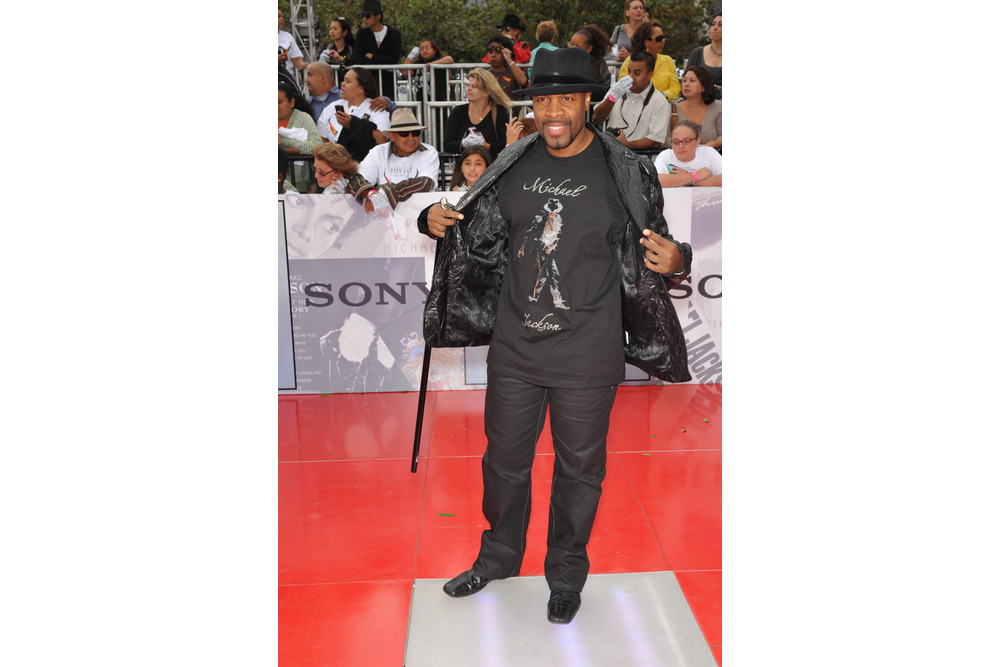

Michael Bearden was a child growing up on Chicago’s South Side when he watched Quincy Jones become the first Black musical director and conductor for the Academy Awards in 1971. Jones stood at the podium in a black tuxedo and a ruffled, powder-blue shirt, and something shifted for the young Bearden in that moment. He realized, watching his future mentor command the room, that such an achievement was within reach.
Bearden went on to be mentored by Jones directly during his career a full-circle relationship that carries particular weight given that Jones passed away shortly before Bearden took the Oscars stage for the first time in 2025. On March 15, Bearden returns as music director for the 98th Academy Awards at the Dolby Theatre at Ovation Hollywood, with the ceremony airing live at 6 p.m. Central on ABC and Hulu.
An Emmy nomination and a promise to go further
Bearden’s debut as Oscars music director last year earned him an Emmy nomination, driven in part by his deliberate strategy of weaving unexpected musical choices into a night of orchestral grandeur. He placed Barry White’s Love’s Theme, Quincy Jones Ai No Corrida and Stevie Wonder’s Another Star into the evening’s musical fabric, drawing immediate responses from viewers and industry peers who said the selections felt unlike anything they had heard at the ceremony before.
The response confirmed what Bearden already believed that a broad television audience responds to emotional recognition, to hearing something familiar arrive in an unexpected context. His goal this year is the same, scaled to an even larger responsibility. He will conduct and co-arrange nearly 60 pieces of music across the evening, including live performances, presenter accompaniments, commercial bumpers and original compositions for specific segments.
What goes into directing music for the biggest night in film
Bearden describes the music director role at the Oscars as something close to a film director overseeing every department simultaneously. He and his lead arranger select not only the major performance pieces but also the brief musical transitions that punctuate the entire broadcast decisions that shape the emotional texture of the evening in ways viewers feel without always consciously registering.
This year, live performances are expected to include music from Sinners and KPop Demon Hunters, both of which are nominated for best original song. Bearden must find ways to honor the scores of multiple films in short, concentrated segments while also leaving room for the kind of spontaneous moments that define live television.
That spontaneity was on full display last year when Mick Jagger appeared as a presenter. Bearden immediately called up a Rolling Stones arrangement, and Jagger’s reaction to hearing it transformed a routine presenter moment into something genuinely memorable. The orchestra kept playing as Jagger responded to the music, and Bearden held the moment until Jagger returned to his scripted role. It is the kind of live instinct that no pre-programmed playlist can replicate and the reason Bearden believes a live orchestra remains irreplaceable at an event of this scale, even as other awards shows experiment with DJ formats.
A career built across five decades and 500 artists
The breadth of Bearden’s musical background gives his Oscars work its distinctive range. His career began early, with piano lessons as a child and mentorship from Chicago jazz legend Ramsey Lewis before he even graduated from Whitney M. Young Magnet High School. He went on to study at Howard University before touring with jazz flutist Herbie Mann, an experience that launched a career spanning more than 500 artists.
He served as co-music director for the Emmy Awards and directed the music for Lady Gaga’s Super Bowl halftime show in 2017. He is perhaps most widely known for his work as music director on “This Is It, Michael Jackson‘s planned London residency that was documented in a 2009 posthumous film after Jackson’s death. His collaborators over the decades have included Madonna, D’Angelo and countless others across genres.
Bearden is also working on a book that will chronicle his musical journey, adding a literary dimension to a career already defined by its range and longevity.
What he hopes viewers take away on March 15
Bearden’s ambition for the 98th Oscars is consistent with everything he has built his career around. He wants people to feel something. With ballots already cast and outcomes sealed heading into the ceremony, the music becomes one of the few remaining variables capable of shaping how the evening is remembered. For Bearden, that is not a burden but an opportunity the same one Quincy Jones seized in 1971, and the same one he hopes a young viewer somewhere will one day decide they want for themselves.
