


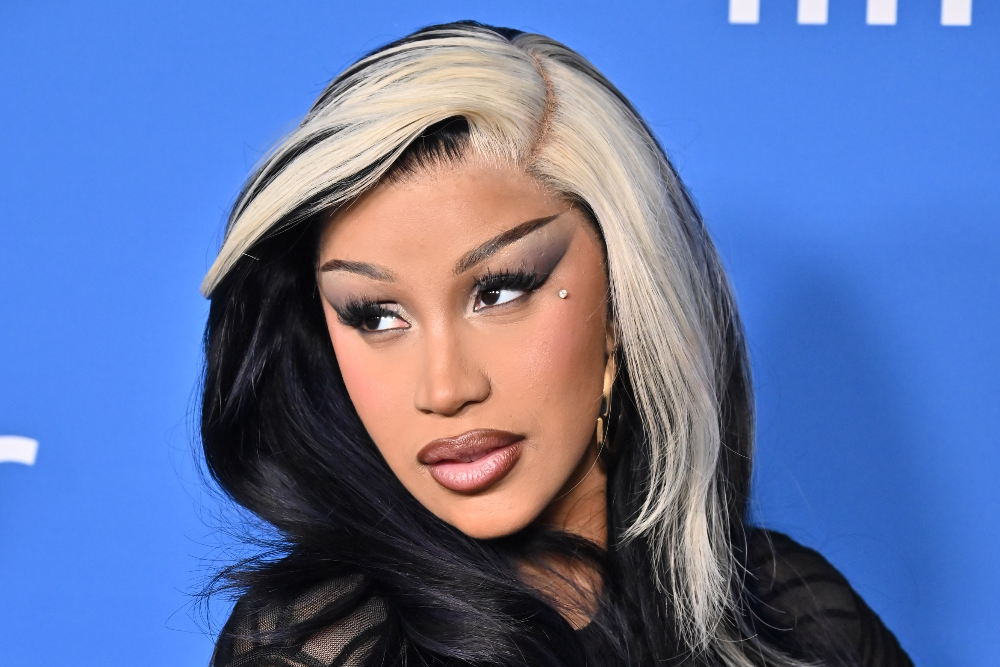
Cardi B is not just dominating arenas on her Little Miss Drama tour — she is also racking up wins in the courtroom. A federal judge in Texas dismissed a $50 million copyright infringement lawsuit targeting her 2024 hit Enough (Miami), delivering the Grammy-winning rapper yet another major legal victory.
The case was brought by producers Joshua Fraustro and Miguel Aguilar, who perform under the name Kemikal956. The duo claimed that Cardi B lifted the melody and bassline of their 2021 track Greasy Frybread — a song they produced for rapper Sten Joddi that gained traction after appearing in promotional material for the acclaimed FX series Reservation Dogs. Filed in July 2024, the lawsuit also named Atlantic Records and Warner Music Group as co-defendants.
U.S. District Judge Fernando Rodriguez Jr. dismissed the case on March 30, ruling on multiple grounds that the lawsuit simply could not move forward. The decision was sweeping — and it was not close.
Why the judge threw out the case
The ruling came down hard on the plaintiffs for several critical reasons
- No copyright registration — Fraustro and Aguilar did not have Greasy Frybread registered with the U.S. Copyright Office when they first filed suit. They only secured that registration in October 2025 — more than a year after initiating legal action
- Wrong jurisdiction — The plaintiffs argued that Cardi B‘s performances in Texas gave the court authority over the case. Judge Rodriguez rejected that, ruling that her Texas shows were simply part of a broader national tour and did not specifically target the state
- Weak pleading — The judge found that each part of the lawsuit was missing key legal elements, including that their business interference claim had no factual support whatsoever
- No amendment allowed — The court blocked any further attempts to refile, calling any additional amendment futile
This level of dismissal is notable. The judge did not just rule on one flaw — he systematically dismantled every angle of the plaintiffs’ case, leaving no viable path forward.
Cardi B’s growing legal track record
This courtroom win is not an isolated moment — it is part of a pattern that is hard to ignore. Just months earlier, a Los Angeles jury found Cardi not liable for assault and battery in a separate $24 million case brought by her former security guard Emani Ellis. That verdict, combined with this latest dismissal, signals that legal challenges thrown at Cardi B have consistently failed to land.
Her attorney responded to the ruling with measured confidence, expressing satisfaction with the court’s careful and thorough consideration of every issue raised throughout the case. Atlantic Records and Warner Music Group, both named as co-defendants, also walked away cleared — the judge disposed of all third-party claims as well, citing the same registration failure that doomed the original complaint.
The song at the center of it all
Enough (Miami) is no throwaway track. Released in March 2024 via Atlantic Records, the single climbed to No. 9 on the Billboard Hot 100 and held its position on the chart for 14 weeks. It has since surpassed 97.9 million streams on Spotify and was re-released on the deluxe version of Cardi’s sophomore album Am I the Drama? — which debuted at No. 1 on the Billboard 200 in October. The song is also a regular fixture on her current Little Miss Drama arena tour setlist, proving its staying power with live crowds night after night.
The plaintiffs had claimed the song hurt their reputation in the industry and caused them to be blacklisted — serious allegations that the court ultimately found had no factual grounding to support them.
What this means for Cardi B
Beyond the legal victory, this moment reinforces something that often gets overlooked in conversations about Cardi B — her staying power both on the charts and off them. She remains the female rapper with the most No. 1 singles on the Billboard Hot 100 and the only female rapper to achieve multiple solo chart-toppers on that list. Her sophomore album debuted at No. 1. Her tour is selling out arenas across the country.
A bigger picture worth noting
Copyright lawsuits targeting major artists have become increasingly common in the streaming era, where any sonic similarity — real or perceived — can spark litigation. What makes this case stand out is how thoroughly it collapsed under legal scrutiny. The plaintiffs lacked a registered copyright at filing, chose the wrong jurisdiction, and presented claims the judge described as missing fundamental pleading requirements.
For Cardi B, the dismissal is more than a legal win. It is a reminder that behind the bars, the performances, and the headlines, there is a sharp legal team protecting one of hip-hop’s most commercially successful careers. The lawsuits keep coming — and they keep getting thrown out.
Whatever the next chapter looks like, she is walking into it undefeated.
