


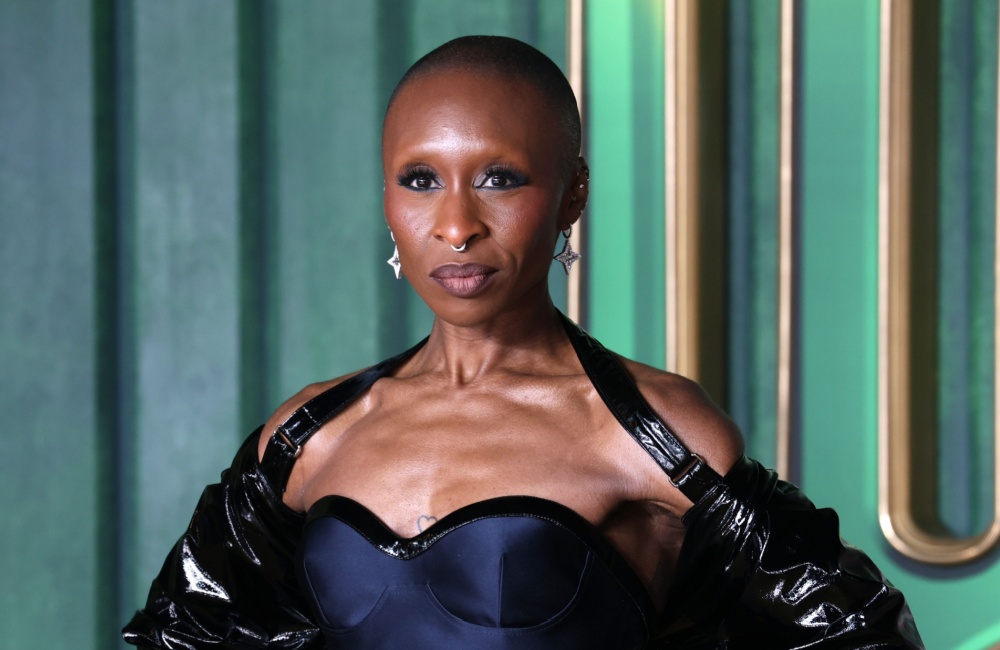
Something shifted in the room at London’s Noël Coward Theatre recently, and it had nothing to do with the script. Midway through her one-woman performance of Dracula, Cynthia Erivo stopped. Not because of a technical failure or a forgotten line, but because someone in the audience had pulled out a phone and started recording.
She spotted it. She addressed it. Security removed the person. And about ten minutes later, the show went on.
The moment traveled quickly across social media, where people alternately praised Erivo for holding the line and marveled at the audacity it takes to film a live performance in direct violation of a stated policy. But the conversation it sparked goes well beyond the walls of a West End theater.
The instinct to record before you even think
There is something revealing about the reflex that drives a person to pull out a phone in a darkened theater. The performance is happening right in front of them. Erivo, who carries the full weight of 23 characters across every single night through May 30, is giving everything she has to the stage. And still, for some, the instinct is to document rather than experience.
That instinct has become one of the defining social tensions of the moment. The attention economy has quietly trained people to treat presence as permission. If something is happening near you, the logic goes, then you have some claim to it. Context rarely slows that impulse down.
Tyler, the Creator ran into this firsthand when surveillance footage of him browsing a bookstore surfaced online without his knowledge or consent. He was not doing anything remarkable. He was simply existing in a space. But that was enough for the clip to circulate and take on a life of its own.
His response was to carve out spaces where that kind of surveillance simply cannot follow. He began hosting listening parties with a strict no-phone policy, not as a gimmick but as a genuine effort to protect something. He noted publicly that friends had told him they no longer dance in public because they fear being filmed and mocked. A natural form of human expression, he observed, had been quietly killed off by the fear of becoming a meme.
Erivo and the uneven weight of enforcement
What makes the theater incident particularly worth sitting with is what it required of Erivo beyond the performance itself. She had to stop, identify the violation, address it publicly, wait for security to intervene, and then find her way back into an emotionally demanding role in front of a live audience. That is a significant amount of additional labor, and it was entirely avoidable.
For Black women especially, this kind of boundary enforcement carries its own familiar weight. The expectation of access rarely disappears just because the rules have been clearly stated. Erivo did not have the luxury of ignoring it. She had to assert the boundary herself, in front of everyone, and then get back to work.
When content becomes a weapon
The stakes of all this extend further than any single incident. Earlier this year, a major social platform was forced to remove dozens of accounts sharing AI-generated explicit images of Black women without their consent. Women have reported being secretly filmed in gyms, on sidewalks, and in stores, only to discover themselves circulating online without any knowledge it had happened.
The barrier to turning a person into content has never been lower. The consequences have never been harder to predict or undo.
Erivo and the question worth asking
At its core, what happened in that London theater is a small but pointed example of a much larger problem. Not every moment is ours to capture. Not every person in our vicinity has agreed to be content. And the fact that someone has to stop a live performance to remind an audience of that says something about where we are right now.
The real question is whether we actually want to be present for our lives anymore or whether we have quietly traded experience for documentation without noticing the cost.
