


Dave Chappelle has made a career out of saying the things other people are afraid to say. But the veteran comedian is now drawing a firm line between what he does on stage and how others have chosen to use it off of it.
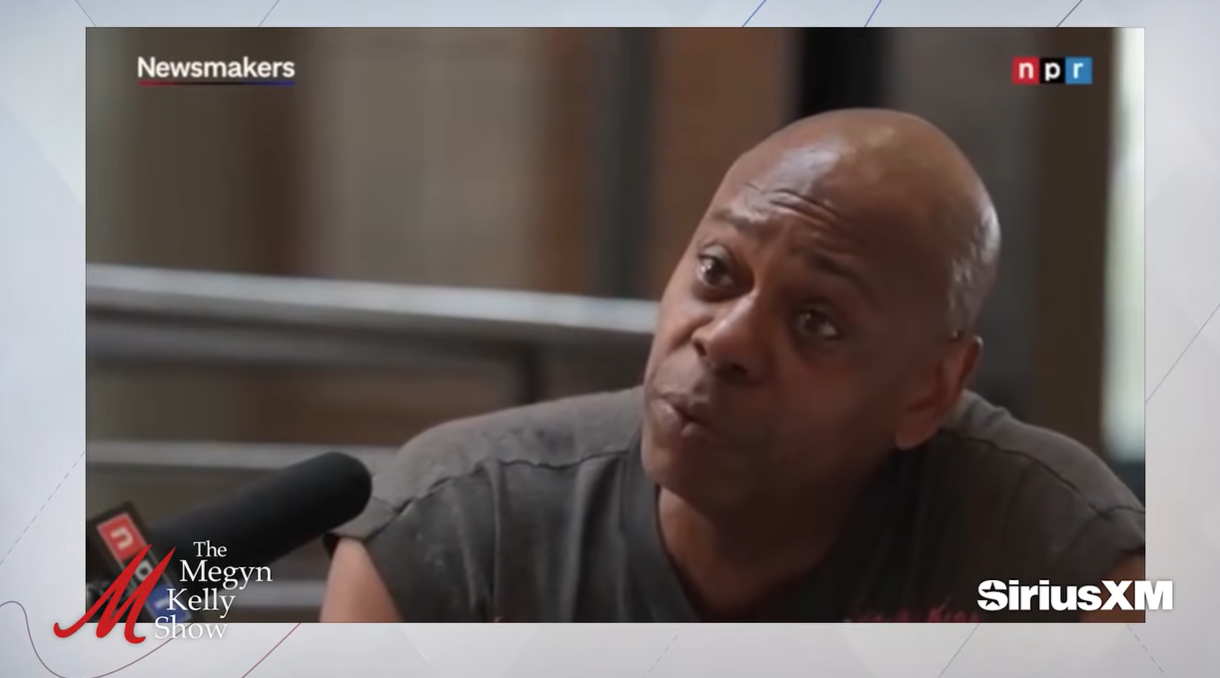
In a recent interview with NPR, Chappelle addressed growing frustration over the way the Republican Party has used his jokes about the transgender community as political ammunition. He made clear that while his comedy has explored the subject, his intent was never to serve as a talking point for any party’s platform.
How Republican politicians entered the picture
Chappelle recalled a visit to Washington, D.C., that quickly took an uncomfortable turn. While there, he was approached by multiple members of Congress who wanted photos with him. Among them were 1) Rep. Lauren Boebert of Colorado and 2) Rep. Anna Paulina Luna of Florida.
What followed bothered Chappelle more than the request itself. The photo was later shared on social media in a way that implied he held the same views on gender that both lawmakers publicly espouse namely, a strictly binary understanding of sex and identity. Chappelle felt his image had been co-opted to advance a political position he does not hold.
His response in the NPR interview was direct: he resented that the Republican Party leaned into transgender jokes as part of its platform, describing it as a weaponized version of what he was doing on stage and insisting that was never his purpose.
The backlash that never fully went away
This is not the first time Chappelle’s material has put him at the center of a cultural storm. His 2021 Netflix special, The Closer, drew intense criticism from LGBTQ+ advocates and allies who argued that several jokes in the special were harmful to transgender people. The fallout was significant enough that a group of Netflix employees staged a walkout in protest.
Netflix ultimately chose to keep the special on its platform, a decision that drew its own round of criticism. Chappelle, for his part, has consistently maintained that his comedy is not rooted in contempt for the transgender community. In a previous interview with The Washington Blade, he spoke about not obstructing anyone’s lifestyle and rejecting the idea that he discriminates based on gender identity.
Where comedy ends and politics begin
The tension Chappelle is navigating is one that many comedians face, though few at his level of visibility. Comedy has long served as a vehicle for exploring uncomfortable social terrain, and the best practitioners of the craft use it to provoke thought as much as laughter. The late Patrice O’Neal, a foundational figure in stand up whose influence Chappelle has acknowledged, believed deeply that no subject should be off limits for a comedian willing to approach it honestly.
But the current political climate has made that calculus more complicated. When jokes migrate from a stage or a streaming platform into a campaign rally or a congressional social media post, the original context collapses. What was crafted as commentary becomes campaign material, and the comedian becomes, unwillingly, a surrogate.
The broader conversation this moment opens up
Public response to Chappelle’s NPR comments has reflected the divided opinions that have followed him for years. Supporters argue that comedy must remain a space where performers can take risks and address difficult subjects without those moments being distorted or punished. Critics maintain that humor targeting already-marginalized communities carries real-world consequences regardless of the intent behind it.
What Chappelle’s frustration makes plain is that intent and impact are both part of the equation and that neither exists in a vacuum. A joke told on stage does not disappear into the air. It travels, it gets clipped, it gets shared, and sometimes it ends up in places and contexts its creator never imagined or endorsed.
For Chappelle, the issue is not whether he can joke about the transgender community. The issue is who gets to decide what that joke means once it leaves his hands.
