


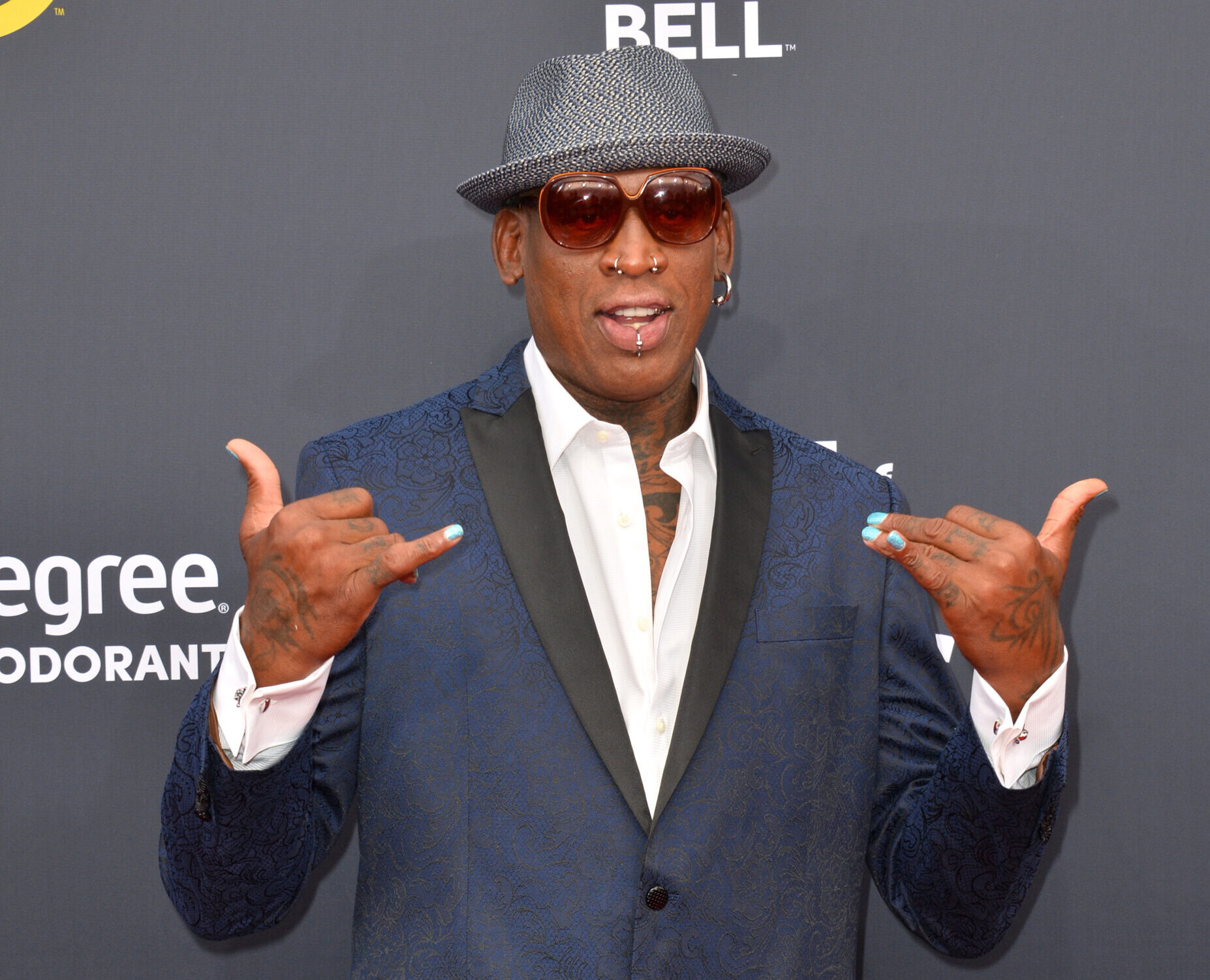
Dennis Rodman built a career on doing the things other players would not. He rebounded with a ferocity that made him one of the best to ever play the game, collected five championship rings and became one of the most recognizable figures in sports history. Toughness was his brand. Resilience was his identity. What finally broke through that armor was not a physical blow but a quiet, devastating reckoning with the truth about who he had been to the people who needed him most.
For years Rodman managed to hold onto a version of himself as a devoted father, a man who loved his children deeply even if his presence was inconsistent. That version eventually collapsed under its own weight. He came to understand that the gap between how he saw himself and how he had actually shown up was vast, and no amount of good intentions could close it.
A blueprint that was never written
To understand why Rodman struggled so profoundly with fatherhood, it helps to look at what he was given to work with. His biological father, Philander Rodman Jr., left the family when Dennis was three years old. He did not simply drift away. He disappeared into an entirely different life, eventually settling abroad and reportedly fathering dozens of other children.
Dennis grew up with his mother and two sisters in circumstances that offered no model of engaged, present fatherhood. The absence of that example did not doom him but it left a significant gap, one that fame, money and relentless public attention would later fill in all the wrong ways.
Fame as a hiding place
By the time Rodman reached the height of his NBA career, external validation had become a kind of addiction. The adoration of crowds, the spectacle of celebrity and the constant stimulation of life in the spotlight gave him somewhere to put his energy that felt safer than the vulnerability of genuine intimacy. He leaned into his eccentricities, his unpredictability and his persona as a way of keeping the more frightening parts of himself at a distance.
His children were present. His family was around him. But presence and availability are not the same thing, and Rodman eventually had to sit with that distinction. He acknowledged that he had chosen distraction over connection in the moments that mattered and that the choice had been his own.
A public apology that was never meant for the public
The reckoning became visible during Rodman’s Basketball Hall of Fame induction ceremony in 2011. Standing before a packed room with his family seated in the audience, he set aside the performance of toughness and said what he had spent years avoiding.
He addressed his children and his family directly, acknowledging that he had failed them as a father and as a son. He did not frame it as something done for the crowd or for applause. He framed it as something long overdue and deeply personal, a moment of accountability that he described as one of the more difficult things he had ever done.
The admission did not erase the years of absence. It could not. But it marked something meaningful: a man choosing to stop lying to himself about who he had been and what that had cost the people closest to him.
A legacy that refuses simple answers
Rodman’s story resists easy resolution. He remains one of the most gifted defensive players in the history of professional basketball and one of the most complicated figures the sport has produced. His candor about his failures as a father is itself a kind of courage, even if it arrived later than anyone would have wished.
What his journey makes clear is that the qualities that make someone exceptional in one arena offer no guarantees in the one that matters most. Talent earns rings and enshrinement. Being a father requires something else entirely, something Rodman spent most of his life struggling to locate within himself.
