


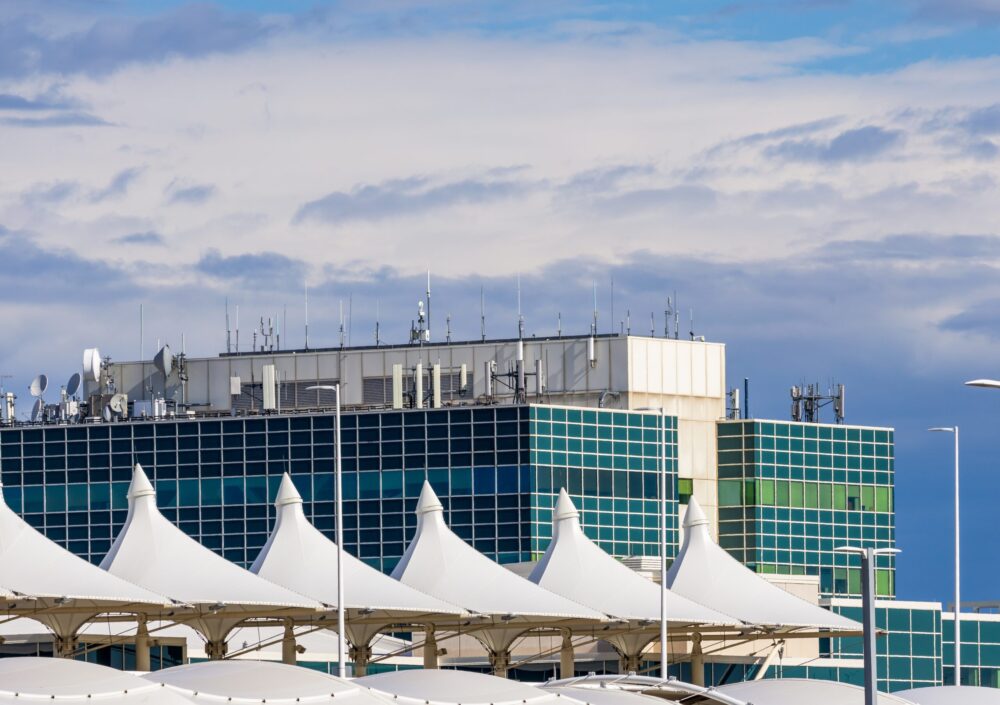
What began as a power outage at Denver International Airport on Wednesday morning quickly escalated into a significant disruption for air travel across much of the United States. The Federal Aviation Administration issued a ground stop for the airport covering the window from 9:54 a.m. to 11:30 a.m. MDT, meaning all flights departing toward Denver from a wide range of traffic control areas were grounded due to equipment outages at the facility.
Airport officials confirmed the power incident began at approximately 9:20 a.m. and that certain areas of the airport were still without power as of 10 a.m. Technicians were working to restore service as quickly as possible, but no timeline for full restoration had been provided.
The ground stop covered most of the country
The scope of the FAA’s ground stop was broad. Flights heading to Denver from the following 13 air traffic control areas were affected: 1) Los Angeles, 2) Chicago, 3) Salt Lake City, 4) Houston, 5) Fort Worth, 6) Cleveland, 7) Oakland, 8) Seattle, 9) Kansas City, 10) Memphis, 11) Indianapolis, 12) Albuquerque and 13) Minneapolis. The only major region of the country not covered by the ground stop was the East Coast, meaning the disruption effectively touched air traffic from coast to coast across the central and western United States.
A ground stop of this geographic scope reflects the severity of the equipment failure and the degree to which Denver International functions as a hub connecting air travel across multiple regions simultaneously.
Travelers on the ground faced immediate challenges
The impact inside the airport was felt quickly. The train connecting the main terminal to the gates went offline as part of the power incident, cutting off the primary route travelers use to reach their departure gates. Reports from travelers on X described being held on planes and unable to deboard, while others reported being unable to access restrooms within affected areas of the terminal.
As of 10 a.m., flight tracking service FlightAware showed 96 flights delayed and 6 canceled, including 37 departures from Denver and 44 scheduled arrivals. Airport officials noted that this level of delay is not dramatically unusual for Denver International under normal operating conditions, but the combination of a ground stop, a disabled gate train and peak spring break travel volume created conditions considerably more disruptive than a typical delay picture.
Security wait times were running at approximately 10 minutes as of 10 a.m. according to available data, though whether TSA screening procedures had been affected by the outage was not immediately confirmed.
Xcel Energy confirmed as the power source for the airport
Xcel Energy’s outage map showed an unplanned outage in the area surrounding Denver International Airport, and a company spokesperson confirmed to FOX31 that Xcel serves the airport. The spokesperson indicated that additional information would be forthcoming as the company assessed the situation.
The confirmation that the outage originated with the external power supply rather than internal airport systems shifts some of the response responsibility to the utility, though Denver International’s own backup systems and emergency protocols are also under scrutiny given the scale of the disruption.
Airport protocols designed for this scenario are being tested
Denver International Airport has long maintained that the probability of a significant power outage at the facility is very low, citing extensive backup infrastructure and regular maintenance protocols. A spokesperson previously told local media that the airport’s emergency response framework is built to ensure operational continuity and allow for swift coordination with stakeholders in the event of a power loss.
Wednesday’s outage is putting those assurances to a real-world test at the worst possible time. With more than 80,000 travelers expected to move through the airport on peak spring break days, and with a nationwide ground stop in effect during the morning travel window, the ability to restore power quickly and communicate clearly with affected passengers is critical.
Travelers with flights through Denver are encouraged to check current wait times and flight status at FlyDenver.com and to monitor their airline’s communications directly for the most current information on delays and rebooking options. Airport officials continue to recommend arriving at least two hours before scheduled departure regardless of conditions.
Source : Fox 31
