


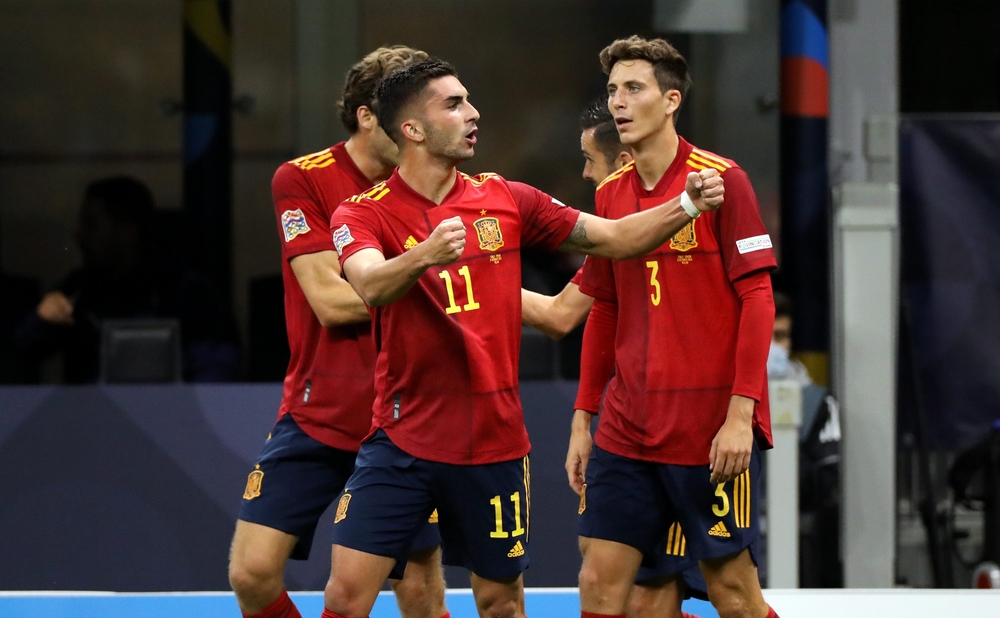
Spain are world champions again. A single goal from substitute Torres in extra time was all it took to end Argentina’s reign, as the defending champions fell 1-0 at MetLife Stadium in East Rutherford, New Jersey, in one of the most tightly contested World Cup finals in recent memory.
Ferran Torres, who had gone the entire tournament without finding the net and absorbed considerable criticism along the way, delivered the decisive moment in the 106th minute. His finish gave Spain a triumph built on patience, defensive resolve and one moment of clinical brilliance at the exact time it was needed most.
For Argentina, the loss was a quiet, deflating exit. A team that had entered the final having engineered dramatic comebacks throughout the tournament could not manufacture a single shot on goal across the regulation 90 minutes. Then, just before extra time began, midfielder Enzo Fernández received a second yellow card, leaving the South Americans to defend with 10 men for the entire additional period.
Spain dominated but had to wait
The pattern of the match told the story of the final clearly. Spain controlled possession and created the cleaner opportunities, but Argentine goalkeeper Emiliano Martínez was formidable throughout, keeping the scoreline level long enough to give the South Americans a chance.
Argentina’s best hope rested with Lionel Messi, whose presence on the opposing side was enough to generate genuine anxiety in the Spanish camp. The veteran forward was managed carefully and kept largely quiet, but with Messi on the field no lead was ever truly safe. When Fernández was dismissed and the numerical advantage shifted decisively in Spain’s favor, the inevitability of what was coming became harder to deny.
Torres entered as a substitute and found the opening in the 106th minute, converting an opportunity that had been building through sustained Spanish pressure. It was his first goal of the competition, and the timing could not have been more significant.
Torres answers the critics with one swing
Torres had spent the weeks of the tournament fielding questions about his lack of contribution in front of goal. He had featured in multiple matches without leaving a statistical mark on the scoresheet. In a competition of this magnitude, patience with a forward who cannot score has limits, and Torres had been feeling that pressure.
The response Torres gave in the final silenced every doubt in a single moment. Torres described the relief of scoring as enormous and framed the entire journey through the tournament, including the difficult stretches, as something that had been building toward this outcome. He credited faith as a source of strength throughout the difficult weeks and suggested the universe had its own way of rewarding perseverance.
Torres also pointed to the weight of national expectation behind each Spanish player on the pitch, noting that the goal did not belong to those on the field alone but to the roughly 47 million people back home who had watched and hoped across every round of the competition.
Argentina exits with dignity
The Argentina dressing room was subdued but not without grace. Coach Lionel Scaloni acknowledged that Spain had been the better side on the day and that the result was deserved. He spoke of sadness but also of pride in what his squad had accomplished across an entire World Cup campaign that brought them to the final of a tournament they had defended admirably for four years.
Scaloni told reporters that the manner in which his players had competed throughout the competition was something he would carry with him long after the disappointment of the final had faded. He said losing required its own form of character and that his team had shown it.
Argentina go home as former champions. Spain leave New Jersey as the new ones, with Torres, the tournament’s most scrutinized forward, standing at the center of the celebration.
