


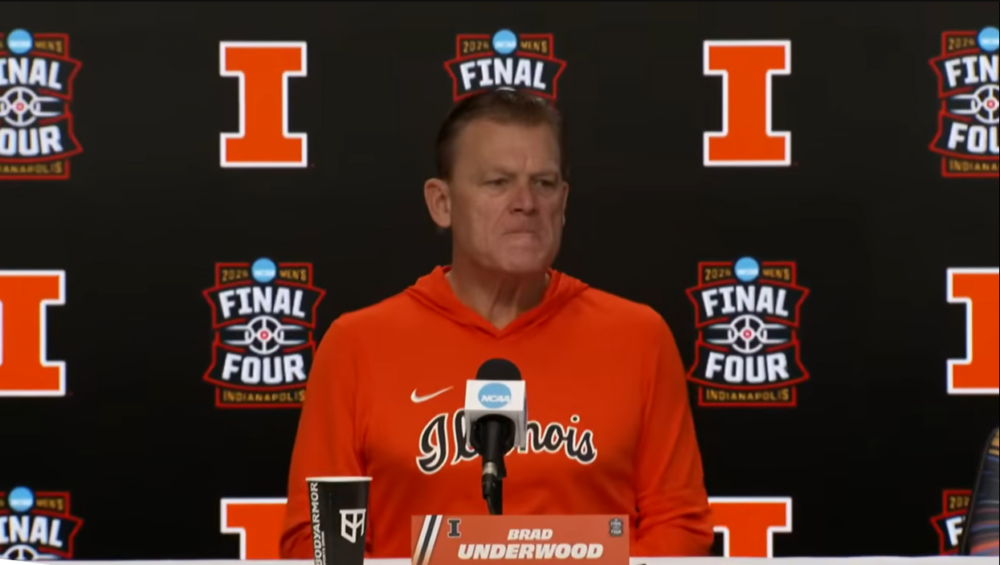
Brad Underwood had been to the Elite Eight. Multiple times. But getting past it was a different problem entirely one that no amount of domestic recruiting had yet solved. So the Illinois head basketball coach decided to try something different, and it started with a phone call.
On the other end of the line was Miško Ražnatović, one of the most well-connected basketball agents in Europe and the man who represents NBA superstar Nikola Jokić, among others. What followed was a conversation that would fundamentally reshape the Illinois roster and quietly change how college basketball programs think about international talent.
The 5 players who changed everything
Ražnatović pitched a simple but bold idea, bring in a group of his clients from the Balkans, not just one player, but several, so they could support one another through the transition. Underwood did not hesitate. He signed all five.
The players now known informally as the Balkan Five are: 1. David Mirković, 2. Mihailo Petrović, 3. Zvonimir Ivišić, 4. Tomislav Ivišić and 5. Toni Bilić. Joining them on the roster is Andrej Stojaković, the son of former NBA standout Peja Stojaković, giving the team an international core unlike anything seen in college basketball in recent memory.
Together, the group accounts for more than half of Illinois’ total scoring and rebounding this season a contribution that has carried the program all the way to the Final Four, where the Illini are set to face UConn for a chance at the national championship.
Why European players are choosing college over the pros
For years, the conventional wisdom was that elite teenage players from Europe had no reason to pursue college basketball in the United States. Professional leagues in their home countries offered salaries and competitive experience that American college programs simply could not match. That calculus changed significantly in 2021 with the introduction of NIL Name, Image, Likeness rules that allow college athletes to profit from endorsements and sponsorships.
The financial opportunity now available through NIL means some international players can earn more during two years of college basketball than they might over an entire decade playing professionally in Europe. That shift has sent Division I programs scrambling to scout European tournaments with a seriousness they never had before.
Experience that travels well
What makes the Balkan Five particularly effective is not just their skill it is their seasoning. Several of these players competed in the Adriatic League before arriving in Champaign, a professional competition that regularly features players far older and more experienced than themselves.
Mirković, for example, was already playing against grown professionals well before most American players his age were competing at the varsity high school level. That kind of environment develops a mental and physical maturity that is difficult to manufacture, and it shows in how confidently the group has performed in high-pressure situations during the NCAA Tournament.
Ražnatović has noted that this advanced development is a consistent characteristic among his clients, many of whom have been embedded in elite basketball academies and professional structures since early adolescence.
A new model for college recruiting
Illinois success has not gone unnoticed. Coaches around the country are beginning to rethink their international recruiting strategies, and the group model identifying clusters of players from the same region or background is gaining traction. The logic is straightforward transition is hard, but it is easier when players can speak their own language, lean on shared cultural references and adjust to a new country together rather than alone.
Mirković has spoken to how meaningful that built in support system has been, explaining that arriving as a group rather than as a lone newcomer made the adjustment to American college life far less isolating.
Ražnatović, for his part, has indicated that this approach is not a one-time experiment. He sees it as a replicable model and plans to continue helping European players navigate college basketball in similar cohorts going forward.
What comes next
Illinois has become an unlikely symbol of where college basketball may be heading a sport increasingly shaped by global talent and the structural changes that have finally made American universities competitive destinations for the world’s best young players.
As the Illini prepare for the Final Four, the story of the Balkan Five is no longer just a quirky recruiting anecdote. It is a blueprint.
