


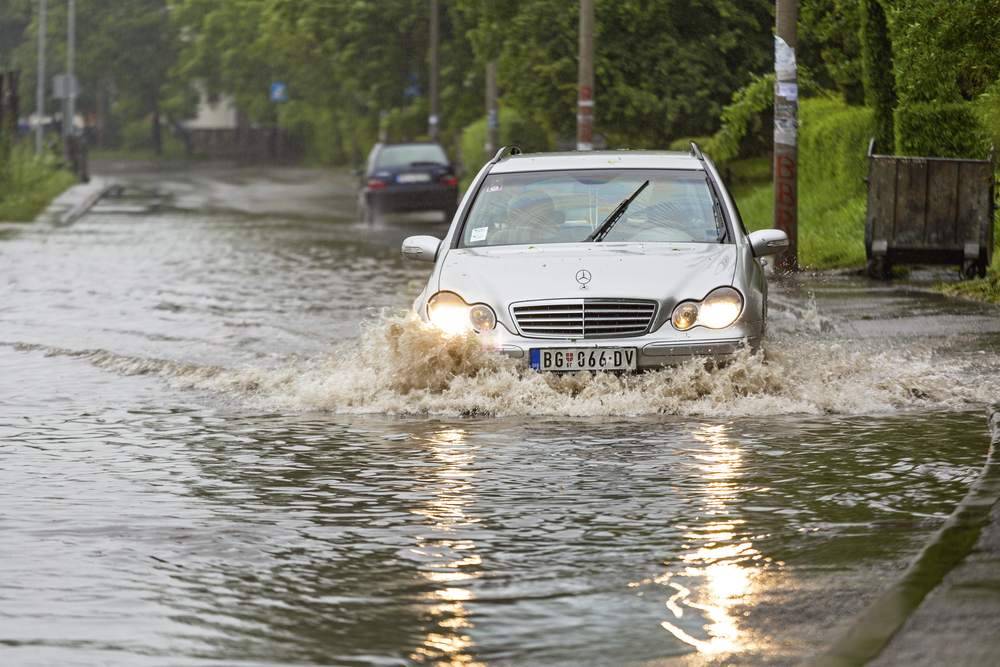
At least six people have died in Indiana since severe storms began hitting the state on August 11, according to the Indiana Department of Homeland Security, with the number climbing from five to six as officials confirmed a new fatality Saturday. The dead include a 4 year old boy killed when a tree fell on his home in Jennings County, a 19 year old man and 58 year old woman in Delaware County, and additional victims confirmed in Lake, Porter and LaPorte counties.
Why did the White River break a record that survived 113 years?
The White River crested at Noblesville just before 2 a.m. Saturday at 24.5 feet, breaking a mark of 23.8 feet that had stood since 1913. Here’s what most coverage has missed. That 1913 flood was driven partly by spring snowmelt combined with heavy rain, while this year’s flood arrived purely from summer rainfall with no snowmelt boost at all. Climate researchers say that makes the 2026 event more significant than the raw numbers suggest, since Indiana’s flood control planning has spent over a century treating 1913 as its worst case scenario, and that scenario no longer holds.
What is causing this level of flooding to keep happening?
Some parts of central Indiana picked up close to a foot of rain in under 48 hours, water that had nowhere to drain fast enough. Scientists studying the storm pattern point to a stalled jet stream, a weather setup that traps storm systems in place and lets them dump rain repeatedly over the same ground. Researchers have documented this pattern showing up more often in recent decades as a warming Arctic narrows the temperature difference that normally keeps the jet stream moving. Indianapolis Mayor Joe Hogsett said the city is facing a flooding event unlike anything seen in more than 30 years, and Marion County emergency officials called it a once in a lifetime type of flood.
How many people have lost power, and where is the damage worst?
At least 150,000 customers remained without electricity statewide as of Saturday, according to Indiana Department of Homeland Security director Jonathan Whitham. Damage has concentrated along the river corridor stretching from Hamilton County into the northern Indianapolis suburbs, with Noblesville officials estimating it will take weeks for the city to return to normal even after the river started receding. In that city alone, crews evacuated 170 residents along with five dogs and one groundhog to safety, a small detail that says a lot about how fast the water came up.
What comes next for flood-hit communities?
Whitham said the flooding remains an active threat for at least another 24 hours before any real recovery work can begin, and flash flood watches stretched Saturday from eastern Iowa all the way to West Virginia. President Trump approved federal disaster assistance for Indiana after a call with Gov. Mike Braun, opening the door to FEMA resources for the recovery ahead. The Indianapolis Fire Department has completed roughly 50 water rescues so far, helping 91 residents and 45 pets to safety, and officials are still urging anyone near the river to leave before conditions shift again.
The bigger question hanging over Indiana now isn’t just when the water recedes. It’s whether a flood control system built around a 1913 benchmark can hold up against a climate that keeps rewriting what worst case actually looks like.
